

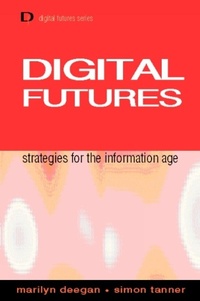
Digital Futures
Description

Libraries have been traditionally associated with managing physical resources, however with the rise of the Internet and the rapid expansion of electronic communication media, information gathering, storage and transmission have presented fresh challenges to those responsible for preserving the cultural memory of society.
This book examines the strategic issues involved in realizing a digital future for libraries in the information age. It looks at how librarians and information professionals can locate the electronic resources most relevant to the needs of their users, integrate these resources into the infrastructure of their institutions, manage the necessary technology and anticipate future trends in the digital age.
Topics covered include:
- the effect of information and communications in the digital world upon libraries and information organizations
- the role of the library and the librarian in the digital age
- economic factors, cultural resource management, technology impact, and knowledge management in the digital library environment
- preservation of material culture through digitization and preservation of digital objects
- case studies demonstrating the digital information impact upon national, academic, public and transnational organizations worldwide.
Readership: An indispensable guide for all information professionals - including librarians, library and information managers and archivists - wanting to keep abreast of developments in communications technologies, manage change in the library environment, and implement new modes and methods of resource management. It will also be of interest to students on library and information studies courses.
More details
Other editions
Additional editions
Persons
Marilyn Deegan is Professor of Digital Humanities and Honorary Research Fellow at King's College London.
Simon Tanner is Professor of Digital Cultural Heritage in the Department of Digital Humanities at King's College London.
Content
1. Digital futures in current contexts 2. Why digitize? 3. Developing collections in the digital world 4. The economic factors 5. Resource discovery, description and use 6. Developing and designing systems for sharing digital resources 7. Portals and personalization: mechanisms for end-user access 8. Preservation 9. Digital librarians: new roles for the Information Age 10. Digital futures...
