

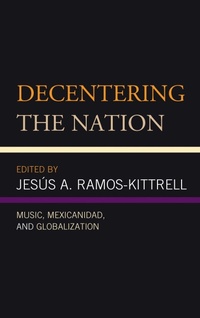
Decentering the Nation
Music, Mexicanidad, and Globalization
Lexington Books (Publisher)
1st Edition
Published on 12. December 2019
1 pages
978-1-9787-5173-6 (ISBN)
Description

winner of the 2021 Ellen Koskoff Edited Volume Prize
Decentering the Nation: Music, Mexicanidad, and Globalization considers how neoliberal capitalism has upset the symbolic economy of "Mexican" cultural discourse, and how this phenomenon touches on a broader crisis of representation affecting the nation-state in globalization. This book argues that, while mexicanidad emerged in the early twentieth century as a cultural trope about national origins, culture, and history, it was, nonetheless a trope steeped in 'otherization' and used by nation-states (Mexico and the United States) to legitimize narratives of cultural and socioeconomic development stemming out of nationalist political projects that are now under strain. Using music as a phenomenological platform of inquiry, contributors to this book focus on a critique of mexicanidad in terms of the cultural processes through which people contest ideas about race, gender, and sexuality; reframe ideas of memory, history, and belonging; and negotiate the experiences of dislocation that affect them. The volume urges readers to find points of resonance in its chapters, and thus, interrogate the asymmetrical ways in which power traverses their own historical experience. In light of the crisis in representation that currently affects the nation-state as a political unit in globalization, such resonance is critical to make culture an arena of social collusion, where alliances can restore the fiber of civil society and contest the pressures that have made disenfranchisement one of the most alarming features characterizing the complex relationships between the state and the neoliberal corporate system that seeks to regulate it. Scholars of history, international relations, cultural anthropology, Latin American studies, queer and gender studies, music, and cultural studies will find this book particularly useful.
Decentering the Nation: Music, Mexicanidad, and Globalization considers how neoliberal capitalism has upset the symbolic economy of "Mexican" cultural discourse, and how this phenomenon touches on a broader crisis of representation affecting the nation-state in globalization. This book argues that, while mexicanidad emerged in the early twentieth century as a cultural trope about national origins, culture, and history, it was, nonetheless a trope steeped in 'otherization' and used by nation-states (Mexico and the United States) to legitimize narratives of cultural and socioeconomic development stemming out of nationalist political projects that are now under strain. Using music as a phenomenological platform of inquiry, contributors to this book focus on a critique of mexicanidad in terms of the cultural processes through which people contest ideas about race, gender, and sexuality; reframe ideas of memory, history, and belonging; and negotiate the experiences of dislocation that affect them. The volume urges readers to find points of resonance in its chapters, and thus, interrogate the asymmetrical ways in which power traverses their own historical experience. In light of the crisis in representation that currently affects the nation-state as a political unit in globalization, such resonance is critical to make culture an arena of social collusion, where alliances can restore the fiber of civil society and contest the pressures that have made disenfranchisement one of the most alarming features characterizing the complex relationships between the state and the neoliberal corporate system that seeks to regulate it. Scholars of history, international relations, cultural anthropology, Latin American studies, queer and gender studies, music, and cultural studies will find this book particularly useful.
More details
Series
Edition
1. Auflage
Language
English
Place of publication
United States
Publishing group
Bloomsbury Publishing Plc
Target group
Professional and scholarly
Illustrations
15 b/w photos;
ISBN-13
978-1-9787-5173-6 (9781978751736)
Copyright in bibliographic data and cover images is held by Nielsen Book Services Limited or by the publishers or by their respective licensors: all rights reserved.
Schweitzer Classification
Other editions
Additional editions
Book
03/2023
Lexington Books
€44.80
Shipment within 15-20 days
Persons
Jesús A. Ramos-Kittrell is assistant professor in residence of ethnomusicology and music history at the University of Connecticut.
Content
Foreword
by Chela Sandoval
Introduction: Post-Mexicanidad apropos of the Postnational
by Jesús A. Ramos-Kittrell
1.Afrodiasporic Visual and Sonic Assemblages: Racialized Anxieties and the Disruption of Mexicanidad in Cine de Rumberas
by Laura G. Gutiérrez
2.The Danza de Inditas in the Mexican Huasteca Region: Decolonizig Nationalist Discourse
by Lizette Alegre González
3.Chavela's Frida: Decolonial Performativity of the Queer Llorona
by Ana R. Alonso-Minutti
4.Vaquero World: Queer Mexicanidad, Trans Performance, and the Undoing of Nation
by Nadine Hubbs
5."Soy gallo de Sinaloa jugado en varios palenques": Production and Consumption of Narco-music in a Transnational World
by César Burgos Dávila and Helena Simonett
6.Yo lo digo sin tristezas (I say it without lament): Transnational Migration, Postnational Voicings, and the Aural Politics of Nation
by Alex E. Chávez
7.Reclaiming 'the Border' in Texas-Mexican Conjunto Heritage and Cultural Memory
by Cathy Ragland
8.Sounding Cumbia: Past and Present in a Globalized Mexican Periphery
by Jesús A. Ramos-Kittrell
9.Southern California Chicanx Music and Culture: Affective Strategies within a Browning Temporal System of Global Contradictions
by Peter J. García
10.Listening from 'The Other Side': Music, Border Studies and The Limits of Identity Politics
by Alejandro L. Madrid
by Chela Sandoval
Introduction: Post-Mexicanidad apropos of the Postnational
by Jesús A. Ramos-Kittrell
1.Afrodiasporic Visual and Sonic Assemblages: Racialized Anxieties and the Disruption of Mexicanidad in Cine de Rumberas
by Laura G. Gutiérrez
2.The Danza de Inditas in the Mexican Huasteca Region: Decolonizig Nationalist Discourse
by Lizette Alegre González
3.Chavela's Frida: Decolonial Performativity of the Queer Llorona
by Ana R. Alonso-Minutti
4.Vaquero World: Queer Mexicanidad, Trans Performance, and the Undoing of Nation
by Nadine Hubbs
5."Soy gallo de Sinaloa jugado en varios palenques": Production and Consumption of Narco-music in a Transnational World
by César Burgos Dávila and Helena Simonett
6.Yo lo digo sin tristezas (I say it without lament): Transnational Migration, Postnational Voicings, and the Aural Politics of Nation
by Alex E. Chávez
7.Reclaiming 'the Border' in Texas-Mexican Conjunto Heritage and Cultural Memory
by Cathy Ragland
8.Sounding Cumbia: Past and Present in a Globalized Mexican Periphery
by Jesús A. Ramos-Kittrell
9.Southern California Chicanx Music and Culture: Affective Strategies within a Browning Temporal System of Global Contradictions
by Peter J. García
10.Listening from 'The Other Side': Music, Border Studies and The Limits of Identity Politics
by Alejandro L. Madrid
