


Death and Institutions
Processes, Places and the Past
Bristol University Press
1st Edition
Published on 21. March 2025
218 pages
978-1-5292-3667-5 (ISBN)
Description

Institutions play a crucial role in shaping experiences of end-of-life care, dying, death, body disposal and bereavement. However, there has been little holistic or multidisciplinary research in this area, with studies typically focusing on individual settings such as hospitals and cemeteries, or being confined to specific disciplines.
This interdisciplinary collection combines chapters on process, place and the past to examine the relationships both within and between institutions, institutionalization and death in international contexts.
Of broad appeal to students and academics in areas including social policy, health sciences, sociology, psychology, anthropology, cultural studies, history and the wider humanities, this collection spans multiple disciplines to offer crucial insights into the end of life, body disposal, bereavement and mourning.
This interdisciplinary collection combines chapters on process, place and the past to examine the relationships both within and between institutions, institutionalization and death in international contexts.
Of broad appeal to students and academics in areas including social policy, health sciences, sociology, psychology, anthropology, cultural studies, history and the wider humanities, this collection spans multiple disciplines to offer crucial insights into the end of life, body disposal, bereavement and mourning.
Reviews / Votes
"This collection reflects the great disciplinary diversity of editors Woodthorpe, Frisby and Michael-Fox whose expertise lies in sociology, history, English and media studies. Drawing on scholarly work from a wide variety of countries and from diverging historical periods, the editors have chosen a fascinating array of selections demonstrating the interplay between cultural institutions and death. Thanatology students will find many stimulating and thought-provoking viewpoints on the interplay between cultural institutions and death in this diverse collection." W. Feigelman, Nassau Community College, CHOICE Reviews "This collection offers clear and perceptive critical lenses to tropes about dying well, the 'pejorative state', necropolitics and the Death Positive Movement to name a few, which are soundly researched, timely and refreshing." Ruth McManus, University of Canterbury, Christchurch, New ZealandMore details
Series
Edition
First Edition
Language
English
Place of publication
Bristol
United Kingdom
Target group
Professional and scholarly
College/higher education
Illustrations
1 s/w Tabelle, 4 s/w Abbildungen
1 Tables, black and white; 4 Illustrations, black and white
ISBN-13
978-1-5292-3667-5 (9781529236675)
Copyright in bibliographic data and cover images is held by Nielsen Book Services Limited or by the publishers or by their respective licensors: all rights reserved.
Schweitzer Classification
Other editions
Additional editions
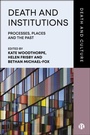
Death and Institutions
Processes, Places and the Past
Book
03/2025
1st Edition
Bristol University Press
€105.50
Shipment within 3-4 weeks
Persons
Kate Woodthorpe is Reader in Sociology and Co-Director of the Centre for Death and Society at the University of Bath.
Helen Frisby is Visiting Research Fellow in the Centre for Death and Society at the University of Bath.
Bethan Michael-Fox teaches and researches in the School of English and Creative Writing at The Open University.
Helen Frisby is Visiting Research Fellow in the Centre for Death and Society at the University of Bath.
Bethan Michael-Fox teaches and researches in the School of English and Creative Writing at The Open University.
Content
Introduction - Kate Woodthorpe, Helen Frisby and Bethan Michael-Fox
1. Culture as an Institution: Assessing Quality of Death in China - Chao Fang
2. The Market for Human Body Parts: Institutions, Intermediaries and Regulation - Lee Moerman and Sandra van der Laan
3. Secrecy, Judgement and Stigma: Assisted Dying in Aotearoa New Zealand - Rhona Winnington
4. Institutional Thoughtlessness: Prison as a Place for Dying - Renske Visser
5. Out of the Ashes in New York City: Body Storage Bottleneck in COVID-19's First Wave - Sally Raudon
6. Governing the Dead's Territory - Hajar Ghorbani
7. 'The Bluecoat Boys to Walk and Sing an Anthem before the Corpse': The Children of Christ's Hospital in London Funerals of the 18th Century - Dan O'Brien
8. Inside-Out and Outside-In: Learned Institutions and Garden Cemeteries in 19th-Century Britain - Lindsay Udall
9. 'They Attached No Blame to the Staff in Charge': The Role of Dublin Workhouse Administration in Preventing and Contributing to Institutional Mortality, 1872-1913 - Shelby Zimmerman
10. Tenets and Tensions: A Critical Exploration of the Death Positive Movement - Anna Wilde
11. Representations of Immortality and Institutions in 21st-Century Popular Culture - Devaleena Kundu and Bethan Michael-Fox
12. 'I Was So Lost ... And Who Brought You Back? Me.' - Deathstyle Gurus and the New Institutional Logics of Mourning on Instagram - Johanna Sumiala and Linda Pentikaeinen
Afterword - Kate Woodthorpe, Helen Frisby and Bethan Michael-Fox
1. Culture as an Institution: Assessing Quality of Death in China - Chao Fang
2. The Market for Human Body Parts: Institutions, Intermediaries and Regulation - Lee Moerman and Sandra van der Laan
3. Secrecy, Judgement and Stigma: Assisted Dying in Aotearoa New Zealand - Rhona Winnington
4. Institutional Thoughtlessness: Prison as a Place for Dying - Renske Visser
5. Out of the Ashes in New York City: Body Storage Bottleneck in COVID-19's First Wave - Sally Raudon
6. Governing the Dead's Territory - Hajar Ghorbani
7. 'The Bluecoat Boys to Walk and Sing an Anthem before the Corpse': The Children of Christ's Hospital in London Funerals of the 18th Century - Dan O'Brien
8. Inside-Out and Outside-In: Learned Institutions and Garden Cemeteries in 19th-Century Britain - Lindsay Udall
9. 'They Attached No Blame to the Staff in Charge': The Role of Dublin Workhouse Administration in Preventing and Contributing to Institutional Mortality, 1872-1913 - Shelby Zimmerman
10. Tenets and Tensions: A Critical Exploration of the Death Positive Movement - Anna Wilde
11. Representations of Immortality and Institutions in 21st-Century Popular Culture - Devaleena Kundu and Bethan Michael-Fox
12. 'I Was So Lost ... And Who Brought You Back? Me.' - Deathstyle Gurus and the New Institutional Logics of Mourning on Instagram - Johanna Sumiala and Linda Pentikaeinen
Afterword - Kate Woodthorpe, Helen Frisby and Bethan Michael-Fox
