
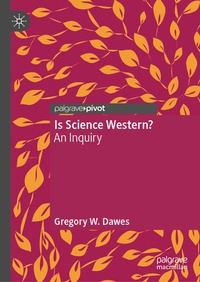
Is Science Western?
Description
Alles über E-Books | Antworten auf Fragen rund um E-Books, Kopierschutz und Dateiformate finden Sie in unserem Info- & Hilfebereich.
This book explores the question to what extent science is Western, whether in origin or by character. It aims to contribute to the debate regarding the relative status of local forms of knowledge (such as those found among indigenous peoples) and modern science. Advocates of local ways of knowing often contrast them with what they call Western science. Their opponents, on the other hand, insist that modern science is not merely Western, but universal. But there has been little discussion about what it would mean for science to be Western, let alone what evidence there is in support of the idea. The present book fills this gap, offering a middle path between what have become polarized views.
Is Science Western? is essential reading for scholars, researchers and advanced students of the philosophy of science and of epistemology. It is also ideal for scholars of indigenous knowledge within postcolonial studies.
More details
Other editions
Additional editions
Person
Gregory Dawes is Professor of Philosophy at the University of Otago, New Zealand
Content
1: Introduction: What is the Question?- 2: What Do We Mean by 'Science'?- 3: Is Science Western by Origin?- 4: Is Science Western by Character?- 5: The Primacy of the Operational.- 6: Conclusion: Is Science Western?.

System requirements
File format: PDF
Copy protection: Watermark-DRM (Digital Rights Management)
System requirements:
- Computer (Windows; MacOS X; Linux): Use the free software Adobe Reader, Adobe Digital Editions, or any other PDF viewer of your choice (see eBook Help).
- Tablet/Smartphone (Android; iOS): Install the free app Adobe Digital Editions or another reading app for eBooks, e.g., PocketBook (see eBook Help).
- E-reader: Bookeen, Kobo, Pocketbook, Sony, Tolino and many more (only limited: Kindle).
The file format PDF always displays a book page identically on any hardware. This makes PDF suitable for complex layouts such as those used in textbooks and reference books (images, tables, columns, footnotes). Unfortunately, on the small screens of e-readers or smartphones, PDFs are rather annoying, requiring too much scrolling.
This eBook uses Watermark-DRM, a „soft” copy protection. This means that there are no technical restrictions to prevent illegal distribution. However, there is a personalised watermark embedded in the eBook that can be used to identify the purchaser of the eBook in the event of misuse and to provide evidence for legal purposes.
For more information, see our eBook Help page.