

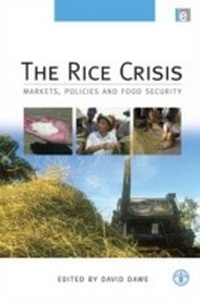
The Rice Crisis
Markets, Policies and Food Security
1st Edition
Published on 26. July 2012
364 pages
978-1-136-53039-5 (ISBN)
Description

The recent escalation of world food prices - particularly for cereals - prompted mass public indignation and demonstrations in many countries, from the price of tortilla flour in Mexico to that of rice in the Philippines and pasta in Italy. The crisis has important implications for future government trade and food security policies, as countries re-evaluate their reliance on potentially more volatile world markets to augment domestic supplies of staple foods.
This book examines how government policies caused and responded to soaring world prices in the particular case of rice, which is the world's most important source of calories for the poor. Comparable case studies of policy reactions in different countries, principally across Asia, but also including the USA, provide the understanding necessary to evaluate the impact of trade policy on the food security of poor farmers and consumers. They also provide important insights into the concerns of developing countries that are relevant for future international trade negotiations in key agricultural commodities. As a result, more appropriate policies can be put in place to ensure more stable food supplies in the future. Published with the Food and Agriculture (FAO) Organization of the United Nations
This book examines how government policies caused and responded to soaring world prices in the particular case of rice, which is the world's most important source of calories for the poor. Comparable case studies of policy reactions in different countries, principally across Asia, but also including the USA, provide the understanding necessary to evaluate the impact of trade policy on the food security of poor farmers and consumers. They also provide important insights into the concerns of developing countries that are relevant for future international trade negotiations in key agricultural commodities. As a result, more appropriate policies can be put in place to ensure more stable food supplies in the future. Published with the Food and Agriculture (FAO) Organization of the United Nations
Reviews / Votes
'This book, with chapters from many prominent experts, presents new evidence from the recent rice price crisis and draws lessons for preventing the next crisis. It is a unique set of references on global food security and the world rice market.'Shenggen Fan, Director General, International Food Policy Research Institute (IFPRI)
'This book is a must-read for those who wish to understand the world rice market, trade policies and food security concerns. It provides a careful and detailed analysis of the causes and consequences of the 2007 and 2008 global rice crisis. It is written by knowledgeable experts from the key rice economy nations.'
Professor Eric J. Wailes, University of Arkansas, USA
More details
Language
English
Place of publication
London
United Kingdom
Publishing group
Taylor & Francis Ltd
Target group
College/higher education
Product notice
Reflowable
File size
21,86 MB
ISBN-13
978-1-136-53039-5 (9781136530395)
Copyright in bibliographic data and cover images is held by Nielsen Book Services Limited or by the publishers or by their respective licensors: all rights reserved.
Schweitzer Classification
Other editions
Additional editions
Book
09/2010
1st Edition
Earthscan Ltd
€184.50
Shipment within 3-4 weeks
Book
Routledge
€100.60
The article will not be published
Person
David Dawe is a Senior Economist at the Food and Agriculture Organization (FAO) of the United Nations. A graduate of Harvard University, he has studied the Asian rice economy for more than 20 years, including 15 years resident in the Philippines, Indonesia and Thailand.
Content
Part I: Introduction
1. Food Crises Past, Present (and Future?): Will we ever learn?
Part II: Overview: The World Rice Market and Trade Policies
2. The World Rice Market Crisis of 2007-08
3. Did Speculation Affect World Rice Prices?
4. Trade Related Policies to Ensure Food (Rice) Security in Asia
Part III: Policy Responses in Traditional Importing Countries
5. Volatility in Rice Prices and Policy Responses in Bangladesh
6. Indonesia's Rice Policy And Price Stabilization Program: Managing Domestic Prices During The 2008 Crisis
7. The Rice Crisis in the Philippines: Why Did it Occur and What Are its Policy Implications?
8. West African Experience with the World Rice Crisis 2007-2008
9. Rice in Africa: Will Imports Continue to Grow?
Part IV: Policy Responses in Traditional Exporting Countries
10. The Political Economy of Thailand's Rice Price and Export Policies in 2007-08
11. The Vietnamese Rice Industry During the Global Food Crisis
12. Rice Production in Cambodia: Will Exports Continue to Grow?
Part V: Policy responses in China and India
13. How China Stabilized Grain Prices During the Global Price Crisis
14. Rice Policies in India in the Context of the Global Rice Price Spike
Part VI: Policy Responses in the Developed Countries
15. Japan's Rice Policy and its Role in the World Rice Market: Japan Should Act as a Watchdog
16. The 'Diplomatic Crop or How the U.S. Provided Critical Leadership In Ending the Rice Crisis
Part VII: Conclusion
17. Can the Next Rice Crisis be Prevented?
1. Food Crises Past, Present (and Future?): Will we ever learn?
Part II: Overview: The World Rice Market and Trade Policies
2. The World Rice Market Crisis of 2007-08
3. Did Speculation Affect World Rice Prices?
4. Trade Related Policies to Ensure Food (Rice) Security in Asia
Part III: Policy Responses in Traditional Importing Countries
5. Volatility in Rice Prices and Policy Responses in Bangladesh
6. Indonesia's Rice Policy And Price Stabilization Program: Managing Domestic Prices During The 2008 Crisis
7. The Rice Crisis in the Philippines: Why Did it Occur and What Are its Policy Implications?
8. West African Experience with the World Rice Crisis 2007-2008
9. Rice in Africa: Will Imports Continue to Grow?
Part IV: Policy Responses in Traditional Exporting Countries
10. The Political Economy of Thailand's Rice Price and Export Policies in 2007-08
11. The Vietnamese Rice Industry During the Global Food Crisis
12. Rice Production in Cambodia: Will Exports Continue to Grow?
Part V: Policy responses in China and India
13. How China Stabilized Grain Prices During the Global Price Crisis
14. Rice Policies in India in the Context of the Global Rice Price Spike
Part VI: Policy Responses in the Developed Countries
15. Japan's Rice Policy and its Role in the World Rice Market: Japan Should Act as a Watchdog
16. The 'Diplomatic Crop or How the U.S. Provided Critical Leadership In Ending the Rice Crisis
Part VII: Conclusion
17. Can the Next Rice Crisis be Prevented?
