

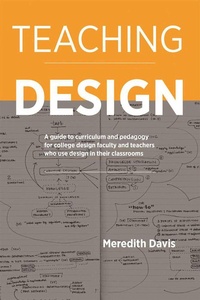
Teaching Design
A Guide to Curriculum and Pedagogy for College Design Faculty and Teachers Who Use Design in Their Classrooms
Published on 11. July 2017
216 pages
978-1-62153-531-7 (ISBN)
Description

An Expertly Written Guidebook to Teaching Design at All Levels
Teaching Design provides a practical foundation for teaching about and through design. The exploding interest in design and design thinking calls for qualified faculty members who are well prepared for a variety of institutional settings and content areas. While designers know their disciplines, they frequently lack experience in constructing responsive curricula and pedagogies for rapidly evolving professions. And while K-12 educators are trained for the classroom, their ability to transform teaching and learning through design is limited by a shortfall in professional literature.
Davis's extensive experience in education offers a detailed path for the development of curricula. The book addresses writing objectives and learning outcomes that succeed in the counting-and-measuring culture of institutions but also meet the demands of a twenty-first-century education. An inventory of pedagogical strategies suggests approaches to learning that serve both college professors and K-12 teachers who want to actively engage students in critical and creative thinking. Sections on assessment make the case for performance-based activities that provide credible evidence of student learning. Davis also discusses the nature of contemporary problems and teaching strategies that are well matched to growing complexity, rapid technological change, and increased demand for interdisciplinary engagement.
Examples in Teaching Design span the design disciplines and draw on Davis's experience in teaching seminars for college faculty, graduate courses for design students seeking academic careers, and workshops for K-12 teachers converting their classrooms into centers for innovation.
Teaching Design provides a practical foundation for teaching about and through design. The exploding interest in design and design thinking calls for qualified faculty members who are well prepared for a variety of institutional settings and content areas. While designers know their disciplines, they frequently lack experience in constructing responsive curricula and pedagogies for rapidly evolving professions. And while K-12 educators are trained for the classroom, their ability to transform teaching and learning through design is limited by a shortfall in professional literature.
Davis's extensive experience in education offers a detailed path for the development of curricula. The book addresses writing objectives and learning outcomes that succeed in the counting-and-measuring culture of institutions but also meet the demands of a twenty-first-century education. An inventory of pedagogical strategies suggests approaches to learning that serve both college professors and K-12 teachers who want to actively engage students in critical and creative thinking. Sections on assessment make the case for performance-based activities that provide credible evidence of student learning. Davis also discusses the nature of contemporary problems and teaching strategies that are well matched to growing complexity, rapid technological change, and increased demand for interdisciplinary engagement.
Examples in Teaching Design span the design disciplines and draw on Davis's experience in teaching seminars for college faculty, graduate courses for design students seeking academic careers, and workshops for K-12 teachers converting their classrooms into centers for innovation.
More details
Other editions
Additional editions
Meredith Davis
Teaching Design
A Guide to Curriculum and Pedagogy for College Design Faculty and Teachers Who Use Design in Their Classrooms
Book
07/2017
Allworth Press,U.S.
€24.00
Shipment within 3-4 weeks
Person
Meredith Davis is emerita professor at the College of Design at North Carolina State University, where she served as the department head of graphic design and director of the interdisciplinary PhD in design. She holds BS and MEd degrees in education from Penn State University and an MFA in design from Cranbrook Academy of Art. Davis has taught for forty-seven years, and she is the Alexander Quarles Holladay medalist for Excellence in Teaching and AIGA national medalist. She has also served on the NASAD Accreditation Commission, drafted its design standards, and reviewed more than eighty college-level curricula in the United States and ten countries abroad. She is the author of Graphic Design Theory and is a member on the editorial boards of Design Issues and She Ji Journal of Design, Economics, and Innovation. She lives in Raleigh, North Carolina.
Content
- Intro
- Title Page
- Copyright
- Contents
- Foreword
- Part I: Teaching about Design
- Chapter 1: A Brief History of Design Education
- From Trades to Professions
- European Craft Guilds and Apprenticeship Systems
- The École des Beaux-Arts and Classical Education in Architecture
- Industry and Independent Schools of Design in the United States
- The Modernist Agenda of the Bauhaus
- The Ulm School of Design and a Curriculum of Social Responsibility
- Rejecting the Modernist Paradigm
- The Contemporary Context for Design Education
- Chapter 2: Designing Effective Curricula
- Curriculum and Enduring Content
- Projecting Future Conditions
- Planning for Program Effectiveness
- Responding to Demand for Curricular Flexibility
- Implementing Curricular Change
- Assessing Curricular Change
- Chapter 3: Pedagogies and Projects
- The Signature Pedagogy of Design
- Pedagogical Styles
- The Teachable Moment
- Studio Projects as the Signature Pedagogy of Design
- Scaffolding
- Chapter 4: Interdisciplinarity and Teaching Collaboration in Design
- A Brief History of Interdisciplinarity
- Teaching Collaboration
- General Education and Study in Design
- The Education of the Design Generalist
- Increasing Demands of Interdisciplinary Practice on Graduate Education
- Chapter 5: Assessing Student and Curricular Performance
- Evaluating Creativity
- What Is a Rubric?
- Critiques and Peer-to-Peer Evaluation of Student Work
- A Few Words on Design Juries
- Mid-program Reviews for Advancement
- Evaluating Curricular Effectiveness
- Part II: Teaching Through Design
- Chapter 6: Design in the Service of Teaching
- Design Thinking
- The Role of Design Thinking in Education
- The Legacy of Design in K-12 Schools
- The Application of Design to Teaching and Learning in Higher Education
- Chapter 7: Pedagogical Strategies for Teaching Through Design
- Scenarios
- Personas
- Analogical Thinking
- Visualization
- Simulations and Prototypes
- Competing Constraints
- References
- Index
