

Queer Print in Europe
1st Edition
Published on 20. October 2022
272 pages
978-1-350-15868-9 (ISBN)
Description

How have radical print cultures fostered and preserved queer lived experience from the 1960s to the present? What alternative stories about queer life across Europe can visual material reveal?
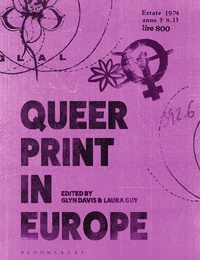
Queer Print in Europe is the first book devoted to the exploration of queer print cultures in Europe, following the birth of an international gay rights movement in the late 1960s. By unearthing these ephemeral paper documents from archives and personal collections, including materials that have been out of circulation since they were first distributed, this book examines how the production and dissemination of queer print intersected with the emergence of LGBTQ+ activism within specific national contexts. This vital contribution to queer history explores borders and political movements, and the ways in which these materials contributed, through their international circulation, to the creation of a 'post-national' queer community.
Illustrated throughout with examples of manifestos, flyers, posters, zines and other forms of print media, it features interviews with those responsible for making, distributing or archiving queer print, alongside a series of new theoretical essays that set particular publications and the individuals and groups that produced them in context. The book isolates specific instances of queer print media and scrutinises their design aesthetics, identifying both the significant contribution that queer print has made to histories of LGBTQ+ struggle and to the history of print design.
Queer Print in Europe is the first book devoted to the exploration of queer print cultures in Europe, following the birth of an international gay rights movement in the late 1960s. By unearthing these ephemeral paper documents from archives and personal collections, including materials that have been out of circulation since they were first distributed, this book examines how the production and dissemination of queer print intersected with the emergence of LGBTQ+ activism within specific national contexts. This vital contribution to queer history explores borders and political movements, and the ways in which these materials contributed, through their international circulation, to the creation of a 'post-national' queer community.
Illustrated throughout with examples of manifestos, flyers, posters, zines and other forms of print media, it features interviews with those responsible for making, distributing or archiving queer print, alongside a series of new theoretical essays that set particular publications and the individuals and groups that produced them in context. The book isolates specific instances of queer print media and scrutinises their design aesthetics, identifying both the significant contribution that queer print has made to histories of LGBTQ+ struggle and to the history of print design.
More details
Edition
1. Auflage
Language
English
Place of publication
London
United Kingdom
Publishing group
Bloomsbury Publishing PLC
Illustrations
100 colour illus
ISBN-13
978-1-350-15868-9 (9781350158689)
Copyright in bibliographic data and cover images is held by Nielsen Book Services Limited or by the publishers or by their respective licensors: all rights reserved.
Schweitzer Classification
Other editions
Additional editions
Glyn Davis | Laura Guy
Queer Print in Europe
Book
11/2022
Bloomsbury Visual Arts
€116.50
Shipment within 15-20 days
Glyn Davis | Laura Guy
Queer Print in Europe
Book
11/2022
Bloomsbury Visual Arts
€37.50
Shipment within 15-20 days
Persons
Glyn Davis is Professor of Film Studies at the University of St Andrews, UK. He is the author, co-author, or co-editor of eleven books, including The Richard Dyer Reader (BFI/Bloomsbury, co-edited with Jaap Kooijman, forthcoming 2022), The Living End: A Queer Film Classic (forthcoming, 2022), and Pop Cinema (co-edited with Tom Day, forthcoming 2022). From 2016 to 2019, Glyn was the Project Leader of 'Cruising the Seventies: Unearthing Pre-HIV/AIDS Queer Sexual Cultures', a pan-European queer history project funded by HERA and the European Commission (www.crusev.ed.ac.uk).
Laura Guy is Lecturer in Fine Art Critical Studies at The Glasgow School of Art, UK. Her research focuses on post-1960s photographic, documentary and print cultures and has recently been published in Third Text, Women: A Cultural Review, Aperture and Frieze. She is editor of Phyllis Christopher, Dark Room: San Francisco Sex and Protest, 1988-2003 (2021).
Laura Guy is Lecturer in Fine Art Critical Studies at The Glasgow School of Art, UK. Her research focuses on post-1960s photographic, documentary and print cultures and has recently been published in Third Text, Women: A Cultural Review, Aperture and Frieze. She is editor of Phyllis Christopher, Dark Room: San Francisco Sex and Protest, 1988-2003 (2021).
Content
Introduction, Glyn Davis (University of St Andrews, UK) and Laura Guy (Glasgow School of Art, UK)
Part One: Politics of Community Building
1. Silent Voices: The 'Arabs' and Gay Liberation in France, Antoine Idier (ESAM, France)
2. 'Happiness was in the Pages of this Monthly': The Birth of the Lesbian Press in France and the Fabric of a Space of One's Own (1976-1990), Ilana Eloit (University of Geneva, Switzerland)
3. Seeking Acceptance or Revolution? An Overview of the First Italian LGBTQ Magazines, 1971-1979, Dario Pasquini (Independent Researcher, Italy)
4. Change Always has to Build: In Conversation with Gail Lewis, Taylor Le Melle (Independent Researcher, the Netherlands)
Part Two: Materials and Making
5. The Sexual Revolt in Spain in the 1970s through its Publications: Ideas, Fears and Aesthetics, Alberto Berzosa (Carlos III University of Madrid, Spain) and Gracia Trujillo (Complutense University of Madrid, Spain)
6. Sexual Difference and Queer Subjectivity in Slovak LGBTQ Print Periodicals, Viera Lorencova (Fitchburg State University, USA)
7. Revolt Press, Internationalization and the Development of Gay Markets in Sweden before HIV/AIDS, Thomas Cubbin (University of Gothenburg, Sweden)
8. Mietje: In Conversation with Gert Hekma and Mattias Duyves, Benny Nemer (Royal Academy of Fine Arts (KASK), Belgium)
Part Three: Generational Interactions
9. This Too is Polish Culture: In Conversation with Karol Radziszewski, Aleksandra Gajowy (Independent Researcher, UK)
10. Queer Memory in (re)Constituting and Forgetting the Trans '70s in the UK, Nat Raha (University of St Andrews, UK)
11. Encapsulated Time: Generational and Cultural Discrepancies in West German Lesbian Magazines of the 1970s, Janin Afken (Humboldt University, Germany)
12. Lavender Menace Revisited: In Conversation with Sigrid Nielsen, Bob Orr and James Ley, Fiona Anderson (Newcastle University, UK)
Part One: Politics of Community Building
1. Silent Voices: The 'Arabs' and Gay Liberation in France, Antoine Idier (ESAM, France)
2. 'Happiness was in the Pages of this Monthly': The Birth of the Lesbian Press in France and the Fabric of a Space of One's Own (1976-1990), Ilana Eloit (University of Geneva, Switzerland)
3. Seeking Acceptance or Revolution? An Overview of the First Italian LGBTQ Magazines, 1971-1979, Dario Pasquini (Independent Researcher, Italy)
4. Change Always has to Build: In Conversation with Gail Lewis, Taylor Le Melle (Independent Researcher, the Netherlands)
Part Two: Materials and Making
5. The Sexual Revolt in Spain in the 1970s through its Publications: Ideas, Fears and Aesthetics, Alberto Berzosa (Carlos III University of Madrid, Spain) and Gracia Trujillo (Complutense University of Madrid, Spain)
6. Sexual Difference and Queer Subjectivity in Slovak LGBTQ Print Periodicals, Viera Lorencova (Fitchburg State University, USA)
7. Revolt Press, Internationalization and the Development of Gay Markets in Sweden before HIV/AIDS, Thomas Cubbin (University of Gothenburg, Sweden)
8. Mietje: In Conversation with Gert Hekma and Mattias Duyves, Benny Nemer (Royal Academy of Fine Arts (KASK), Belgium)
Part Three: Generational Interactions
9. This Too is Polish Culture: In Conversation with Karol Radziszewski, Aleksandra Gajowy (Independent Researcher, UK)
10. Queer Memory in (re)Constituting and Forgetting the Trans '70s in the UK, Nat Raha (University of St Andrews, UK)
11. Encapsulated Time: Generational and Cultural Discrepancies in West German Lesbian Magazines of the 1970s, Janin Afken (Humboldt University, Germany)
12. Lavender Menace Revisited: In Conversation with Sigrid Nielsen, Bob Orr and James Ley, Fiona Anderson (Newcastle University, UK)
