

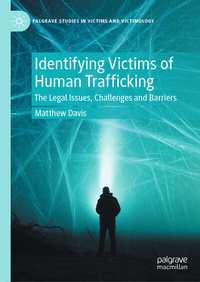
Identifying Victims of Human Trafficking
Description

This book emphasises the importance of difficulties identifying victims of human trafficking. It is often challenging for trafficked victims to be identified, for victims to self-identify, and for victims to be distinguishable from other groups of vulnerable people such as economic migrants, asylum seekers, refugees and smuggled persons. This book examines the environments where difficulties of identifying foreign victims exist or identification is overlooked entirely. It argues that a victim-centred approach is required to recognize them for who they are, a trafficked victim. This lies in opposition to the justice system which often takes the oath of prosecuting victims rather than identifying them as victims, criminalising them for offences as part of their exploitation, forced upon them under duress from their exploiters. Drawing on a range of subjects, this book contributes to existing academic work and speaks to anti-trafficking organisations, charities, public authorities and staff within the UK's National Referral Mechanism to play a pivotal role in spotting, referring and identifying more foreign trafficked victims, despite the current negativity surrounding immigration.
More details
Other editions
Additional editions
Person
Matthew Davis is Lecturer in Law at the University of Wolverhampton, UK. Matthew holds PhD in International Law, Human Rights and Criminal Justice from the University of Birmingham. Dr Davis is Fellow of the Academics Stand Against Poverty Global Justice Program at Yale University. Dr Davis conducts research on modern slavery and human trafficking and adopts a victim-centred approach to assisting and supporting victims of human trafficking and exploitation. His work lends himself to suggesting solutions complex issues of identification and detection of more victims in the UK.
Content
1. Introduction and Context.- 2. The Challenges for Victims to Self -Identify Themselves.- 3. The Response of Civil Society in Identifying Victims of Human Trafficking alongside a National Referral Mechanism.- 4. The Prosecution of Trafficked Victims.- 5. Conclusion - A Path Forward to Enable More Identifications.
