

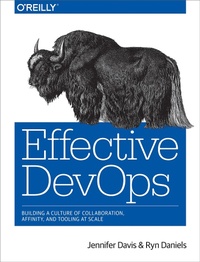
Effective DevOps
Description

Some companies think that adopting devops means bringing in specialists or a host of new tools. With this practical guide, you'll learn why devops is a professional and cultural movement that calls for change from inside your organization. Authors Ryn Daniels and Jennifer Davis provide several approaches for improving collaboration within teams, creating affinity among teams, promoting efficient tool usage in your company, and scaling up what works throughout your organization's inflection points.
Devops stresses iterative efforts to break down information silos, monitor relationships, and repair misunderstandings that arise between and within teams in your organization. By applying the actionable strategies in this book, you can make sustainable changes in your environment regardless of your level within your organization.
- Explore the foundations of devops and learn the four pillars of effective devops
- Encourage collaboration to help individuals work together and build durable and long-lasting relationships
- Create affinity among teams while balancing differing goals or metrics
- Accelerate cultural direction by selecting tools and workflows that complement your organization
- Troubleshoot common problems and misunderstandings that can arise throughout the organizational lifecycle
- Learn from case studies from organizations and individuals to help inform your own devops journey
More details
Other editions
Additional editions
Content
- Cover
- Copyright
- Table of Contents
- Foreword by John Allspaw
- Foreword by Nicole Forsgren
- Preface
- Introducing Effective Devops
- Who This Book Is For
- How This Book Is Organized
- Methodology of Case Studies
- Conventions Used in This Book
- Using Code Examples
- Safari® Books Online
- How to Contact Us
- Acknowledgments
- From Ryn
- From Jennifer
- Part I. What Is Devops?
- Chapter 1. The Big Picture
- A Snapshot of Devops Culture
- The Evolution of Culture
- The Value of the Story
- Ryn's Story
- Jennifer's Story
- Illustrating Devops with Stories
- Chapter 2. What Is Devops?
- A Prescription for Culture
- The Devops Equation
- Devops as Folk Model
- The Old View and the New View
- The Devops Compact
- Chapter 3. A History of Devops
- Developer as Operator
- The Advent of Software Engineering
- The Advent of Proprietary Software and Standardization
- The Age of the Network
- The Beginnings of a Global Community
- The Age of Applications and the Web
- The Growth of Software Development Methodologies
- Open Source Software, Proprietary Services
- Agile Infrastructure
- The Beginning of devopsdays
- The Current State of Devops
- Summary
- Chapter 4. Foundational Terminology and Concepts
- Software Development Methodologies
- Waterfall
- Agile
- Scrum
- Operations Methodologies
- ITIL
- COBIT
- Systems Methodologies
- Lean
- Development, Release, and Deployment Concepts
- Version Control
- Test-Driven Development
- Application Deployment
- Continuous Integration
- Continuous Delivery
- Continuous Deployment
- Minimum Viable Product
- Infrastructure Concepts
- Configuration Management
- Cloud Computing
- Infrastructure Automation
- Artifact Management
- Containers
- Cultural Concepts
- Retrospective
- Postmortem
- Blamelessness
- Organizational Learning
- Summary
- Chapter 5. Devops Misconceptions and Anti-Patterns
- Common Devops Misconceptions
- Devops Only Involves Developers and System Administrators
- Devops Is a Team
- Devops Is a Job Title
- Devops Is Relevant Only to Web Startups
- You Need a Devops Certification
- Devops Means Doing All the Work with Half the People
- There Is One "Right Way" (or "Wrong Way") to Do Devops
- It Will Take X Weeks/Months to Implement Devops
- Devops Is All About the Tools
- Devops Is About Automation
- Devops Is a Fad
- Devops Anti-Patterns
- Blame Culture
- Silos
- Root Cause Analysis
- Human Error
- Summary
- Chapter 6. The Four Pillars of Effective Devops
- Collaboration
- Affinity
- Tools
- Scaling
- Summary
- Part II. Collaboration
- Chapter 7. Collaboration: Individuals Working Together
- Sparkle Corp Weekly Planning Meeting
- Defining Collaboration
- Individual Differences and Backgrounds
- Professional Backgrounds
- Personal Backgrounds
- Goals
- Cognitive Styles
- Opportunities for Competitive Advantage
- Mentorship
- Senior-to-Junior Mentoring
- Senior-to-Senior Mentoring
- Junior-to-Senior Mentoring
- Junior-to-Junior Mentoring
- Introducing Mindsets
- Cultivating the Right Mindset
- Fixed Mindset
- Growth Mindset
- Focus on Individual Growth
- Mindsets and Learning Organizations
- The Role of Feedback
- Reviews and Rankings
- Frequency of Feedback
- Ranking System
- The Problems with Rock Stars and Superflocks
- The Value of Social Capital to a Team
- Communication and Conflict Resolution Styles
- Effective Communication
- How We Communicate
- Communication Context and Power Differentials
- Empathy and Trust
- Developing Empathy
- Developing Trust
- Humane Staffing and Resources
- Availability and Maintenance
- Work-Life Balance
- Team Size Considerations
- Effective Collaboration with Sparkle Corp
- Summary
- Chapter 8. Collaboration: Misconceptions and Troubleshooting
- Collaboration Misconceptions
- You Can't Teach an Old Sysadmin New Tricks
- You Need to Hire Rock Stars When You're Trying to Grow Quickly
- A Diverse Team Can't Collaborate as Effectively
- Collaboration Troubleshooting
- Some People on the Team Aren't Pulling Their Weight
- We Need to Decide If We Should Let Someone Go
- I'm Overworked, Stressed, and Burnt Out
- Some People on the Team Are Feeling Disrespected
- Some People Aren't Communicating Enough
- An Employee (or Candidate) Is Technically Brilliant, but Also a Jerk
- I Don't Feel Like My Career Is Progressing Within My Current Team/Organization
- Nobody Listens to Me (Anymore)
- We Just Had a Reorganization or Staff Reduction
- Part III. Affinity
- Chapter 9. Affinity: From Individuals to Teams
- Sparkle Corp Development Demo Day
- People Networks
- What Makes a Team?
- The Work That Teams Do
- Defining Affinity
- Interpersonal Ties Within Teams
- Team Culture
- Team Cohesion
- Diversity
- Benefits of Diversity
- Axes of Diversity and Intersectionality
- Hiring Considerations
- Maintaining an Inclusive Environment
- Teams and Organizational Structure
- Finding Common Ground Between Teams
- From Competition to Cooperation
- Building Team Empathy
- Improving Team Communication
- Case Study: United States Patent and Trademark Office
- Background and Directions
- Encouraging Collaboration and Affinity
- Balancing Multiple Viewpoints
- Benefits of Improved Affinity
- Shortened Cycle Time
- Reduction of Communication Barriers
- Trust
- Innovation
- Requirements for Affinity
- Slack
- Explicit Values and Goals
- Space
- Collaboration and Cooperation
- Measuring Affinity
- Employee Skills and Evaluations
- Interteam Interaction
- Giving Back to the Community
- Sparkle Corp Dev and Ops Affinity
- Summary
- Chapter 10. Affinity: Misconceptions and Troubleshooting
- Affinity Misconceptions
- Ops Engineers Aren't as Valuable to the Organization as Developers Are
- Sharing Too Much Outside the Company Might Weaken Our Competitive Position
- Affinity Troubleshooting
- One or More Individuals Are Interrupting Group Flow Dynamics
- One Team Keeps Blocking Other Teams
- Some Teams Are Feeling Undervalued
- People Don't Seem to Trust Each Other
- People Are Concerned Solely About Technical Aspects of Work, Not Interpersonal Ones
- Different Teams Seem Like They Won't Ever Be Able to Really Work Together
- Past Interpersonal Conflicts Are Causing Present Interteam Conflicts
- Team X Seems to Want to Be Their Own Silo
- People Are Blaming Mistakes on Devops
- Part IV. Tools
- Chapter 11. Tools: Ecosystem Overview
- Software Development
- Local Development Environment
- Version Control
- Artifact Management
- Automation
- Server Installation
- Infrastructure Automation
- System Provisioning
- Test and Build Automation
- Monitoring
- Metrics
- Logging
- Alerting
- Events
- Evolution of the Ecosystem
- Summary
- Chapter 12. Tools: Accelerators of Culture
- The Value of Tools to People
- What Are Tools?
- The Right Tools for Real Problems
- Embracing Open Source
- Standardization of Tools
- Consistent Processes for Tool Analysis
- Exceptions to Standardization
- Irrelevance of Tools
- Failures of Process, Not Tools
- Conway's Law for Tool Selection
- The Impacts of Tools on Culture
- Tools Impacting Communication
- Tools Impacting Broader Behaviors
- Selection of Tools
- Product Development
- Community Health
- In-House Customization
- Example: Comparison of Version Control
- Example: Manual Infrastructure Configuration over Automation
- Auditing Your Tool Ecosystem
- Elimination of Tools
- Improvements: Planning and Measuring Change
- Case Studies
- Examining DramaFever
- Impact of Existing Technology
- Continuous Impact of Emerging Technologies
- Affinity Empowering Adoption of Practices
- Tool Selection at DramaFever
- Examining Etsy
- Explicit Versus Implicit Culture
- A Culture of Compassion
- A Culture of Blamelessness
- Being Remote-Friendly
- Tools Enforcing Practice
- Buy or Build
- Considering Automation
- Measuring Success
- Motivations and Decision-Making Challenges
- Sparkle Corp Effective Tool Usage
- Summary
- Chapter 13. Tools: Misconceptions and Troubleshooting
- Tools Misconceptions
- We Use Technology X, but Everyone Else Is Using Technology Y
- We Must Change to Technology Y as Soon as Possible
- Using Technology X Means We're Doing Devops
- We Have to Make Sure We Don't Choose the Wrong Tool
- You Can Buy Devops-in-a-Box or Devops-as-a-Service
- Tools Troubleshooting
- We're Trying to Find the Best Practices for Technology X
- We Can't Get People to Agree on One Particular Tool
- We've Decided to Adopt (or Retire) Technology X, but People Are Resisting Using It (or Giving It Up)
- Part V. Scaling
- Chapter 14. Scaling: Inflection Points
- Understanding Scaling
- Considering Enterprise Devops
- Growing or Shrinking the Organization Strategically with Devops
- Considerations of Deliberate Scaling
- Planning for Scaling
- Organizational Structure
- Locality
- Team Flexibility
- Organizational Lifecycle
- Elimination of Vampire and Zombie Projects
- The Impact of Release Cycles
- Complexity and Change
- Scaling for Teams
- Growing Your Teams: Hiring as Scaling
- Retention
- Case Studies: Growing and Scaling Teams
- Growing and Building Operations Teams
- Problems with "Hero Culture"
- Job Postings and Recruitment Issues
- Developing Individuals and Teams
- Developing and Growing Team Members
- Team Scaling and Growth Strategies
- Keeping Teams Small and Flexible
- Fostering Collaboration
- Managing Conflict
- Scaling for Organizations
- Centralized Versus Ad Hoc Teams
- Build Out Leadership
- Case Study: Government Digital Service, GOV.UK
- Explicit Culture
- Planning
- Challenges
- Building Affinity
- Case Study: Target
- Examining Target
- Starting with Desired Outcomes
- Affinity Within the Enterprise
- Tools and Technology Within the Enterprise
- Sharing Knowledge Within the Enterprise
- Summary
- Chapter 15. Scaling: Misconceptions and Troubleshooting
- Scaling Misconceptions
- Some of Our Teams Will Never Be Able to Work Together
- We Need Total Executive Buy-In to Start Making Changes
- We Don't Have the Budget to Do Any Hiring Right Now So We Can't Start Doing Devops
- Scaling Troubleshooting
- Management Is Insistent That We Stick With X, and Doesn't See the Value of Devops
- Teams Are Spread Too Thin
- Decisions Aren't Being Made Well
- We're Having Problems Attracting the Talent We Want
- Morale Is Suffering After a Reorganization or Staff Reduction
- We Don't Know If We Need a Full Team for X
- Part VI. Bridging Devops Cultures
- Chapter 16. Building Bridges with the Four Pillars of Effective Devops
- The Significance of Stories
- Explicit and Implicit Stories
- Devops in Theory and in Practice
- Real-World Case Studies: Stories Showing Practice
- Learning from Stories
- Building Connections with Stories
- Summary
- Chapter 17. Bridging Devops Cultures: Learning from Our Stories
- What Stories Can Teach Us About Culture
- Values
- Prohibitions
- Myths
- Rituals
- Ideas and Knowledge
- Interorganizational Interactions
- Conferences and Travel
- Other Community Events
- Engineering Exchanges
- Encouraging Interorganizational Affinity
- Discouraging Fixed Mindsets
- Start with Small Changes
- Summary
- Chapter 18. Bridging Devops Cultures: Fostering Human Connections
- Individual Stories and Narratives around Work
- Taylorism and the Value of Individual Stories
- Celebrating Individuals
- Going Remote
- Leaving a Company
- Cultural Debt
- The Health of Systems
- Examining Sick Systems
- Creating Healthy Systems
- Organizational and Individual Health
- Identifying Healthy and Unhealthy Cultures
- Summary
- Chapter 19. Conclusion
- Your Next Steps
- Creating Effective Devops
- Chapter 20. Further Resources
- What Is Devops?
- Collaboration: Individuals Working Together
- Affinity: From Individuals to Teams
- Tools: Accelerators of Culture
- Scaling: Inflection Points
- Bridging Devops Cultures
- Recommended Conferences and Meetups
- Recommended Podcasts
- Index
- About the Authors
- Colophon
