

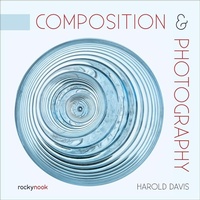
Composition & Photography
Description

Own composition, use composition, and make composition your own in your photographs!
Of all the magical elixirs that make up a successful photograph, composition is perhaps the most fundamental, and at the same time the most elusive. What makes a composition "good"? It's hard to define exactly, but we instinctively recognize good composition when we see it. There is an undeniable emotional response when a composition resonates with and complements the subject matter of an image.
But traditional attempts to define "good composition" and to pass on rules for good compositional construction are often doomed to failure. The truth is, there are no hard and fast rules. Rules eliminate experimentation and spontaneity, which are crucial for creating compelling, dynamic, and exciting compositions. The best compositions contain an element of the unexpected. "Expect the unexpected!" is perhaps the only viable "rule" of composition. To create exciting compositions, you must have a willingness to embrace serendipity and change as part of your artistic practice. After all, composition is a process, not a result.
In Composition & Photography, photographer and bestselling author Harold Davis teaches you how to perceive patterns and abstractions and incorporate them into your image-making process. If one of the goals of photography is to show viewers things that are new, or things they haven't seen before, or things they have seen many times but need to see anew, then it's with the thoughtful and considered use of composition that you do that.
In this book, you'll learn how to reduce your subject matter to the fundamentals, and to show familiar subjects in unfamiliar, novel ways. Harold covers topics and themes such as:
Composition & Photography will help you find the tools and visual vocabulary to creatively design your photographs. Regardless of the genre and kind of photography you practice, you'll learn to create powerful compositions that incorporate structure and form into your work in ways that best support your images. Along the way, Harold shows and discusses his own work relating to each compositional element or theme he's exploring. And featured throughout the book are exercises about flexibility and process, designed to spur your creativity and help you begin an internal creative discussion.
"My goal as a photography teacher and writer about photography is to inspire and to help you become the best and most creative photographer and image-maker that you can be." ¿Harold Davis
"Harold Davis is a force of nature¿a man of astonishing eclectic skills and accomplishments." ¿Rangefinder Magazine
More details
Other editions
Additional editions


Content
- Cover
- Title Page
- Dedication
- Copyright
- Contents
- Expect the Unexpected
- Line
- Circle
- Rectangle & Frame
- Patterns & Repetition
- Spirals & Fractals
- Entering & Exiting
- Vanishing Points & Perspective
- Symmetry & Asymmetry
- Positive & Negative Space
- Abstraction
- The Practice of Composition
- Notes & Resources
- Glossary
- Index
