

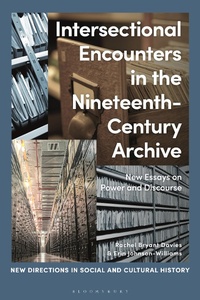
Intersectional Encounters in the Nineteenth-Century Archive
New Essays on Power and Discourse
1st Edition
Published on 11. August 2022
328 pages
978-1-350-20035-7 (ISBN)
Description

Rachel Bryant Davies and Erin Johnson-Williams lead a cast of renowned scholars to initiate an interdisciplinary conversation about the mechanisms of power that have shaped the nineteenth-century archive, to ask: What is a nineteenth-century archive, broadly defined?
This landmark collection of essays will broach critical and topical questions about how the complex discourses of power involved in constructions of the nineteenth-century archive have impacted, and continue to impact, constructions of knowledge across disciplinary boundaries, and beyond academic confines. The essays, written from a range of disciplinary perspectives, grapple with urgent problems of how to deal with potentially sensitive nineteenth-century archival items, both within academic scholarship and in present-day public-facing institutions, which often reflect erotic, colonial and imperial, racist, sexist, violent, or elitist ideologies.
Each contribution grapples with these questions from a range of perspectives: Musicology, Classics, English, History, Visual Culture, and Museums and Archives. The result is far-reaching historical excavation of archival experiences.
This landmark collection of essays will broach critical and topical questions about how the complex discourses of power involved in constructions of the nineteenth-century archive have impacted, and continue to impact, constructions of knowledge across disciplinary boundaries, and beyond academic confines. The essays, written from a range of disciplinary perspectives, grapple with urgent problems of how to deal with potentially sensitive nineteenth-century archival items, both within academic scholarship and in present-day public-facing institutions, which often reflect erotic, colonial and imperial, racist, sexist, violent, or elitist ideologies.
Each contribution grapples with these questions from a range of perspectives: Musicology, Classics, English, History, Visual Culture, and Museums and Archives. The result is far-reaching historical excavation of archival experiences.
More details
Series
Edition
1. Auflage
Language
English
Place of publication
London
United Kingdom
Publishing group
Bloomsbury Publishing PLC
Target group
College/higher education
Illustrations
20 b/w illus
ISBN-13
978-1-350-20035-7 (9781350200357)
Copyright in bibliographic data and cover images is held by Nielsen Book Services Limited or by the publishers or by their respective licensors: all rights reserved.
Schweitzer Classification
Other editions
Additional editions
Rachel Bryant Davies | Rachel Bryant Davies | Erin Johnson-Williams
Intersectional Encounters in the Nineteenth-Century Archive
New Essays on Power and Discourse
Book
03/2024
Bloomsbury Academic
€55.89
Shipment within 15-20 days
Rachel Bryant Davies | Erin Johnson-Williams
Intersectional Encounters in the Nineteenth-Century Archive
New Essays on Power and Discourse
Book
09/2022
Bloomsbury Academic
€133.81
Shipment within 15-20 days
Persons
Rachel Bryant Davies is Lecturer in Comparative Literature at Queen Mary University of London, UK, and is an Early Career Associate with the Archive of Performances of Greek and Roman Drama, University of Oxford, UK. She is the author of Troy, Carthage and the Victorians: The Drama of Classical Ruins in the Nineteenth-Century Imagination (2018).
Erin Johnson-Williams is Assistant Professor at Durham University, UK. She is also a Leverhulme Early Career Fellow.
Erin Johnson-Williams is Assistant Professor at Durham University, UK. She is also a Leverhulme Early Career Fellow.
Content
List of Figures
List of Tables
Acknowledgements
Notes on Contributors
1. Introduction: Intersectional Encounters in the Nineteenth-Century Archive, Rachel Bryant Davies and Erin Johnson-Williams
Part I: Archival Ownership
2. 'Found in Store': Working with Source Communities and Difficult Objects at Durham University's Oriental Museum, Rachel Barclay, Lauren Barnes, Gillian Ramsay, Craig Barclay, and Helen Armstrong
3. Transforming the Archive of Slavery at the Tropenmuseum, Adiva Lawrence
4. Maqdala and the South Kensington Museum: 150 Years Later, Alexandra Watson Jones
Part II: Colonial Power
5. Encountering Colonial Science in the Visual Archive: The natural history paintings of Raja Serfoji II of Tanjore (1777-1832), David Lowther
6. Enclosing Archival Sound: Colonial Singing as Discipline and Resistance, Erin Johnson-Williams
7. The Infantilisation of Indigeneity in Colonial Australia, Roisín Laing
8. 'Some Nameless, Dreadful Wrong': Reading the Silencing of Police Rape in the Indian Colonial Archive, Deana Heath
Part III: Biographical Silences
9. Completing the Mosaic: Sara Baartman and the Archive, Tiziana Morosetti
10. Mercury, Sulphur Baths, and Fine Art: Censorship and the Sexual Health of John and Joséphine Bowes, Founders of The Bowes Museum, Judith Phillips
11. Empowering the Invisible: The Archival Legacy of Christian Cole, Philip Burnett
Part IV: Layered Archives
12. The Power of Invisibility: Nursing Nuns and Archival Gatekeeping, Jemima Short
13. The Instability and Ideology of the Archive: Archival Evidence and Nineteenth-Century British Theatre Audiences, Jim Davis
14. 'Our Mind Strives to Restore the Mutilated Forms': Nineteenth-Century Virtual Museum Tours in Children's Periodicals, Rachel Bryant Davies
Afterword, Intersectional Albertopolis, Tim Barringer
Index
List of Tables
Acknowledgements
Notes on Contributors
1. Introduction: Intersectional Encounters in the Nineteenth-Century Archive, Rachel Bryant Davies and Erin Johnson-Williams
Part I: Archival Ownership
2. 'Found in Store': Working with Source Communities and Difficult Objects at Durham University's Oriental Museum, Rachel Barclay, Lauren Barnes, Gillian Ramsay, Craig Barclay, and Helen Armstrong
3. Transforming the Archive of Slavery at the Tropenmuseum, Adiva Lawrence
4. Maqdala and the South Kensington Museum: 150 Years Later, Alexandra Watson Jones
Part II: Colonial Power
5. Encountering Colonial Science in the Visual Archive: The natural history paintings of Raja Serfoji II of Tanjore (1777-1832), David Lowther
6. Enclosing Archival Sound: Colonial Singing as Discipline and Resistance, Erin Johnson-Williams
7. The Infantilisation of Indigeneity in Colonial Australia, Roisín Laing
8. 'Some Nameless, Dreadful Wrong': Reading the Silencing of Police Rape in the Indian Colonial Archive, Deana Heath
Part III: Biographical Silences
9. Completing the Mosaic: Sara Baartman and the Archive, Tiziana Morosetti
10. Mercury, Sulphur Baths, and Fine Art: Censorship and the Sexual Health of John and Joséphine Bowes, Founders of The Bowes Museum, Judith Phillips
11. Empowering the Invisible: The Archival Legacy of Christian Cole, Philip Burnett
Part IV: Layered Archives
12. The Power of Invisibility: Nursing Nuns and Archival Gatekeeping, Jemima Short
13. The Instability and Ideology of the Archive: Archival Evidence and Nineteenth-Century British Theatre Audiences, Jim Davis
14. 'Our Mind Strives to Restore the Mutilated Forms': Nineteenth-Century Virtual Museum Tours in Children's Periodicals, Rachel Bryant Davies
Afterword, Intersectional Albertopolis, Tim Barringer
Index
