


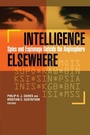
Intelligence Elsewhere
Description

Spying, the "world's second oldest profession," is hardly limited to the traditional great power countries. Intelligence Elsewhere, nevertheless, is the first scholarly volume to deal exclusively with the comparative study of national intelligence outside of the anglosphere and European mainstream. Past studies of intelligence and counterintelligence have tended to focus on countries such as the United States, Great Britain, and Russia, as well as, to a lesser extent, Canada, Australia, France, and Germany. This volume examines the deep historical and cultural origins of intelligence in several countries of critical importance today: India, China, the Arab world, and indeed, Russia, the latter examined from a fresh perspective. The authors then delve into modern intelligence practice in countries with organizations significantly different from the mainstream: Iran, Pakistan, Japan, Finland, Sweden, Indonesia, Argentina, and Ghana.
With contributions by leading intelligence experts for each country, the chapters give the reader important insights into intelligence culture, current practice, and security sector reform. As the world morphs into an increasingly multi-polar system, it is more important than ever to understand the national intelligence systems of rising powers and regional powers that differ significantly from those of the US, its NATO allies, and its traditional opponents. This fascinating book shines new light into intelligence practices in regions that, until now, have eluded our understanding.
More details
Other editions
Additional editions
Persons
Philip H. J. Davies is a senior lecturer and director of Brunel University's Centre for Intelligence and Security Studies in the United Kingdom.
Kristian C. Gustafson is a lecturer and deputy director of Brunel University's Centre for Intelligence and Security Studies.
Content
Part I: Introduction and Theory
1. An Agenda for the Comparative Study of Intelligence: Yet Another Missing Dimension
Philip H. J. Davies and Kristian C. Gustafson
2. Political Culture: Approaches and Prospects
Stephen Welch
Part II: Intelligence Culture outside the Anglosphere
3. Subversive Information: The Historical Thrust of Chinese Intelligence
Ralph D. Sawyer
4. The Original Surveillance State: Kautilya's Arthashastra and Government by Espionage in Classical India
Philip H. J. Davies
5. Protecting the New Rome: Byzantine Influences on Russian Intelligence
Kristian C. Gustafson
6. Origins of an Arab and Islamic Intelligence Culture
Aziz Al-Asmari
Part III: Current Practice and Theory
7. Pakistan's Inter-Services Intelligence
Rob Johnson
8. Iranian Intelligence Organizations
Carl Anthony Wege
9. Intelligence and Security-Sector Reform in Indonesia
Peter Gill and Lee Wilson
10. A Reconstruction of Japanese Intelligence: Issues and Prospects
Ken Kotani
11. The Processes and Mechanisms of Developing a Democratic Intelligence Culture in Ghana
Emmanluel Kwesi Aning, Emma Birikorang, and Ernest Ansah Lartey
12. Intelligence Community Reforms: The Case of Argentina
Eduardo E. Estévez
13. Sweden: Intelligence the Middle Way
Wilhelm Agrell
14. Intelligence Culture, Economic Espionage, and the Finnish Security Intelligence Service
Lauri Holmström
Part IV: Conclusion
15. Legacies, Identities, Improvisation, and Innovations of Intelligence
Philip H. J. Davies and Kristian C. Gustafson
Contributors
Index
