Marswalk One
Description

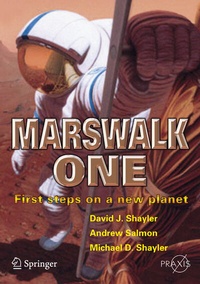
MARSWALK ONE: First Steps on a New Planet addresses the question of why we should embark on a journey to Mars, documenting what the first human crew will do when they place their feet in the red dust of the planet. The book also addresses why we need to carry out these tasks and, more importantly, what a human crew could achieve that an automated mission could not. Understanding the clear benefits of sending a human crew to the surface of Mars, and how these benefits can be seen back on Earth, is the key to sustained long-term public and political support for the programme in terms of cash and commitment.
The book accepts that the journey will be made, but does not specify precisely when. Flight time, and how to get to and from the planet are discussed briefly, to understand why the suggested duration spent at Mars is reasonable.
The main objective of the work is to look at what science will be done on the surface - supported by orbital operations - and what hardware and technology will be employed to achieve the mission objectives. This analysis is drawn from previous experiences in manned and unmanned space programmes, including Apollo, Skylab, Salyut/Mir, Shuttle and ISS, Viking, Luna/Lunokhod, and recent Mars missions such as Pathfinder and Global Surveyor.
In addition, new interviews with key personalities involved in planning Martian exploration, and discussions about current thoughts on what we need to accomplish on Mars when we get there, will provide a lively and thought provoking account that could generate fresh debate.
When the decision is finally made to go to Mars, it will be made in the knowledge that most of the world knows why we are going and what benefits mankind will see for the effort. The authors' primary objective is to begin this understanding.
Reviews / Votes
From the reviews:
"This book aims to answer questions about what the first manned missions to Mars will do, both on the surface and from orbit, and what they can achieve that unmanned missions cannot. . It is illustrated . with black-and-white photos and has a brief chronology as an appendix and a four-page index. . there is a need for books like this. They provide food for thought and should be studied by future Mars exploration planners . ." (Mark Williamson, www.satellite-evolution.com, May/June, 2007)
More details
Other editions
Additional editions