

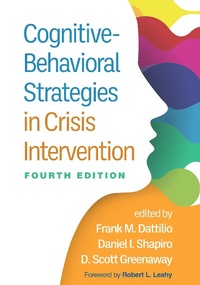
Cognitive-Behavioral Strategies in Crisis Intervention
4th Edition
Published on 18. July 2023
398 pages
978-1-4625-5375-4 (ISBN)
Description

Practitioners, students, and instructors in clinical psychology, social work, psychiatry, nursing, and counseling. Serves as a text in graduate-level courses on CBT and/or crisis intervention.
More details
Other editions
Additional editions
Frank M. Dattilio | Daniel I. Shapiro | D. Scott Greenaway
Cognitive-Behavioral Strategies in Crisis Intervention, Fourth Edition
Book
10/2023
4th Edition
Guilford Press
€69.50
Shipment within 15-20 days
Persons
Frank M. Dattilio, PhD, ABPP, is Clinical Associate Professor of Psychiatry at the University of Pennsylvania Perelman School of Medicine, where he has served on the teaching faculty since 1989. He was a part-time instructor in psychiatry at Harvard Medical School for 14 years, and is now a part-time teaching associate. Dr. Dattilio is a practicing clinical and forensic psychologist and is board certified by the American Board of Professional Psychology. He is also a founding Fellow of the Academy of Cognitive Therapy. Dr. Dattilio has presented extensively throughout the world on treatment of a wide range of disorders using cognitive-behavioral therapy. His more than 300 publications have been translated into 30 languages. Dr. Dattilio has received numerous awards for outstanding achievement in the fields of psychology, psychotherapy, and marital and family therapy.
Daniel I. Shapiro, PhD, is Assistant Professor in the Department of Psychiatry and Behavioral Sciences at the University of California, Davis, and Director of Operations for the UC Davis Early Psychosis Programs. Dr. Shapiro is an expert in cognitive-behavioral therapy (CBT) and in the identification and treatment of early stages of serious mental illness. He has been involved in directing the implementation of evidence-based treatment programs in academic and community mental health settings. Dr. Shapiro is passionate about improving access to evidence-based care for serious mental illness globally, and training the next generation of clinicians and educators locally. He is particularly interested in how such factors as culture, stress, neurocognition, and beliefs about mental illness and wellness affect pathways to and decisions about treatment. He has published numerous peer-reviewed articles and book chapters.
D. Scott Greenaway, PhD, ABPP, is a clinical psychologist in private practice at Marsh Landing Behavioral Group in Jacksonville Beach, Florida. Since entering private practice in 2005, he has specialized in cognitive-behavioral therapy (CBT) with children and adults struggling with depression, anxiety, oppositional behaviors, and attention-deficit/hyperactivity disorder. In addition to his clinical practice, Dr. Greenaway co-directs the CBT Training Certification Program at the Atlanta Center for Cognitive Therapy. His writings have been published in books and magazines, and he hosts a YouTube channel entitled PsychologyWorks. Dr. Greenaway is board certified in behavioral and cognitive therapy by the American Board of Professional Psychology.
Daniel I. Shapiro, PhD, is Assistant Professor in the Department of Psychiatry and Behavioral Sciences at the University of California, Davis, and Director of Operations for the UC Davis Early Psychosis Programs. Dr. Shapiro is an expert in cognitive-behavioral therapy (CBT) and in the identification and treatment of early stages of serious mental illness. He has been involved in directing the implementation of evidence-based treatment programs in academic and community mental health settings. Dr. Shapiro is passionate about improving access to evidence-based care for serious mental illness globally, and training the next generation of clinicians and educators locally. He is particularly interested in how such factors as culture, stress, neurocognition, and beliefs about mental illness and wellness affect pathways to and decisions about treatment. He has published numerous peer-reviewed articles and book chapters.
D. Scott Greenaway, PhD, ABPP, is a clinical psychologist in private practice at Marsh Landing Behavioral Group in Jacksonville Beach, Florida. Since entering private practice in 2005, he has specialized in cognitive-behavioral therapy (CBT) with children and adults struggling with depression, anxiety, oppositional behaviors, and attention-deficit/hyperactivity disorder. In addition to his clinical practice, Dr. Greenaway co-directs the CBT Training Certification Program at the Atlanta Center for Cognitive Therapy. His writings have been published in books and magazines, and he hosts a YouTube channel entitled PsychologyWorks. Dr. Greenaway is board certified in behavioral and cognitive therapy by the American Board of Professional Psychology.
Content
Foreword, Robert L. Leahy
I. Introduction
1. Crisis Intervention: An Overview, Frank M. Dattilio, Daniel I. Shapiro, & D. Scott Greenaway
2. Ethical and Legal Issues in Crisis Intervention, Jeffery E. Barnett
II. Psychological Crises
3. Effectively Managing Suicidal Crises, David A. Jobes, Ethan W. Graure, & John Paul Ryan
4. Cognitive-Behavioral Therapy for Anxiety-Related Crises, D. Scott Greenaway
5. Working with Psychosis in Inpatient Settings, Katherine Eisen, Sripriya Chari, & Kate Hardy
6. Suicide Prevention with Borderline Personality Disorder, Daniella C. Cavenagh & Dara G. Friedman-Wheeler
III. Medically Related Crises
7. Dementia-Related Crises, Susmita Halder, Akash Kumar Mahato, & D. Scott Greenaway
8. Crises in Substance Misuse and Dependence, Sharon M. Freeman Clevenger, James W. Sturges, & Misti Storie
9. Crises Related to Acute and Chronic Pain, Hillary L. Ditmars, Jenna Sandler Eilenberg, & John D. Otis
10. Crises in Integrated Health Settings and Life-Threatening Illnesses, Joseph R. Pellizzari, Tyler G. Tulloch, & Randi E. McCabe
IV. Child and Family Crises
11. Child Sexual and Physical Abuse, Justin R. Misurell, Jaclyn M. Zocca, & Lindsay Anderson
12. Couples in Crisis, Norman B. Epstein, Stephen E. Schlesinger, & HaeDong Kim
13. Families in Crisis, Frank M. Dattilio & Allison Schoenly
14. Child and Adolescent Disorders, Stephen Timchack
15. Crises with Older Adults, Allison Schoenly & Robert J. Berchick
V. Environmental and Situational Crises
16. Disaster Trauma, Lata K. McGinn, Lauren Bonavitacola, & William Buerger
17. The Involuntary Hospitalization Process, Daniel I. Shapiro & Stephania L. Hayes
18. Terrorism, Patricia J. Watson, Daphna Canetti, & Stevan E. Hobfoll
19. Major Threats of Violence: Evaluation and Management, John S. Rozel, Patrick McCormick, & Jaqulyn Stilson
20. Intervention for Police Following Deadly Force Encounters, Laurence Miller
VI. Concluding Topics
21. The Self-Care of Mental Health Crisis Professionals, Frank M. Dattilio
22. Afterword, Frank M. Dattilio, Daniel I. Shapiro, & D. Scott Greenaway
Index
I. Introduction
1. Crisis Intervention: An Overview, Frank M. Dattilio, Daniel I. Shapiro, & D. Scott Greenaway
2. Ethical and Legal Issues in Crisis Intervention, Jeffery E. Barnett
II. Psychological Crises
3. Effectively Managing Suicidal Crises, David A. Jobes, Ethan W. Graure, & John Paul Ryan
4. Cognitive-Behavioral Therapy for Anxiety-Related Crises, D. Scott Greenaway
5. Working with Psychosis in Inpatient Settings, Katherine Eisen, Sripriya Chari, & Kate Hardy
6. Suicide Prevention with Borderline Personality Disorder, Daniella C. Cavenagh & Dara G. Friedman-Wheeler
III. Medically Related Crises
7. Dementia-Related Crises, Susmita Halder, Akash Kumar Mahato, & D. Scott Greenaway
8. Crises in Substance Misuse and Dependence, Sharon M. Freeman Clevenger, James W. Sturges, & Misti Storie
9. Crises Related to Acute and Chronic Pain, Hillary L. Ditmars, Jenna Sandler Eilenberg, & John D. Otis
10. Crises in Integrated Health Settings and Life-Threatening Illnesses, Joseph R. Pellizzari, Tyler G. Tulloch, & Randi E. McCabe
IV. Child and Family Crises
11. Child Sexual and Physical Abuse, Justin R. Misurell, Jaclyn M. Zocca, & Lindsay Anderson
12. Couples in Crisis, Norman B. Epstein, Stephen E. Schlesinger, & HaeDong Kim
13. Families in Crisis, Frank M. Dattilio & Allison Schoenly
14. Child and Adolescent Disorders, Stephen Timchack
15. Crises with Older Adults, Allison Schoenly & Robert J. Berchick
V. Environmental and Situational Crises
16. Disaster Trauma, Lata K. McGinn, Lauren Bonavitacola, & William Buerger
17. The Involuntary Hospitalization Process, Daniel I. Shapiro & Stephania L. Hayes
18. Terrorism, Patricia J. Watson, Daphna Canetti, & Stevan E. Hobfoll
19. Major Threats of Violence: Evaluation and Management, John S. Rozel, Patrick McCormick, & Jaqulyn Stilson
20. Intervention for Police Following Deadly Force Encounters, Laurence Miller
VI. Concluding Topics
21. The Self-Care of Mental Health Crisis Professionals, Frank M. Dattilio
22. Afterword, Frank M. Dattilio, Daniel I. Shapiro, & D. Scott Greenaway
Index
