

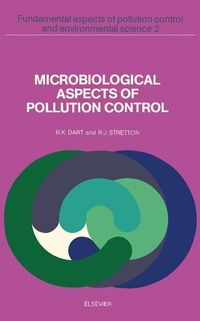
Microbiological Aspects of Pollution Control
Fundamental Aspects of Pollution Control and Environmental Science
1st Edition
Published on 24. June 2016
224 pages
978-1-4831-6518-9 (ISBN)
Description

Microbiological Aspects of Pollution Control
More details
Other editions
New editions
E-Book
12/2012
2nd Edition
Elsevier
€54.95
Available for download
Additional editions

R.K. Dart | R.J. Stretton | R.J. Wakeman
Microbiological Aspects of Pollution Control
Fundamental Aspects of Pollution Control and Environmental Science
Book
Elsevier
€54.46
The article will not be published
Content
- Front Cover
- Microbiological Aspects of Pollution Control
- Copyright Page
- Table of Contents
- INTRODUCTION
- ACKNOWLEDGEMENTS
- CHAPTER 1. MICROBIAL PRODUCTION OF POLLUTANTS
- Metabolism of Metals
- Metabolism of Nitrogen Compounds
- Metabolism of Sulphur Compounds
- Production of Simple Carbon Compounds
- Production of Mycotoxins
- Production of Bacterial Toxins
- REFERENCES
- CHAPTER 2. AIR POLLUTION AND MICRO-ORGANISMS
- Effect of Air Pollutants on Micro-organisms
- Micro-organisms as Air Pollutants
- Aerosols from Wastewater Treatment Processes
- REFERENCES
- CHAPTER 3. HEALTH HAZARDS ARISING FROM WATER-BORNE PATHOGENS
- Bacteria
- Viruses
- Protozoa
- Parasitic Worms
- REFERENCES
- CHAPTER 4. WATER TESTING
- Water Sampling
- Bacteriological Sampling
- Frequency of Sampling Water Supplies for Bacteriological Examination
- Bacteriological Testing of Water
- Plate Count
- Examination for Coli-aerogenes Group of Organisms
- The Presumptive Test for the Coli-aerogenes Group
- The Differential Coli-aerogenes Test
- Tests for Faecal Streptococc1
- Membrane Filtration Technique for the Examination of Water and Sewage
- Pathogenic Organisms in Water
- Non-pathogenic Nuisance Organisms in Water
- Bacteriological Standards
- Bacteriological Control of Swimming Baths
- Rapid Techniques for the Detection of Bacteria
- Viruses
- Other Indicators of Pollution
- Oxygen Demand Tests
- Biological (Biochemical) Oxygen Demand (BOD)
- Methylene-blue Stability Test
- Chemical Oxygen Demand Test (COD)
- Permanganate Value
- Microbiological Examination of Pharmaceutical Products
- REFERENCES
- CHAPTER 5. SEWAGE TREATMENT
- Activated Sludge Process
- Oxidation Ditch
- Biological Filtration (Trickling Filter)
- Rotary-disc Biological Contactors
- Oxidation Ponds
- Land Treatment
- Sludge Treatment
- Disposal of Sewage from Coastal Towns
- Septic Tanks and Cesspools
- Polishing of Effluents from Sewage Works
- Productive Use of Organic Waste
- REFERENCES
- CHAPTER 6. DISINFECTION AND RECYCLING OF WATER
- Disinfection of Water
- Recycling of Water
- REFERENCES
- CHAPTER 7. EUTROPHICATION
- REFERENCES
- CHAPTER 8. THERMAL POLLUTION
- REFERENCES
- CHAPTER 9. THE SULPHUR CYCLE AND WASTE RECOVERY
- Sulphur Cycle
- Sulphate-reducing Bacteria
- Sulphur Oxidizing Bacteria
- Chlorobium phaeovibrioides.
- Acid Mine Drainage
- Microbial Mining
- Use of Power Station Ash
- REFERENCES
- CHAPTER 10. OIL POLLUTION
- REFERENCES
- CHAPTER 11. BIODEGRADATION
- Aromatic Degradation
- Heterocyclic and Alioyclie Degradation
- Synthetic Detergents
- Pesticides
- REFERENCES
