

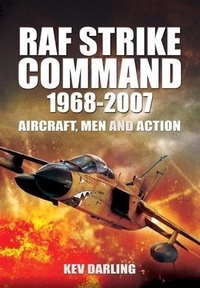
RAF Strike Command 1968 -2007
Aircraft, Men and Action
Published on 19. December 2012
256 pages
978-1-78337-854-8 (ISBN)
Description

Aviation author Kev Darling looks at the origins of the World War Two Royal Air Force commands and histories in
RAF Strike Command.
In 1968, the RAF Commands that had become famous in World War Two-Fighter, Bomber, Coastal, Air Support and Signals Commands-were combined into the single Strike Command, an amalgamation that served throughout the remaining years of the Cold War, in the Falklands, and in the Middle East in Operations Desert Shield, Desert Storm and Granby.
This organizational change caused re-equipment, base changes and increasing economic constraints. The Royal Navy was now responsible for the UK's nuclear deterrent in the form of their Polaris submarines, so the RAF's V-Bomber Force were now relegated to tanker operations, with the exception of the lone Vulcan that was sent to the Falklands conflict. The Command's fleet of fast jets became more adaptable, with single types assuming the roles of fighter, bomber, reconnaissance, and maritime attack. The aircraft also became multinational in their design and manufacture as Britain's postwar lead in aircraft design had been frittered away by years of thoughtless government, leading to a single company for production. Apart from the brilliant Harrier which the US continues to develop and build, other aircraft flown by the Command were from European syndicates, such as the Tornado and Jaguar. The US supplied the transports in the form of the faithful Hercules, and Europe most of the helicopter fleet.
Exploring the operations that took place during this military wing's existence, the aircraft they flew and the men who flew them, RAF Strike Command is a tribute to the fast-dwindling power of the Royal Air Force.
In 1968, the RAF Commands that had become famous in World War Two-Fighter, Bomber, Coastal, Air Support and Signals Commands-were combined into the single Strike Command, an amalgamation that served throughout the remaining years of the Cold War, in the Falklands, and in the Middle East in Operations Desert Shield, Desert Storm and Granby.
This organizational change caused re-equipment, base changes and increasing economic constraints. The Royal Navy was now responsible for the UK's nuclear deterrent in the form of their Polaris submarines, so the RAF's V-Bomber Force were now relegated to tanker operations, with the exception of the lone Vulcan that was sent to the Falklands conflict. The Command's fleet of fast jets became more adaptable, with single types assuming the roles of fighter, bomber, reconnaissance, and maritime attack. The aircraft also became multinational in their design and manufacture as Britain's postwar lead in aircraft design had been frittered away by years of thoughtless government, leading to a single company for production. Apart from the brilliant Harrier which the US continues to develop and build, other aircraft flown by the Command were from European syndicates, such as the Tornado and Jaguar. The US supplied the transports in the form of the faithful Hercules, and Europe most of the helicopter fleet.
Exploring the operations that took place during this military wing's existence, the aircraft they flew and the men who flew them, RAF Strike Command is a tribute to the fast-dwindling power of the Royal Air Force.
More details
Other editions
Additional editions
Book
12/2012
Pen & Sword Aviation
€51.00
Shipment within 10-20 days
Person
Kev Darling has written many aviation books such as P-51 Mustang, Warbirdtech 28: English Electric Lightning and Merlin-powered Spitfires. He is one of Britain's most highly respected aviation authors.
Content
- Front Cover
- Title Page
- Copyright Page
- Contents
- Introduction
- Chapter 1 Fighter Command - the Final Decade
- Chapter 2 Bomber Command - the Last Ten Years
- Chapter 3 Coastal and Transport Commands
- Chapter 4 Strike Command is Born
- Chapter 5 Integrations and Further Changes
- Chapter 6 The RAF at War in the South Atlantic
- Chapter 7 Operation Corporate - They Also Served
- Chapter 8 Farewell to the Old - Hello to the New
- Chapter 9 War in the Desert - Operation Granby/Desert Storm
- Chapter 10 Onward to the Future and the End
- Appendix I Comparative Strengths
- Appendix II Aircraft and Operating Squadrons
- Bibliography
