

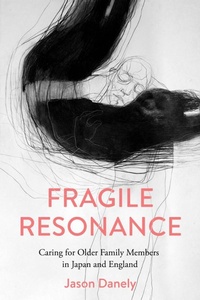
Fragile Resonance
Description

Fragile Resonance describes the paths carers take as they make meaning of their experiences and find a sense of moral purpose to sustain them and guide their decisions. When a parent or partner becomes frail or disabled, often a family member assumes responsibility for their care. But family care is a physically and emotionally exhausting undertaking. Carers experience moments of profound connection as well as pain and grief. Carers ask themselves questions about the meaning of family, their entitlement to support, and their capacity to understand and sympathize with another person's pain.
Based on his research gathering stories of family carers in Japan and England, Jason Danely traces how care transforms individual sensibilities and the roles of cultural narratives and imagination in shaping these transformations, which persist even after the care recipient has died. Throughout Fragile Resonance, Danely examines the implications of unpaid carer's experiences for challenging and enhancing social policies and institutions, highlighting innovative alternatives grounded in the practical ethics of care.
More details
Other editions
Additional editions
Person
Jason Danely is Reader in Anthropology and Chair of the Healthy Ageing and Care Research Innovation and Knowledge Exchange Network at Oxford Brookes University. He is the author or coeditor of Aging and Loss, Vulnerability and the Politics of Care, and Transitions and Transformations. You can find him online at jasondanely.com and on X @JasonDanely.
Content
Introduction
1. Cultural Ecologies of Care
2. Becoming a Carer
3. Fatigue and Endurance
4. Dangerous Compassion
5. Counter-worlds of Care
6. Living On
7. The Politics of Care
Conclusion
