

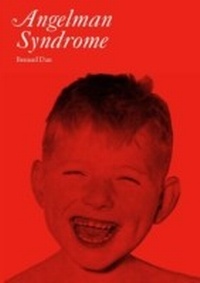
Angelman Syndrome
1st Edition
Published on 31. May 2008
192 pages
978-1-898683-83-4 (ISBN)
Description

This book provides a comprehensive review of clinical and genetic issues, natural history, possible pathophysiological pathways, specific clinical problems (motor impairment, behaviour, learning difficulties, communication, sleep, epilepsy), clinical neurophysiology, neuropathology, rehabilitation and basic research in the field of Angelman syndrome. This condition is a neurogenetic disorder characterised by developmental delay, absence of speech, motor impairment, epilepsy and a peculiar behavioural phenotype. It is caused by the lack of expression of the UBE3A gene associated with various abnormalities of chromosome 15q11-13. Angelman syndrome appears to be distributed equally worldwide. Precise diagnosis carries clinical and genetic counselling implications. However, many clinicians still seem unfamiliar with this condition despite the severity and typical aspects of presentation. Beyond individual situations, Angelman syndrome can serve as a disease model opening broad questioning of genetic and epigenetic influences in neurology, as well as of several concepts such as psychomotor development, cerebral palsy, behavioural phenotypes and epileptic syndromes. Recent advances in molecular biology and animal models of the syndrome have provided new data which can improve our understanding of Angelman syndrome and open the way to more specific management.
More details
Other editions
Additional editions
Content
- Intro
- CONTENTS
- AUTHORS' APPOINTMENTS
- FOREWORD
- 1 DR ANGELMAN'S SYNDROME Bernard Dan
- Original report of Angelman syndrome
- Dr Harry Angelman (Fig. 1.2)
- From puppet children to Angelman syndrome
- Illustrations and derivations
- From patient descriptions to diagnostic criteria
- Angelman syndrome as a model
- Conclusion
- 2 NATURAL HISTORY Karine Pelc and Bernard Dan
- Antenatal and perinatal period
- Neonatal period
- Infancy
- Childhood
- Adolescence
- Adulthood
- Conclusion
- 3 A PERSONAL ACCOUNT Patrick Haverbeke
- How an angel changed our life
- Early problems with integration
- Options for Henri's education
- The road to diagnosis
- Tools for communication
- The difficult choice: putting Henri in a residential institution
- Reorganising our family life
- Time is passing: Henri becomes an adult
- Henri, ambassador across the world
- 4 MEDICAL GENETICS Bernard Dan
- Chromosome 15q11-q13 deletion
- Uniparental disomy
- UBE3A mutation
- Imprinting defect
- Chromosomal aberration
- Other identified genetic abnormalities
- Genetic testing
- Genetic counselling
- Prenatal diagnosis
- Risks associated with in vitro fertilisation
- Conclusion
- 5 MOLECULAR BIOLOGY Bernard Dan
- Genomic imprinting
- UBE3A gene expression
- Ubiquitination
- An integrative hypothesis
- Possible targets for management
- Conclusion
- Genomic imprinting
- UBE3A gene expression
- Ubiquitination
- An integrative hypothesis
- Possible targets for management
- Conclusion
- 6 DIFFERENTIAL DIAGNOSIS Bernard Dan
- Cerebral palsy
- Autistic spectrum
- Lennox-Gastaut syndrome
- Rett syndrome
- Untreated phenylketonuria
- Methylenetetrahydrofolate reductase deficiency
- ATR-X syndrome
- Gurrieri syndrome
- Mowat-Wilson syndrome
- Chromosomal abnormalities
- Mosaic imprinting defects of 15q11-q13
- Prader-Willi syndrome
- Inverted duplication of chromosome 15
- Conclusion
- 7 BEHAVIOUR Bernard Dan
- Happy disposition
- Hyperactivity and impulsivity
- Stereotypic behaviours
- Autistic features
- Social interaction
- Behavioural adaptability
- Interest profile
- Oral behaviours
- Conclusion
- 8 PERCEPTION AND COGNITION Bernard Dan
- Visual perception
- Auditory and language perception
- Somatosensory perception
- Pain
- Other perceptual modalities
- Attention
- 'Mental age'
- Memory
- Emotion
- Conclusion
- 9 COMMUNICATION Bernard Dan
- General context of communication
- Receptive verbal language
- Expressive verbal language
- Expressive non-verbal language
- Conclusion
- 10 MOVEMENT AND POSTURAL CONTROL Bernard Dan and Guy Cheron
- Alternative vs immature motor development
- Early motor development
- Later motor development
- Motor signs
- Balance
- Oromotor function
- Hand function
- Walking
- Other movements
- Tremor vs myoclonus
- Pathophysiology
- Physical management
- Pharmacological management
- Conclusion
- 11 EPILEPSY Bernard Dan and Stewart G. Boyd
- Natural history of the seizure disorder
- Seizure types
- Epileptic syndrome
- Convulsive status epilepticus
- Non-convulsive status epilepticus
- Management
- Conclusion
- 12 SLEEP Bernard Dan and Stewart G. Boyd
- Sleep architecture
- Difficulties in initiating sleep
- Multiple nocturnal awakenings
- Parasomnias
- Pathophysiology
- General considerations on management
- Behavioural management
- Use of melatonin
- Use of other drugs
- Other approaches
- Conclusion
- 13 CLINICAL NEUROPHYSIOLOGY Bernard Dan, Stewart G. Boyd and Guy Cheron
- Physiological activities
- Distinctive rhythmic patterns
- Epileptic discharges
- Differential diagnosis of electroencephalographic features
- Pathophysiology of electroencephalographic features
- Other rhythmic activities
- Conclusion
- 14 NEUROIMAGING AND NEUROPATHOLOGY Bernard Dan
- Structural imaging
- Functional imaging
- Neuropathology
- Conclusion
- 15 ANIMAL MODELS Bernard Dan
- Model of maternal deletion
- Model of uniparental disomy
- Models of imprinting defect
- Models of UBE3A mutation
- Other models
- Conclusion
- 16 PERSPECTIVES Bernard Dan
- Current trends
- Molecular biology and genetics
- Patient surveys
- Psychological issues
- Neurological issues
- Animal models
- Conclusion
- 17 RESOURCES
- REFERENCES
- INDEX
