


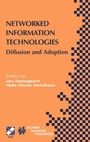
Networked Information Technologies
Diffusion and Adoption
1st Edition
Published on 11. April 2006
XII, 220 pages
978-1-4020-7862-0 (ISBN)
Description

Software systems that used to be relatively autonomous entities such as e.g. accounting systems, order-entry systems etc. are now interlinked in large networks comprising extensive information infrastructures. What earlier used to be stand-alone proprietary systems are now for the most part replaced by more or less standardized interdependent systems that form large networks of production and use. Organizations have to make decisions about what office suite to purchase? The easiest option is to continuously upgrade the existing office suite to the latest version, but the battle between WordPerfect and Microsoft Word demonstrated that the choice is not obvious. What instant messenger network to join for global communication? Preferably the one most colleagues and friends use; AOL Instant Messenger, Microsoft Messenger, and ICQ represent three satisfactory, but disjunctive alternatives. Similarly organizations abandon their portfolio of homegrown IT systems and replace them with a single Enterprise Resource Planning (ERP) system. Several ERP alternatives exist on the market, but which is the right one for you? The argumentation and rationale behind these considerations are obviously related to the technological and social networks we are embedded in, but it is not always easy to specify how.
Networked Information Technologies: Diffusion and Adoption offers contributions from academics and practitioners who study networked information systems from a diffusion and adoption point of view. Themes related to the conceptualisation of diffusion and adoption of networked information systems are discussed along with studies of the diffusion of networked information systems in public sector institutions and private businesses.
This volume contains the edited proceedings of the IFIP Conference on The Diffusion and Adoption of Networked Information Technologies, which was sponsored by the International Federation for Information Processing (IFIP) WorkingGroup 8.6 and held in Copenhagen, Denmark in October 2003.
Networked Information Technologies: Diffusion and Adoption offers contributions from academics and practitioners who study networked information systems from a diffusion and adoption point of view. Themes related to the conceptualisation of diffusion and adoption of networked information systems are discussed along with studies of the diffusion of networked information systems in public sector institutions and private businesses.
This volume contains the edited proceedings of the IFIP Conference on The Diffusion and Adoption of Networked Information Technologies, which was sponsored by the International Federation for Information Processing (IFIP) WorkingGroup 8.6 and held in Copenhagen, Denmark in October 2003.
More details
Other editions
Additional editions
Book
03/2004
Springer
€106.50
Shipment within 15-20 days
Content
The Socio-Political Construction of CareSys.- Information and Communication Technologies Diffusion in Industrial Districts.- Where is the Innovation?.- Co-Ordination of E-Government.- Translations in Network Configurations.- MIS and the Dynamics of Legitimacy in Health Care.- Role Model for the Organisational IT Diffusion Process.- Should Buyers Try to Shape IT-Markets Through Non-Market (Collective) Action?.- Exploring Application Service Provision.- A Framework for the Investigation of the Institutional Layer of IT Diffusion.- Taking Organizational Implementation Seriously: The Case of IOS Implementation.- Ten Years on: Reflections on the Past and Future of 8.6.- Networked Technologies - The Role of Networks in the Diffusion and Adoption of Software Process Improvement (SPI) Approaches.- Open Source Software: Placebo or Panacea?.- The Diffusion and Adoption of Mobile Computing.
Chapter 5 Translations in Network Configurations (p.90-91)
7. DISCUSSION AND CONCLUDING REMARKS
Our research contributes to the literature on ICT implementation in organizational contexts. Previous research has pointed out that it is difficult to transfer technology from one context and culture to another and that there is a need for small steps and translations in such processes (Akrich, 1992). Our case study shows that this also applies to contexts that are not far apart, i.e. within the same hospital.
The case confirms the necessity for the involved actors to exercise a great amount of care to incorporate the new system into their daily work life, as argued by Ciborra (1996). However, our study points to difficulties involved in making this happen due to differences amongst stakeholder. The care expressed by the physicians, the nurses and the secretaries to incorporate the new system into their daily life appeared as a series of negotiations as the new system met work practices. Similarly, there were negotiations and translations going on between the different management levels of the hospital, the project, and the orthopaedic clinic. The sense making perspective (Henfridsson, 1999) also applies to this case, but the way in which different actors made sense of the new system varied depending on their interests, the negotiations with other stakeholders, as well as the underlying formative context of the implementation process (Ciborra & Lanzara, 1994). The case shows how routines are shaped and reshaped as the involved actors develop specific meanings of the emerging network configuration.
The considered literature (Ciborra, 1996; Henfridsson, 1999; Ciborra & Lanzara, 1994; Rogers, 1995; Orlikowski, 1996) points out the complexity and dynamics of network implementation processes. It emphasizes in particular the need for actors to be actively engaged in the transformation of current work practices. Our study confirms this with a particular emphasis on the intricacy of reactions and interactions between different stakeholders during system implementation.
The analysis of the case shows how the processes of configuring and reconfiguring a socio-technical network can be studied and understood well by focusing on the negotiations and translations between different key actors and stakeholders. This issue needs to be further elaborated in future research to provide a deeper understanding of the challenges involved in the implementation of network technologies.
Our research also contributes to improving the use of ICT within healthcare. Healthcare plays an increasingly important role in contemporary society. The gab between espoused beliefs in the benefits of using ICT and the difficulties faced in many particular situations suggests, however, that we need to know more about information and change management in this particular context. Our study suggests that managers in hospitals need to pay particular attention to the complex relationships between stakeholders when networked technologies are introduced.
Healthcare managers are advised to proactively design implementation initiatives that allow for the necessary negotiations and translations to take place. Future studies could involve action research and experiments to explore more specifically how the notions of negotiation and translation could support tactics and strategies for successful implementation of ICT based networks within healthcare.
7. DISCUSSION AND CONCLUDING REMARKS
Our research contributes to the literature on ICT implementation in organizational contexts. Previous research has pointed out that it is difficult to transfer technology from one context and culture to another and that there is a need for small steps and translations in such processes (Akrich, 1992). Our case study shows that this also applies to contexts that are not far apart, i.e. within the same hospital.
The case confirms the necessity for the involved actors to exercise a great amount of care to incorporate the new system into their daily work life, as argued by Ciborra (1996). However, our study points to difficulties involved in making this happen due to differences amongst stakeholder. The care expressed by the physicians, the nurses and the secretaries to incorporate the new system into their daily life appeared as a series of negotiations as the new system met work practices. Similarly, there were negotiations and translations going on between the different management levels of the hospital, the project, and the orthopaedic clinic. The sense making perspective (Henfridsson, 1999) also applies to this case, but the way in which different actors made sense of the new system varied depending on their interests, the negotiations with other stakeholders, as well as the underlying formative context of the implementation process (Ciborra & Lanzara, 1994). The case shows how routines are shaped and reshaped as the involved actors develop specific meanings of the emerging network configuration.
The considered literature (Ciborra, 1996; Henfridsson, 1999; Ciborra & Lanzara, 1994; Rogers, 1995; Orlikowski, 1996) points out the complexity and dynamics of network implementation processes. It emphasizes in particular the need for actors to be actively engaged in the transformation of current work practices. Our study confirms this with a particular emphasis on the intricacy of reactions and interactions between different stakeholders during system implementation.
The analysis of the case shows how the processes of configuring and reconfiguring a socio-technical network can be studied and understood well by focusing on the negotiations and translations between different key actors and stakeholders. This issue needs to be further elaborated in future research to provide a deeper understanding of the challenges involved in the implementation of network technologies.
Our research also contributes to improving the use of ICT within healthcare. Healthcare plays an increasingly important role in contemporary society. The gab between espoused beliefs in the benefits of using ICT and the difficulties faced in many particular situations suggests, however, that we need to know more about information and change management in this particular context. Our study suggests that managers in hospitals need to pay particular attention to the complex relationships between stakeholders when networked technologies are introduced.
Healthcare managers are advised to proactively design implementation initiatives that allow for the necessary negotiations and translations to take place. Future studies could involve action research and experiments to explore more specifically how the notions of negotiation and translation could support tactics and strategies for successful implementation of ICT based networks within healthcare.
