
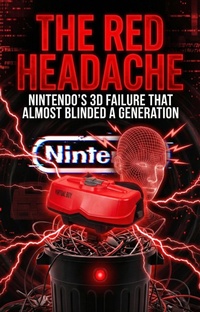
Red Headache
Nintendo's 3D Failure That Almost Blinded a Generation
Chris Dalton(Author)
epubli (Publisher)
1st Edition
Published on 18. February 2026
169 pages
978-3-565-25721-8 (ISBN)
System requirements
for ePUB without DRM
E-Book Single Licence
You are acquiring a single user licence for this eBook, which you might not transfer. [L]
Available for download
Description
Alles über E-Books | Antworten auf Fragen rund um E-Books, Kopierschutz und Dateiformate finden Sie in unserem Info- & Hilfebereich.
In 1995, Nintendo could do no wrong. They dominated the market with the Game Boy and SNES. Then, they released the Virtual Boy. It was a bulky, tripod-mounted headset that displayed games in only two colors: black and stinging red. It caused nausea, neck pain, and headaches within minutes. It was discontinued in less than a year.
"The Red Headache" is the story of Gunpei Yokoi, the legendary inventor of the Game Boy, and his tragic fall from grace. It details the rushed development of the Virtual Boy, driven by a fear of missing out on the "VR craze" of the 90s. The book explains the fatal design flaws: the decision to use cheap red LEDs to save battery life and the warning labels that terrified parents into thinking the device would permanently blind their children.
This is a business cautionary tale about what happens when marketing hype overrides engineering reality. It shows how the failure of the Virtual Boy humbled Nintendo, leading to the departure of its greatest visionary and a strategic pivot that eventually birthed the modern era of gaming.
More details
Edition
1. Auflage
Language
English
File size
0,72 MB
ISBN-13
978-3-565-25721-8 (9783565257218)
Schweitzer Classification
Person
Author
System requirements
File format: ePUB
Copy protection: without DRM (Digital Rights Management)
System requirements:
- Computer (Windows; MacOS X; Linux): Use a reader that can handle the file format ePUB, such as Adobe Digital Editions or FBReader – both free (see eBook Help).
- Tablet/Smartphone (Android; iOS): Install the free app Adobe Digital Editions or the app PocketBook (see eBook Help).
- E-reader: Bookeen, Kobo, Pocketbook, Sony, Tolino and many more (not Kindle).
The file format ePUB works well for novels and non-fiction books – i.e., 'flowing' text without complex layout. On an e-reader or smartphone, line and page breaks automatically adjust to fit the small displays.
This eBook does not use copy protection or Digital Rights Management
For more information, see our eBook Help page.
