

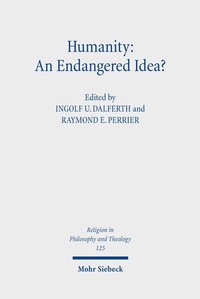
Humanity: An Endangered Idea?
Claremont Studies in the Philosophy of Religion, Conference 2019
1st Edition
Published on 10. March 2023
387 pages
978-3-16-162000-3 (ISBN)
Description

Was macht den Menschen zum Menschen? Was bedeutet es für den Menschen, ein menschliches Leben zu führen? Was ist die
Humanitas
, nach der wir streben sollten? In diesem Band werden zentrale philosophische und theologische Fragen der aktuellen Debatte erörtert, mit besonderem Schwerpunkt auf Transhumanismus, künstlicher Intelligenz und den ethischen Herausforderungen, vor denen die Menschheit in unserer technologischen Kultur steht.
More details
Other editions
Additional editions
Ingolf U. Dalferth | Raymond E. Perrier
Humanity: An Endangered Idea?
Claremont Studies in the Philosophy of Religion, Conference 2019
Book
03/2023
1st Edition
Mohr Siebeck
€99.00
Shipment within 5-7 days
Persons
Editor
Born 1948; 1977 Promotion; 1982 Habilitation; Professor Emeritus of Systematic Theology, Symbolism and Philosophy of Religion at the University of Zurich; Danforth Professor Emeritus of Philosophy of Religion at Claremont Graduate University in California; Fellow at the Stellenbosch Institute for Advanced Study in South Africa.
ISNI:
ISNI:
Born 1988; 2010 Bachelor of Arts (Philosophy), Mississippi State University; 2012 Master of Theological Studies (History of Theology), Emory University; 2018 PhD in Philosophy of Religion and Theology, Claremont Graduate University.
Content
Ingolf U. Dalferth:
Introduction: Humanity: An Endangered Idea?
I. Philosophy
Walter Schweidler: The Paradox of Humanity: Man's Self-Challenging Existence - Daniel Chernilo: Humanism in Dark Times - Raymond E. Perrier: The Logic of Humanism and the Ethics of Indeterminacy, Universalism, and Egalitarianism - Lucas Wright: Broken Mirrors, Distorted Reflections: Anthropomorphism, the Recovery of the Concrétude of the Human in Rosenzweig, Heidegger, and Adorno and Horkheimer
II. Theology
Anselm K. Min: The Human Being as Image of God: Augustinian Meditations on the Contemporary Crisis of Humanity - Petr Gallus: The Other Reduction? Capitalist Sensationalism and the Worldliness of God - Veli-Matti Kärkkäinen: "Multidimensional Monism:" An Integrated and Diverse Embodied Theological Account of the imago Dei - Ronald Cole-Turner: Transcendent Humanity: What if the Incarnation Really Matters? - Daniel Nelson: Incarnate Humanity
III. Transhumanism
Hava Tirosh-Samuelson: Human Flourishing in the Age of Technology - Thomas Jarred Farmer: Transhumanism, Religion, and the Anthropocene - Jon Bialecki: Futures, Straining to Come into the World: Transhumanism, Transhumanisms, and the Moron Transhumanist Association - Richard Livingston: On the Possibility of a Novel Phenomenon
IV. Artificial Intelligence
Dirk Evers: "Know Thyself" - Self-reflection and the Chances and Limits of Dataism - Liu Yue: The Paradoxical Self: A Dilemma for Artificial General Intelligence - Hasse Hamalainen: Conscience and Moral Cognition: What Distinguishes Us from Machines - Nathan Schradle: Reframing Religion in the Algorithmic Age: Appraising the Algorithmic Approach to Religion - Guelfo Carbone: Digital Technology and Embodiment: The Flesh as Paradigm
V. Ethics
Emily Hodges: Humanity as the Development of Intersubjective Giving and Receiving - Adriano Fabris: The Transformations of Human Ethics in an Age of Technological Challenges - Joseph Prabhu: Inter-Being: The Role of Humanity in an Ecological Age - Josiah Solis: Who Still Deserves to Arise?
The idea of humanity is more controversial today than ever before. Traditionally, answers to the questions about our humanity and 'humanitas' (Cicero) have been sought along five routes: by contrasting the human with the non-human (other animals), with the more than human (the divine), with the inhuman (negative human behaviors), with the superhuman (what humans will become), or with the transhuman (thinking machines). In each case the question at stake and the point of comparison is a different one, and in all those respects the idea of humanity has been defined differently. What makes humans human? What does it mean for humans to live a human life? What is the humanitas for which we ought to strive? This volume discusses key philosophical and theological issues in the current debate, with a particular focus on transhumanism, artificial intelligence, and the ethical challenges facing humanity in our technological culture.
Contributors:
Jon Bialecki, Guelfo Carbone, Daniel Chernilo, Ronald Cole-Turner, Ingolf U. Dalferth, Dirk Evers, Adriano Fabris, Thomas Jarred Farmer, Petr Gallus, Hasse Hamalainen, Emily Hodges, Veli-Matti Kärkkäinen, Richard Livingston, Anselm K. Min, Daniel Nelson, Raymond E. Perrier, Joseph Prabhu, Nathan Schradle, Walter Schweidler, Josiah Solis, Hava Tirosh-Samuelson, Lucas Wright, Liu Yue
I. Philosophy
Walter Schweidler: The Paradox of Humanity: Man's Self-Challenging Existence - Daniel Chernilo: Humanism in Dark Times - Raymond E. Perrier: The Logic of Humanism and the Ethics of Indeterminacy, Universalism, and Egalitarianism - Lucas Wright: Broken Mirrors, Distorted Reflections: Anthropomorphism, the Recovery of the Concrétude of the Human in Rosenzweig, Heidegger, and Adorno and Horkheimer
II. Theology
Anselm K. Min: The Human Being as Image of God: Augustinian Meditations on the Contemporary Crisis of Humanity - Petr Gallus: The Other Reduction? Capitalist Sensationalism and the Worldliness of God - Veli-Matti Kärkkäinen: "Multidimensional Monism:" An Integrated and Diverse Embodied Theological Account of the imago Dei - Ronald Cole-Turner: Transcendent Humanity: What if the Incarnation Really Matters? - Daniel Nelson: Incarnate Humanity
III. Transhumanism
Hava Tirosh-Samuelson: Human Flourishing in the Age of Technology - Thomas Jarred Farmer: Transhumanism, Religion, and the Anthropocene - Jon Bialecki: Futures, Straining to Come into the World: Transhumanism, Transhumanisms, and the Moron Transhumanist Association - Richard Livingston: On the Possibility of a Novel Phenomenon
IV. Artificial Intelligence
Dirk Evers: "Know Thyself" - Self-reflection and the Chances and Limits of Dataism - Liu Yue: The Paradoxical Self: A Dilemma for Artificial General Intelligence - Hasse Hamalainen: Conscience and Moral Cognition: What Distinguishes Us from Machines - Nathan Schradle: Reframing Religion in the Algorithmic Age: Appraising the Algorithmic Approach to Religion - Guelfo Carbone: Digital Technology and Embodiment: The Flesh as Paradigm
V. Ethics
Emily Hodges: Humanity as the Development of Intersubjective Giving and Receiving - Adriano Fabris: The Transformations of Human Ethics in an Age of Technological Challenges - Joseph Prabhu: Inter-Being: The Role of Humanity in an Ecological Age - Josiah Solis: Who Still Deserves to Arise?
The idea of humanity is more controversial today than ever before. Traditionally, answers to the questions about our humanity and 'humanitas' (Cicero) have been sought along five routes: by contrasting the human with the non-human (other animals), with the more than human (the divine), with the inhuman (negative human behaviors), with the superhuman (what humans will become), or with the transhuman (thinking machines). In each case the question at stake and the point of comparison is a different one, and in all those respects the idea of humanity has been defined differently. What makes humans human? What does it mean for humans to live a human life? What is the humanitas for which we ought to strive? This volume discusses key philosophical and theological issues in the current debate, with a particular focus on transhumanism, artificial intelligence, and the ethical challenges facing humanity in our technological culture.
Contributors:
Jon Bialecki, Guelfo Carbone, Daniel Chernilo, Ronald Cole-Turner, Ingolf U. Dalferth, Dirk Evers, Adriano Fabris, Thomas Jarred Farmer, Petr Gallus, Hasse Hamalainen, Emily Hodges, Veli-Matti Kärkkäinen, Richard Livingston, Anselm K. Min, Daniel Nelson, Raymond E. Perrier, Joseph Prabhu, Nathan Schradle, Walter Schweidler, Josiah Solis, Hava Tirosh-Samuelson, Lucas Wright, Liu Yue
