

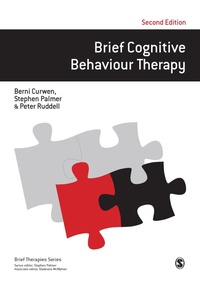
Brief Cognitive Behaviour Therapy
2nd Edition
Published on 8. January 2018
232 pages
978-1-5264-4763-0 (ISBN)
Description

This timely new edition describes how to use cognitive behaviour therapy successfully with clients in a brief, time-limited way. After reading this book therapists will be able to provide effective help to clients suffering from a wide range of disorders, including anxiety, depression, obsessive-compulsive disorder and post-traumatic stress, or those who are suicidal.
Following an explanation of brief therapy and the theory behind cognitive behaviour therapy, the authors outline strategies for helping clients overcome unhelpful beliefs and thought patterns through all stages of counselling. Using illustrative case material throughout, the updated book includes:
extra practical material for the client and therapist to use during the counselling process
a brand new chapter on brief CBT in groupwork
expansion of discussion on counselling suicidal clients within a brief CBT framework.
Every trainee psychotherapist should own a copy of this book, and it is important reading for all new health professionals working in the NHS and private practice.
Following an explanation of brief therapy and the theory behind cognitive behaviour therapy, the authors outline strategies for helping clients overcome unhelpful beliefs and thought patterns through all stages of counselling. Using illustrative case material throughout, the updated book includes:
extra practical material for the client and therapist to use during the counselling process
a brand new chapter on brief CBT in groupwork
expansion of discussion on counselling suicidal clients within a brief CBT framework.
Every trainee psychotherapist should own a copy of this book, and it is important reading for all new health professionals working in the NHS and private practice.
Reviews / Votes
This new edition to the book provides a significant contribution to supporting those in the caring professions to nurture and develop those in need. -- Professor Sir Cary Cooper Highly readable and with a welcome focus on psycho-education, the themes and principles in this gem of a book are as relevant to the coach and the enquiring client as they are to the CBT therapist. -- Mary WattsMore details
Series
Edition
Second Edition
Language
English
Place of publication
London
United Kingdom
Target group
College/higher education
Product notice
Reflowable
File size
3,04 MB
ISBN-13
978-1-5264-4763-0 (9781526447630)
Copyright in bibliographic data and cover images is held by Nielsen Book Services Limited or by the publishers or by their respective licensors: all rights reserved.
Schweitzer Classification
Other editions
Additional editions
Berni Curwen | Stephen Palmer | Peter Ruddell
Brief Cognitive Behaviour Therapy
Book
01/2018
2nd Edition
SAGE Publications Inc
€81.70
Shipment within 10-20 days
Berni Curwen | Stephen Palmer | Peter Ruddell
Brief Cognitive Behaviour Therapy
Book
01/2018
2nd Edition
SAGE Publications Inc
€168.10
Shipment within 10-20 days
Persons
Berni Curwen is a cognitive behavioural psychotherapist accredited by the British Association of Behavioural and Cognitive Psychotherapies (BABCP), and an Eye Movement Desensitisation Reprocessing (EMDR) Clinical Consultant accredited by EMDR Europe. She has a mental health nurse background and is registered with the Nursing and Midwifery Council (NMC). She has worked for the NHS and is currently employed by a private provider to NHS services. She has contributed to a number of publications including the following books published by Sage: Client Assessment (1997), Introduction to Counselling and Psychotherapy (2000), The Beginner's Guide to Counselling and Psychotherapy (2015), as well as Suicide - Strategies and Interventions for Reduction and Prevention (Routledge, 2008).
Professor Stephen Palmer PhD is an award winning psychologist and psychotherapist. He is Founder Director of the Centre for Stress Management, London. He is the UK's first Visiting Professor of Work Based Learning and Stress Management at Middlesex University. He has authored/edited over 50 books including The Beginner's Guide to Counselling and Psychotherapy (Sage, 2015). He is Co-editor of the European Journal of Counselling Theory, Research and Practice. Currently he is Honorary President of the International Stress Management Association; President of the International Society for Coaching Psychology; Founder Co-Chair of the London Branch of the British Association for Behavioural & Cognitive Psychotherapies; a Founder Director and Vice President of the Society of Dialectical Behaviour Therapy and a Director and Deputy Chair of the Association for Rational Emotive Behaviour Therapy. His interests include jazz, art and coastal walking.
Peter Ruddell is a cognitive behavioural psychotherapist accredited by the British Association of Behavioural and Cognitive Psychotherapies (BABCP) and the Association for Rational Emotive Behaviour Therapy (AREBT). He has worked in both the voluntary and private sectors.
He has contributed to a number of publications including the following books published by Sage: Client Assessment (1997), Introduction to Counselling and Psychotherapy (2000), The Beginner's Guide to Counselling and Psychotherapy (2015), as well as Suicide - Strategies and Interventions for Reduction and Prevention (Routledge, 2008).
He is a member of the European and International Advisory Board of the European Journal of Counselling Theory, Research and Practice. Peter is clinical director of the Centre for Stress Management, London.
Professor Stephen Palmer PhD is an award winning psychologist and psychotherapist. He is Founder Director of the Centre for Stress Management, London. He is the UK's first Visiting Professor of Work Based Learning and Stress Management at Middlesex University. He has authored/edited over 50 books including The Beginner's Guide to Counselling and Psychotherapy (Sage, 2015). He is Co-editor of the European Journal of Counselling Theory, Research and Practice. Currently he is Honorary President of the International Stress Management Association; President of the International Society for Coaching Psychology; Founder Co-Chair of the London Branch of the British Association for Behavioural & Cognitive Psychotherapies; a Founder Director and Vice President of the Society of Dialectical Behaviour Therapy and a Director and Deputy Chair of the Association for Rational Emotive Behaviour Therapy. His interests include jazz, art and coastal walking.
Peter Ruddell is a cognitive behavioural psychotherapist accredited by the British Association of Behavioural and Cognitive Psychotherapies (BABCP) and the Association for Rational Emotive Behaviour Therapy (AREBT). He has worked in both the voluntary and private sectors.
He has contributed to a number of publications including the following books published by Sage: Client Assessment (1997), Introduction to Counselling and Psychotherapy (2000), The Beginner's Guide to Counselling and Psychotherapy (2015), as well as Suicide - Strategies and Interventions for Reduction and Prevention (Routledge, 2008).
He is a member of the European and International Advisory Board of the European Journal of Counselling Theory, Research and Practice. Peter is clinical director of the Centre for Stress Management, London.
Content
Introduction
The Cognitive Behaviour Framework
Assessment
Beginning Stage of Therapy
Middle Stage of Therapy
End Stage of Therapy
Additional Strategies and Techniques
Hyponosis as an Adjunct to Cognitive Behaviour Therapy
Brief Therapy - Groups
Treatment Protocols
The Cognitive Behaviour Framework
Assessment
Beginning Stage of Therapy
Middle Stage of Therapy
End Stage of Therapy
Additional Strategies and Techniques
Hyponosis as an Adjunct to Cognitive Behaviour Therapy
Brief Therapy - Groups
Treatment Protocols
