

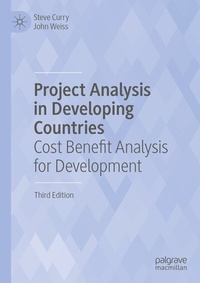
Project Analysis in Developing Countries
Description

This updated new edition explores the techniques used to assess the economic impact of projects in developing countries. Blending an academic understanding of economics and development with an accessible style and practical advice, the costs and benefits of investment projects, an important mechanism for economic development, are assessed to ensure that resource allocation is as productive as possible. New material has been added, particularly on the environmental impact of projects, the role of the discount rate in decision-taking, the application of techniques to estimate willingness to pay for benefit estimation and the quantification of health impacts.
Although the basic techniques of project analysis were developed many decades ago, they remain highly relevant to address current concerns, such as population growth, urbanisation, pressure on physical infrastructure, inequality, and the climate crisis. This book aims to provide an accessible overview, drawn from extensive practical experience, of project analysis in developing countries. It will be relevant to students, researchers, and practitioners interested in development economics.
More details
Other editions
Additional editions
Persons
John Weiss is Emeritus Professor of Development Economics at the University of Bradford, UK and an International Consultant.
Content
1. Introduction.- 2. Main Features of Projects, Project Resource Statements and Financial Statements.- 3. Project Criteria and Differences between Financial and Economic Analysis.- 4. National Economic Returns and Use of Economic Prices.- 5. Comparing Alternative Approaches.- 6. Economic Analysis in a Domestic Price System.- 7. Non-Traded Outputs and Benefit Valuation.- 8. Valuation in Different Sectors.- 9. Economic Discount Rate.- 10. Uncertainty.- 11. Projects and Environmental Effects.- 12. Income Distribution Effects of Projects.- 13. Wider Economic Impacts of Projects.- 14. Limitations and Conclusions.
