

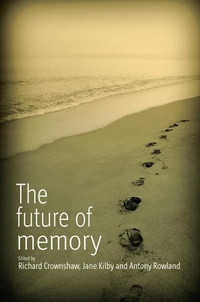
The Future of Memory
Description

Memory studies has become a rapidly growing area of scholarly as well as public interest. This volume brings together world experts to explore the current critical trends in this new academic field. It embraces work on diverse but interconnected phenomena, such as twenty-first century museums, shocking memorials in present-day Rwanda and the firsthand testimony of the victims of genocidal conflicts. The collection engages with pressing 'real world' issues, such as the furor around the recent 9/11 memorial, and what we really mean when we talk about 'trauma'.
More details
Other editions
Additional editions
Persons
Richard Crownshaw is a Lecturer in English at Goldsmiths, University of London.
Content
Preface
Rick Crownshaw, Jane Kilby and Antony Rowland
Chapter 1. Memory: Introduction
Rick Crownshaw
Chapter 2. Beyond the Mnemosyne Institute
Dan Stone
Chapter 3. Rwanda's Bones
Sara Guyer
Chapter 4. The Imperial War Museum North
Gaynor Bagnall and Antony Rowland
Chapter 5. Memory and the Monument after 9/11
James E. Young
Chapter 6. The Edge of Memory: Innovation, Trauma
Susan Rubin Suleiman
Chapter 7. Testimony: Introduction
Antony Rowland
Chapter 8. Reading Perpetrator Testimony
Robert Eaglestone
Chapter 9. Reading beyond the False Memory
Jane Kilby
Chapter 10. False Testimony
Sue Vice
Chapter 11. Reading Holocaust Poetry
Matthew Boswell
Chapter 12. Trauma: Introduction
Jane Kilby
Chapter 13. The Trauma Knot
Roger Luckhurst
Chapter 14. Trauma, Justice and the Political Unconscious
Cathy Caruth
Chapter 15. Trauma and Resistance: In the Shadow of No Towers
Anne Whitehead
Chapter 16. Facing Losses/Losing Guarantees: Meditation on Traumatic Ignorance
Sharon Rosenberg
Chapter 17. Activist Memories: Politics, Trauma, Pleasures
Carrie Hamilton
