

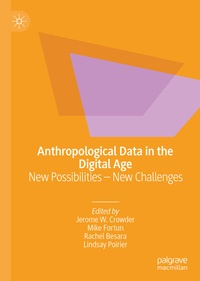
Anthropological Data in the Digital Age
Description

For more than two decades, anthropologists have wrestled with new digital technologies and their impacts on how their data are collected, managed, and ultimately presented. Anthropological Data in the Digital Age compiles a range of academics in anthropology and the information sciences, archivists, and librarians to offer in-depth discussions of the issues raised by digital scholarship. The volume covers the technical aspects of data management-retrieval, metadata, dissemination, presentation, and preservation-while at once engaging with case studies written by cultural anthropologists and archaeologists returning from the field to grapple with the implications of producing data digitally. Concluding with thoughts on the new considerations and ethics of digital data, Anthropological Data in the Digital Age is a multi-faceted meditation on anthropological practice in a technologically mediated world.
More details
Other editions
Additional editions
Persons
Jerome W. Crowder is Associate Professor of Preventative Medicine and Community Health and Associate Director of the Institute for the Medical Humanities at the University of Texas Medical Branch, Galveston, USA.
Mike Fortun is Associate Professor of Anthropology at the University of California, Irvine, USA.
Rachel Besara is Associate Dean of Libraries at Missouri State University, USA.
Lindsay Poirier is Assistant Professor of Science and Technology Studies at the University of California, Davis, USA.
