

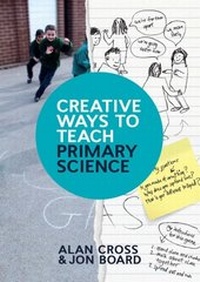
Creative Ways To Teach Primary Science
1st Edition
Published on 1. September 2014
186 pages
978-0-335-24766-0 (ISBN)
Description

This book is intended to encourage creativity and experimentation in teaching primary science, which are regularly recognised as features of outstanding teaching.
More details
Other editions
Additional editions
Alan Cross | Jon Board
Creative Ways to Teach Primary Science
Book
10/2014
Open University Press
€57.19
Shipment within 15-20 days
Content
- Cover page
- Halftitle page
- Title page
- Copyright page
- Praise
- Contents
- Acknowledgements
- 1 Creativity in primary science
- Introduction
- Creative teachers
- Science and creativity
- What can help me?
- Making science a creative subject
- Learner creativity in science
- Teacher creativity in developing learner creativity
- Forms of creativity
- Conclusion
- 2 Children as real scientists
- Pupils contribute directly to the work of professional scientists
- Children as researchers
- Children in control
- Writing/thinking frames
- Safety
- Conclusion
- 3 A creative approach to working scientifically: putting children in the driving seat
- Introduction
- Why do children need to be in the driving seat?
- Creative teaching that develops independent learning
- Teaching the scientific process: it's not just fair testing!
- Creative planning to encourage curiosity
- Challenging children's misconceptions
- Teachers as questioners
- Making it manageable
- Creative learning that develops autonomy
- Conclusion
- 4 ICT and computing
- Computing
- Computers and learners' science
- Conclusion
- 5 Using children's literature, stories, poetry and songs
- Conclusion
- 6 Models and analogies
- When are models and analogies useful?
- Analogy or model?
- It's only a model!
- Misconceptions
- Using creative approaches to make models and analogies more effective
- Assessment for learning
- Some examples of models and analogies by topic
- Conclusion
- 7 Images in science lessons
- Conclusion
- 8 Demonstrations
- Using demonstrations to stimulate creative discussion
- Making demonstrations creative
- Ideas for creative demonstrations
- 9 Dance and drama
- Role play
- Conclusion
- 10 Playground science
- Collaborative learning and playground science
- A creative playground science lesson
- More examples of playground science activities
- Conclusion
- 11 Thinking frames
- Thinking together
- Question matrix
- Conclusion
- 12 Cross-curricular science
- Background
- Why teach cross-curricular science?
- Cross- curricular learning and creativity
- Making cross-curricular science effective
- Planning for cross-curricular science
- Science and the core skills
- Examples of cross-curricular science
- Conclusion
- Bibliography
- Index
