

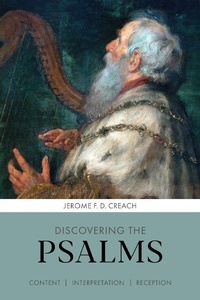
Discovering the Psalms
Description

This introduction to the interpretation of the Psalms encourages in-depth study of the text and genuine grappling with the historical, literary and theological questions that it poses. It draws on a range of methodological approaches as complementary rather than mutually exclusive ways of understanding the text. It also reflects the growing scholarly attention to the reception history of the Psalms, increasingly viewed as a vital aspect of interpretation rather than an optional extra.
'This introduction to the Psalms, by a scholar who has been studying them and praying them for decades, amply demonstrates their potential to feed our worship and revolutionize the way we pray.'
John Goldingay, Professor Emeritus of Old Testament, Fuller Theological Seminar, California
'The best introduction to the Psalms that I have ever seen.'
J. Clinton McCann Jr., Evangelical Professor of Biblical Interpretation, Eden Theological Seminary, St. Louis, Missouri
'A valuable resource for ministry students and any Christian who wants to go deeper with the Psalms.'
Jenni Williams, Vicar of St Matthew with St Luke, and former Tutor in Old Testament at Wycliffe Hall, Oxford
'An eminently readable introduction.'
Sue Gillingham, Professor of the Hebrew Bible, University of Oxford
More details
Other editions
Additional editions
Person
Jerome F. D. Creach is Robert C. Holland Professor of Old Testament at Pittsburgh Theological Seminary, Pittsburgh, Pennsylvania. His recent publications include Violence in Scripture (Westminster John Knox Press, 2013) and Psalms (Westminster John Knox Press, 2012).
Content
- Intro
- Contents
- Acknowledgements
- Abbreviations
- Introduction: The role of the Psalms in the life of the Church
- The nature and purpose of this book
- A preview of the book
- Part 1 Issues in reading the Psalms and the Psalter
- 1 What is a psalm?
- Titles for the book
- How many psalms?
- Anatomy of a psalm
- The heading
- The body of a psalm
- Colophon
- Translation
- Collections and clusters of psalms
- The structure of the book
- Introductory psalms: Psalms 1 and 2
- Concluding psalms: Psalms 146-150
- Fivefold division
- 2 It's poetry!
- What is poetry and why is it important?
- Important terms
- What makes the Psalms poetry?
- Semantic parallelism
- Lowth's categories of parallelism
- Synonymous
- Antithetical
- Synthetic
- Refining the categories
- Intensification
- Complementarity
- Consequential statements
- Metaphor
- The Lord is king
- Refuge
- Simile: another powerful figure of speech
- As a deer longs for water
- Like a tree
- 3 Did David write the Psalms?
- Claims of Davidic authorship
- Psalm 3 as a starting point
- Other affirmations of David as author of the Psalms
- Questioning David as author of the Psalms
- Psalm 72 as turning point in Davidic authorship
- Figurative readings of David in the Psalms
- If not David, then who?
- Recovering David in the Psalms
- 4 A psalm for every occasion: types of psalms
- Psalms study in the twentieth century
- Hermann Gunkel and the rise of form criticism
- Types of psalms
- 1 Prayers for help by an individual
- Subcategory: song of trust
- 2 Prayers for help by the community
- 3 Hymns of praise
- Language and style of hymns
- Imperative
- Description of God's mighty deeds
- Hymns according to subject matter
- Creation hymns
- Enthronement psalms
- Zion songs
- Historical hymns
- 4 Thanksgiving songs of the individual
- Thanksgiving songs of Israel
- 5 Royal psalms
- Other types of psalms
- Psalms that instruct
- Liturgies
- Conclusion
- 5 Settings for performance of the Psalms
- Cultic setting of the Psalms
- What is the 'cult'?
- Role of lyrics in the cult
- Hints of cultic settings
- Outside the Psalter
- In the Psalms
- Psalm headings
- Instructions and invitations within the Psalms
- Imagining the Psalms in worship
- Parades and processions
- Israel's festivals
- The prophets speak?
- Educational settings
- Specific theories of cultic settings
- New Year festival and the enthronement psalms
- Cultic rituals and psalms of the individual
- Re-use of cultic psalms
- Part 2 Reading the Psalms together
- 6 Going by the book: the Psalter as a guide to reading the psalms
- Signs of coherence
- Going further: the theological shape of the Psalter
- Psalms 1 and 2: The two ways
- Psalms 3-72: The prayers of David
- Psalms 73-89: After David's prayers failed
- Psalms 90-106: 'The Lord reigns!'
- Psalm 90: Moses' prayer for God's people
- Psalms 105-106: 'Gather your people'
- Psalms 93-100: 'The Lord reigns!'
- Psalms 107-150: 'Gather your people, O Lord'
- Conclusion
- 7 The theology of the Psalms, Part 1: 'The Lord reigns!'
- God's kingship as the centre of the Psalms
- The Lord reigns!
- The Lord's reign and the practice of justice
- Psalm 82
- King as root metaphor
- Administration of the Lord's reign
- Zion: city of the great king
- The anointed
- Torah
- 8 The theology of the Psalms, Part 2: What is the human being?
- One who trusts
- Prayer: the activity of the righteous
- Praise and worship
- Right behaviour: Psalms 15 and 24
- David as righteous
- Part 3 The Psalms as prayers
- 9 The tradition of psalmic prayer, Part 1: Opening fully to God
- Neglect of the Psalms in Christian prayer
- The nature of psalmic prayer: out of the depths
- The identity of those who pray the Psalms
- The elements of psalmic prayer
- 'Deliver me from evil'
- Giving thanks
- 'Forgive us'
- A broader identity in prayer
- Conclusion
- 10 The tradition of psalmic prayer, Part 2: Psalms that pray for vengeance
- Why do we need prayers of vengeance?
- Guidelines for praying psalms of vengeance
- Three 'model' prayers
- Psalm 109
- Psalm 137
- Psalm 139
- The imprecatory psalms and the meaning of 'vengeance'
- Conclusion: The Psalms and Jesus Christ
- Jesus' identity as Son of God and Messiah
- Baptism, Transfiguration and trial
- Suffering and death
- Resurrection of the 'son of David'
- Works cited
- Copyright acknowledgements
- Index of Scripture references and ancient authors
- Index of modern authors
- Index of subjects
