

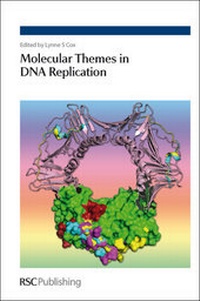
Molecular Themes in DNA Replication
1st Edition
Published on 31. October 2009
315 pages
978-1-84755-985-2 (ISBN)
Description

DNA replication, the process of copying one double stranded DNA molecule to form two identical copies, is highly conserved at the mechanistic level across evolution. Interesting in its own right as a fascinating feat of biochemical regulation and coordination, DNA replication is at the heart of modern advances in molecular biology. An understanding of the process at both the biological and chemical level is essential to developing new techniques in molecular biology. Insights into the process at the molecular level provide opportunities to modulate and intervene in replication. Rapidly dividing cells need to replicate their DNA prior to division, and targeting components of the replication process is a potentially powerful strategy in cancer treatment. Conversely, ageing may be associated with loss of replication activity and restoring it to cells may moderate some of the diseases associated with old age. Replication is, therefore, fundamental to a huge range of molecular biological and biochemical applications, and provides many potential targets for drug design. The fast pace of replication research, particularly in providing new structural insights, has outdated the majority of available texts. This learned, yet accessible, book contains the latest research written by those conducting it. It examines conserved themes providing a biological background for biochemical, chemical and pharmaceutical studies of this huge and exciting field. Rather than simply "itemising" the replication steps and the proteins involved, replication is tackled from a novel perspective. The book provides logical groupings of processes based upon biochemical similarities. The emphasis on mechanisms and the relationship between structure and function targets the chapters towards biochemists and biological chemists as well as molecular and cell biologists. The book highlights new insights into the replication process, from the assembly of pre-replication complexes, through polymerisation mechanisms, to considering replication in the context of chromatin and chromosomes. It also covers mitochondrial DNA replication, and includes archaeal paradigms, which are proving increasingly relevant to the study of replication in higher eukaryotes. Exciting potential drug targets in DNA replication are discussed, particularly in the context of treating malaria and cancer.
More details
Edition
1. Auflage
Language
English
Place of publication
Cambridge
United Kingdom
Target group
Professional and scholarly
ISBN-13
978-1-84755-985-2 (9781847559852)
DOI
10.1039/9781847559852
Copyright in bibliographic data and cover images is held by Nielsen Book Services Limited or by the publishers or by their respective licensors: all rights reserved.
Schweitzer Classification
Other editions
Additional editions
Book
09/2009
Royal Society of Chemistry
€215.75
Article exhausted; check different version
Persons
Lynne S Cox has worked in the field of eukaryotic DNA replication since 1987. Within three years of gaining her PhD, she was awarded a Royal Society of Edinburgh personal research fellowship to conduct her own independent research. During this time, she also ran a CRC-funded project examining replication control through an essential protein PCNA. She then took up a Fellowship at Oriel College, Oxford and a University Lectureship in the Department of Biochemistry at Oxford. As well as studying human DNA replication in relation to cancer and senescence, her laboratory's work on malarial parasite replication factors more than doubled the number of characterized factors, with a view to developing inhibitors of malarial replication. Her most recent work has focussed on loss of replicative capacity during normal and accelerated human ageing, and she has recently secured funding to establish a Drosophila model for characterization of replicative senescence.
Content
Chapter 1. Introduction: conserved steps in eukaryotic DNA replication: Template;
Origins;
Origin recognition;
Pre-initiation;
Initiation;
Elongation;
Termination;
Chromatid cohesion and segregation. Chapter 2. AAA and ATPases in loading replication factors: ORC and loading of Cdc6;
Cdc6 and loading of MCMs;
RFC and loading of PCNA. Chapter 3. Ring structures and six fold symmetry in replication: Helicases: MCMs;
WRN, BLM etc;
Clamps: PCNA;
Rad9-Rad1-Hus1. Chapter 4: Polymerization mechanisms: Thermodynamics of polymerization;
Structural insights into polymerization mechanisms;
fidelity: Replicative polymerase error rates;
Enhancing polymerase fidelity by protein interactions. Chapter 5. Molecular hand-off mechanisms in replication: Priming polymerization;
Polymerase switches;
Okazaki fragment processing: differential affinities for PCNA;
Methylation and chromatin modification via molecular hand-off mediated through PCNA?;
RPA in replication/repair. Chapter 6. Co-ordination of nucleases and helicases: Nucleases in replication: conservation of roles and mechanisms;
Fen1 and Dna2 at Okazaki fragments;
Stalled forks, helicases and nucleases - BLM, WRN, Exo1 and others. Chapter 7. The switch from replication to repair (and back): Monitoring DNA integrity;
Stalled replication forks and replisome stability: impact of lesion type;
Choosing the right polymerase through PCNA modification;
Polymerase switching over lesions;
Restarting stalled forks after repair. Chapter 8: Telomeres and the end replication problem: Structure and stability of telomeres;
Telomerase: structural and drug inhibition studies;
ALT pathways of telomere maintenance;
Telomere length and telomere-specific sister chromatid exchange in replicative senescence. Keeping replicated chromatids together until mitosis: Topoisomerases and separating chromatids;
SMC proteins, claspins and cohesions;
Attaching chromatids to the mitotic spindle - the role of ORC. Chapter 10. Chromatin modification during replication: Chromatin context and replication patterns;
Silenced loci and dormant origins;
DNA methylation during replication;
Histone modifications (methylation, acetylation, phosphorylation, ubiquitination - CAF1, SIRT1, SNF2/HDACs etc);
Nucleosome positioning in relation to origins. Chapter 11. Mittochondrial DNA replication: Template: copy number, structure and origin;
DNA pol gamma - mode of action;
Accessory factors;
Regulation - autonomous or integrated with cell cycle?;
Co-ordination with damage sensing and repair. Chapter 12. Archaeal paradigms and parallels for eukaryotic DNA replication: Overview: comparison between archaeal and eukaryotic replication proteins and processes;
Insights into priming from the structure of the primase core;
Archaeal MCMs as a model for eukaryotic MCMs;
Structure of the archaeal preRC and stabilization by GINS;
Protein interactions with PCNA. Chapter 13. Drug targets in DNA replication: Nuclear replication: ORC, MCMs and GINS - markers or targets?;
Geminin;
PCNA (p21) and Ciz;
Polymerases;
Telomerase;
Mitochondrial replication targets;
Malaria and potential novel drug targets.
Origins;
Origin recognition;
Pre-initiation;
Initiation;
Elongation;
Termination;
Chromatid cohesion and segregation. Chapter 2. AAA and ATPases in loading replication factors: ORC and loading of Cdc6;
Cdc6 and loading of MCMs;
RFC and loading of PCNA. Chapter 3. Ring structures and six fold symmetry in replication: Helicases: MCMs;
WRN, BLM etc;
Clamps: PCNA;
Rad9-Rad1-Hus1. Chapter 4: Polymerization mechanisms: Thermodynamics of polymerization;
Structural insights into polymerization mechanisms;
fidelity: Replicative polymerase error rates;
Enhancing polymerase fidelity by protein interactions. Chapter 5. Molecular hand-off mechanisms in replication: Priming polymerization;
Polymerase switches;
Okazaki fragment processing: differential affinities for PCNA;
Methylation and chromatin modification via molecular hand-off mediated through PCNA?;
RPA in replication/repair. Chapter 6. Co-ordination of nucleases and helicases: Nucleases in replication: conservation of roles and mechanisms;
Fen1 and Dna2 at Okazaki fragments;
Stalled forks, helicases and nucleases - BLM, WRN, Exo1 and others. Chapter 7. The switch from replication to repair (and back): Monitoring DNA integrity;
Stalled replication forks and replisome stability: impact of lesion type;
Choosing the right polymerase through PCNA modification;
Polymerase switching over lesions;
Restarting stalled forks after repair. Chapter 8: Telomeres and the end replication problem: Structure and stability of telomeres;
Telomerase: structural and drug inhibition studies;
ALT pathways of telomere maintenance;
Telomere length and telomere-specific sister chromatid exchange in replicative senescence. Keeping replicated chromatids together until mitosis: Topoisomerases and separating chromatids;
SMC proteins, claspins and cohesions;
Attaching chromatids to the mitotic spindle - the role of ORC. Chapter 10. Chromatin modification during replication: Chromatin context and replication patterns;
Silenced loci and dormant origins;
DNA methylation during replication;
Histone modifications (methylation, acetylation, phosphorylation, ubiquitination - CAF1, SIRT1, SNF2/HDACs etc);
Nucleosome positioning in relation to origins. Chapter 11. Mittochondrial DNA replication: Template: copy number, structure and origin;
DNA pol gamma - mode of action;
Accessory factors;
Regulation - autonomous or integrated with cell cycle?;
Co-ordination with damage sensing and repair. Chapter 12. Archaeal paradigms and parallels for eukaryotic DNA replication: Overview: comparison between archaeal and eukaryotic replication proteins and processes;
Insights into priming from the structure of the primase core;
Archaeal MCMs as a model for eukaryotic MCMs;
Structure of the archaeal preRC and stabilization by GINS;
Protein interactions with PCNA. Chapter 13. Drug targets in DNA replication: Nuclear replication: ORC, MCMs and GINS - markers or targets?;
Geminin;
PCNA (p21) and Ciz;
Polymerases;
Telomerase;
Mitochondrial replication targets;
Malaria and potential novel drug targets.
