


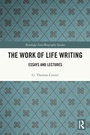
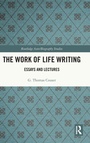
The Work of Life Writing
Essays and Lectures
1st Edition
Published on 13. April 2021
206 pages
978-1-000-36732-4 (ISBN)
Description

Life writing, in its various forms, does work that other forms of expression do not; it bears on the world in a way distinct from imaginative genres like fiction, drama, and poetry; it acts in and on history in significant ways. Memoirs of illness and disability often seek to depathologize the conditions that they recount. Memoirs of parents by their children extend or alter relations forged initially face to face in the home. At a time when memoir and other forms of life writing are being produced and consumed in unprecedented numbers, this book reminds readers that memoir is not mainly a "literary" genre or mere entertainment. Similarly, letters are not merely epiphenomena of our "real lives." Correspondence does not just serve to communicate; it enacts and sustains human relationships. Memoir matters, and there's life in letters. All life writing arises of our daily lives and has distinctive impacts on them and the culture in which we live.
Reviews / Votes
"The Work of Life Writing collects several of the most important essays of G. Thomas Couser's exemplary career at the forefront of life writing scholarship. Reminding us that life writing deserves our attention for its social significance as much as its artistic strength, these dozen pieces treat the many varieties of life writing as unique literary forms that enact relationships and identities, especially under-represented ones. It was Couser who reminded us that memoir is our most democratic of genres, and who brought the study of life writing to bear on disability and illness representation-one of the most important shifts in literary disability study in the past twenty years. This is a book for students and scholars alike, and will appeal to anyone compelled by the important cultural work of auto/biographical texts."Susannah B. Mintz, Professor of English, Skidmore College
"G. Thomas Couser is a central figure in the field of life writing. His lively and accessible prose enters into conversation with scholarship in a variety of fields, including disability studies, narrative medicine, pedagogy (literary studies, creative writing), cultural studies, and sociology. Readers will appreciate having some of his harder-to-find pieces, along with some of his best-known essays, collected in one volume. This book demonstrates the ways in which memoir and autobiography, even those forms that are unlikely to garner critical acclaim, should be taken seriously as forces with the potential to shape our everyday lives. I appreciate the personal touches in his writing-his work feels urgent because, as a reader, I have the opportunity to learn about the life experiences that inspired it."
Megan Brown, Professor of English, Drake University
More details
Series
Edition
1. Auflage
Language
English
Place of publication
London
United Kingdom
Publishing group
Taylor & Francis Ltd
Target group
College/higher education
Illustrations
23 Halftones, black and white; 23 Illustrations, black and white
ISBN-13
978-1-000-36732-4 (9781000367324)
Copyright in bibliographic data and cover images is held by Nielsen Book Services Limited or by the publishers or by their respective licensors: all rights reserved.
Schweitzer Classification
Other editions
Additional editions
Book
12/2022
1st Edition
Routledge
€63.00
Shipment within 15-20 days
Book
04/2021
1st Edition
Routledge
€206.10
Shipment within 15-20 days
Person
G. Thomas Couser received his doctorate in American Civilization at Brown University in 1977. After teaching English at Connecticut College, he moved on to Hofstra University, where he founded and directed a Disability Studies Program. From his dissertation on, his scholarship has been concerned with autobiography and memoir, especially with life writing stimulated by disability and illness and the ethics of life writing.
His academic books include Recovering Bodies: Illness, Disability, and Life Writing (1997), Vulnerable Subjects: Ethics and Life Writing (2004), Signifying Bodies: Disability in Contemporary Life Writing (2009), and Memoir: An Introduction (2012). He has also published dozens of articles and book chapters.
In addition to scholarship, he has published personal essays in the Southwest Review, New Haven Review, and Hudson Review and Letter to My Father: A Memoir (2017).
His academic books include Recovering Bodies: Illness, Disability, and Life Writing (1997), Vulnerable Subjects: Ethics and Life Writing (2004), Signifying Bodies: Disability in Contemporary Life Writing (2009), and Memoir: An Introduction (2012). He has also published dozens of articles and book chapters.
In addition to scholarship, he has published personal essays in the Southwest Review, New Haven Review, and Hudson Review and Letter to My Father: A Memoir (2017).
Content
Chapter 1. Prologue: Death and Life Writing: Reflections on My Morbid Career
Chapter 2. Introduction: The Work of Memoir
Chapter 3. Quality-of-life Writing: Illness, Disability, and Contemporary American Memoir
Chapter 4. Is There a Body in this Text? Embodiment in Graphic Somatography
Chapter 5. Genre Matters: Form, Force, and Filiation
Chapter 6. Memoir and (Lack of) Memory: Filial Narratives of Paternal Dementia
Chapter 7. Paper Orphans: Writers' Children Write Their Lives
Chapter 8. Filiation in Barack Obama's Dreams from My Father."
Chapter 9. Disability, Depression, Diagnosis, and Harm: Reflections on Two Personal Scenarios
Chapter 10. Vulnerable Subjects: Caveat Scriptor
Chapter 11. The Shape of Death in American Autobiography
Chapter 12. On "Freedom Writing": Expression and Repression
Chapter 13. Life in Letters: Letters as Life
Chapter 2. Introduction: The Work of Memoir
Chapter 3. Quality-of-life Writing: Illness, Disability, and Contemporary American Memoir
Chapter 4. Is There a Body in this Text? Embodiment in Graphic Somatography
Chapter 5. Genre Matters: Form, Force, and Filiation
Chapter 6. Memoir and (Lack of) Memory: Filial Narratives of Paternal Dementia
Chapter 7. Paper Orphans: Writers' Children Write Their Lives
Chapter 8. Filiation in Barack Obama's Dreams from My Father."
Chapter 9. Disability, Depression, Diagnosis, and Harm: Reflections on Two Personal Scenarios
Chapter 10. Vulnerable Subjects: Caveat Scriptor
Chapter 11. The Shape of Death in American Autobiography
Chapter 12. On "Freedom Writing": Expression and Repression
Chapter 13. Life in Letters: Letters as Life
