

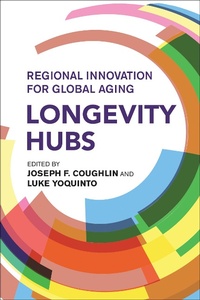
Longevity Hubs
Regional Innovation for Global Aging
Published on 19. November 2024
370 pages
978-0-262-37977-9 (ISBN)
Description

How innovation hotspots for the world's aging population may prove to be of vital economic and strategic importance in the years ahead.
Populations around the world are aging, and older adults' economic influence-already considerable-stands to grow markedly in the decades ahead. Finding ways to make these lives better is a win-win-win: for older consumers; for aging economies; and for companies and the regions where they reside. This much-needed volume edited by Joseph Coughlin and Luke Yoquinto, Longevity Hubs, brings together contributors-entrepreneurs, researchers, designers, public servants, and others-who are addressing the multifaceted concerns of aging societies. Together, they explore the possibility that specific regions will soon distinguish themselves as longevity hubs: a home to disproportionate economic and innovative activity for older populations.
If a region were to emerge as such a disproportionate hotspot, that area and its home nation might better weather some of the challenges posed by population aging, while at the same time providing a cash injection into the local economy thanks to aging markets domestic and foreign. Longevity Hubs explores strategies adopted by different areas' government and industry leaders to promote such activity; who different regions' target markets are; and how local, older adults may affect (and be affected by) innovation in their area. Longevity Hubs opens on Greater Boston, with the collected articles comprising the "Longevity Hub" special project that ran in the Boston Globe in 2021 and 2022. Then the book zooms out to take in a more global stage, in the form of nine chapters written by representatives of cities and regions staking a claim as powerhouses of aging innovation. These include Louisville, in the US; Newcastle, in the UK; Dubai; Milan; São Paulo; Tel Aviv; regions in Japan and Thailand; and Aging2.0, a distributed network.
Populations around the world are aging, and older adults' economic influence-already considerable-stands to grow markedly in the decades ahead. Finding ways to make these lives better is a win-win-win: for older consumers; for aging economies; and for companies and the regions where they reside. This much-needed volume edited by Joseph Coughlin and Luke Yoquinto, Longevity Hubs, brings together contributors-entrepreneurs, researchers, designers, public servants, and others-who are addressing the multifaceted concerns of aging societies. Together, they explore the possibility that specific regions will soon distinguish themselves as longevity hubs: a home to disproportionate economic and innovative activity for older populations.
If a region were to emerge as such a disproportionate hotspot, that area and its home nation might better weather some of the challenges posed by population aging, while at the same time providing a cash injection into the local economy thanks to aging markets domestic and foreign. Longevity Hubs explores strategies adopted by different areas' government and industry leaders to promote such activity; who different regions' target markets are; and how local, older adults may affect (and be affected by) innovation in their area. Longevity Hubs opens on Greater Boston, with the collected articles comprising the "Longevity Hub" special project that ran in the Boston Globe in 2021 and 2022. Then the book zooms out to take in a more global stage, in the form of nine chapters written by representatives of cities and regions staking a claim as powerhouses of aging innovation. These include Louisville, in the US; Newcastle, in the UK; Dubai; Milan; São Paulo; Tel Aviv; regions in Japan and Thailand; and Aging2.0, a distributed network.
More details
Other editions
Additional editions
Book
11/2024
MIT Press
€32.50
Shipment within 10-20 days
Persons
Joseph F. Coughlin is Founder and Director of the MIT AgeLab. He teaches in MIT's Department of Urban Studies and Planning, the Center for Transportation & Logistics, and the Sloan School of Management's Executive Education program. He is the author of The Longevity Economy and a member of the Board of Directors of AARP.
Luke Yoquinto is a research associate at the MIT AgeLab. With AgeLab founder Joseph Coughlin and Globe Opinion, he produced the yearlong 2021-2022 "Longevity Hub" series in the Boston Globe. With Sanjay Sarma, he is the coauthor of Grasp.
Luke Yoquinto is a research associate at the MIT AgeLab. With AgeLab founder Joseph Coughlin and Globe Opinion, he produced the yearlong 2021-2022 "Longevity Hub" series in the Boston Globe. With Sanjay Sarma, he is the coauthor of Grasp.
Content
- Intro
- Contents
- Preface
- Notes
- Introduction
- Money Matters
- Titans of Spending
- Productive Aging
- A Landscape of Gaps
- A Sea Change
- Toward a Geography of Longevity Economy Innovation
- What Might a Longevity Innovation Cluster Look Like?
- New Frontiers in Aging Demand
- Assembling This Volume
- Into Longevity Hubs
- Notes
- I: The Boston Longevity Hub
- 1: Boston: The Silicon Valley of Longevity?
- Notes
- 2: Aging Well
- Lady Gaga, Tony Bennett, and the Power of Bringing Generations Together
- The Joy of Intergenerational Learning
- Notes
- 3: Powering an Aging Workforce
- Why Employers Should Recruit and Retain Older Adults
- Massachusetts Lays a Solid Foundation for Engaging Older Workers
- Notes
- 4: Transportation
- Getting from Here to There
- When It Comes to Autonomous Vehicles, Seniors Can Lead the Way
- Look to the Nonprofit Sector to Give Older Adults a Lift
- Notes
- 5: Innovation
- Collaboration Should Focus on Health, Wealth, and Self
- What We Need as Entrepreneurs
- For Insight, Look to Older Entrepreneurs
- The Barriers to Innovation
- Notes
- 6: Caregiving
- I Became a Caregiver in My Late Twenties-and Found Little Support to Guide Me
- In the Face of an Eldercare Crisis
- Bringing Home Care Up to Scale
- Caregiving Is a Critical Service under Stress
- There's an Innovation Gap in Caregiving
- Notes
- 7: Finances
- Health, Longevity, and the Goals of Financial Industries
- How the Financial Services Industry Can Impact Retirement
- Longer Lifespans Require Secure Financial Futures
- Notes
- 8: Research and Development
- Needed: Federal Leadership on R&D for Our Aging Society
- Budding Technology Should Be Adapted for Elder Care
- How Science, Technology, and Industry Can Work Together to Cure Alzheimer's
- Notes
- 9: Housing
- Aging in Community
- Smaller Is Better
- Where Will We Live as We Age?
- Community-Centered Senior Living Works for Seniors and Communities
- Architecture Plays a Key Role in Reimagining Care Solutions
- Notes
- 10: Health
- The Future of Home Health Care Is Now
- Life Expectancy Depends on Where You Call Home
- Notes
- 11: Living Laboratory
- A Living Laboratory Must Close the Equity and Opportunity Gaps
- How Massachusetts Can Become a Living Laboratory for Aging
- Notes
- II: Global Hub Candidates
- 12: Dubai
- Hub Origins
- Longevity Innovations
- Unique Advantages
- Connectivity
- Conclusion
- Notes
- 13: Louisville
- Aging Innovation in Louisville
- Achieving Longevity through Health Equity
- Innovation Initiatives
- Meeting Older Americans Where They Are
- Looking Ahead
- Notes
- 14: Japan's Urban Satellites
- Defining Longevity Hubs
- Four Longevity Hot Spots
- The Virtue of Multiple Longevity Hubs
- Notes
- 15: Milan
- Demographic Background
- Opportunities and Players
- New Longevity Welfare
- Convening Forces
- Conclusion
- Notes
- 16: Newcastle
- Biomedical Beginnings
- Government Takes Note
- Business Synergies
- Newcastle as Exporter
- Notes
- 17: São Paulo
- The Construction of a New Way of Thinking
- Project Examples
- A Pulsating Market
- A Silver Future
- Notes
- 18: Tel Aviv
- Three Pillars of Israel's Aging Innovation
- How Do These Pillars Lead to Innovation for Aging?
- AgeTech: Tech for Older Adults and Those Who Care for Them
- Agetech Challenges
- Startup Nation Meets the Welfare State
- Notes
- 19: Thailand EEC
- Introduction
- Demographic Challenges
- Retirement: Thailand's First Longevity Export
- Thailand's Government Responses to an Aging Society
- EEC and EECmd
- Interview: Dr. Kammal Kumar Pawa on EECmd
- Selected Policy Discussions and Conclusions
- Notes
- 20: Aging2.0
- Origin Story: Nokia2.0 Meets Venture Philanthropy
- Global Aging: A Collective Intelligence Problem?
- The Growth of a Global Ecosystem
- Impact
- Barriers to Growth
- A Strategic Partnership Gives Aging2.0 Stability and New Options
- Looking to the Future: From Collective Intelligence to Collaborative Impact
- Notes
- Conclusion
- Notes
- Acknowledgments
- Index
