


Designing a European Fiscal Union
Lessons from the Experience of Fiscal Federations
1st Edition
Published on 13. November 2014
270 pages
978-1-317-66751-3 (ISBN)
Description

Does the European Union need closer fiscal integration, and in particular a stronger fiscal centre, to become more resilient to economic shocks? This book looks at the experience of 13 federal states to help inform the heated debate on this issue. It analyses in detail their practices in devolving responsibilities from the subnational to the central level, compares them to those of the European Union, and draws lessons for a possible future fiscal union in Europe.
More specifically, this book tries to answer three sets of questions: What is the role of centralized fiscal policies in federations, and hence the size, features and functions of the central budget? What institutional arrangements are used to coordinate fiscal policy between the federal and subnational levels? What are the links between federal and subnational debt, and how have subnational financing crises been handled, when they occurred? These policy questions are critical in many federations, and central to the current discussions about future paths for the European Union.
This book brings to the table new, practical insights through a systematic and comprehensive comparison of the EU fiscal framework with that of federal states. It also departs from the decentralization perspective that has been prominent in the literature by focusing on the role of the centre (which responsibilities are centralized at the federal level and how they are handled, rather than which functions belong to the local level). Such an approach is particularly relevant for the European Union, where a fiscal union would imply granting new powers to the centre.
More specifically, this book tries to answer three sets of questions: What is the role of centralized fiscal policies in federations, and hence the size, features and functions of the central budget? What institutional arrangements are used to coordinate fiscal policy between the federal and subnational levels? What are the links between federal and subnational debt, and how have subnational financing crises been handled, when they occurred? These policy questions are critical in many federations, and central to the current discussions about future paths for the European Union.
This book brings to the table new, practical insights through a systematic and comprehensive comparison of the EU fiscal framework with that of federal states. It also departs from the decentralization perspective that has been prominent in the literature by focusing on the role of the centre (which responsibilities are centralized at the federal level and how they are handled, rather than which functions belong to the local level). Such an approach is particularly relevant for the European Union, where a fiscal union would imply granting new powers to the centre.
More details
Series
Language
English
Place of publication
London
United Kingdom
Publishing group
Taylor & Francis Ltd
Target group
College/higher education
Illustrations
23 Tables, black and white; 50 Line drawings, black and white; 50 Illustrations, black and white
File size
2,86 MB
ISBN-13
978-1-317-66751-3 (9781317667513)
Copyright in bibliographic data and cover images is held by Nielsen Book Services Limited or by the publishers or by their respective licensors: all rights reserved.
Schweitzer Classification
Other editions
Additional editions
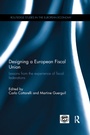
Carlo Cottarelli | Martine Guerguil
Designing a European Fiscal Union
Lessons from the Experience of Fiscal Federations
Book
09/2020
1st Edition
Routledge
€35.89
Shipment within 15-20 days
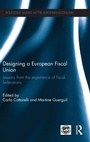
Carlo Cottarelli | Martine Guerguil
Designing a European Fiscal Union
Lessons from the Experience of Fiscal Federations
Book
11/2014
1st Edition
Routledge
€141.60
Shipment within 10-20 days
Persons
Carlo Cottarelli is a Special Commissioner for Public Spending in Italy. Previously, he was Director of the Fiscal Affairs Department of the IMF.
Martine Guerguil oversees the preparation of the IMF flagship Fiscal Monitor. In her previous positions in the IMF, Martine Guerguil led work on debt sustainability and debt relief and on macroeconomic policy design in Latin America and Africa.
Martine Guerguil oversees the preparation of the IMF flagship Fiscal Monitor. In her previous positions in the IMF, Martine Guerguil led work on debt sustainability and debt relief and on macroeconomic policy design in Latin America and Africa.
Content
Introduction and Overview Chapter 1. Distribution of Fiscal Responsibilities in Federations Chapter 2. The Role of Fiscal Transfers in Smoothing Regional Shock Chapter 3. Constraints on Sub-national Fiscal Policy Chapter 4. Budgeting, Accounting, and Reporting Chapter 5. Financing of Central and Sub-national Governments Chapter 6. Sub-national Fiscal Crises Chapter 7. Lesson from the Crisis: Minimal Elements for a Fiscal Union in the Euro Area
