

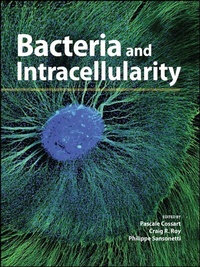
Bacteria and Intracellularity
Description

This book offers a wide-ranging look at the latest studies, including:
* foodborne pathogens, including how, when, and where bacteria interact with the gut and its microbiota
* infections of the urogenital tract, endothelial barriers, and the nervous system
* major advances in work with Mycobacterium tuberculosis and M. leprae
* subcellular microbiology, including metabolism of infected cells, nuclear biology, and microRNAs
* endosymbionts, in particular the latest work with Wolbachia and its effect on insect transmission of viral pathogens
* research into cell autonomous defense pathways that has led to major insights into immunology and innate immunity
* the latest developments in technology, for the next steps in the study of intracellularity
All facets of cellular physiology, within the entire scope of cells and host tissues, can be targeted by pathogens. This book offers to researchers, students, and laboratorians a valuable overview of the state of current research into the cellular microbiology of host-pathogen interactions.
More details
Other editions
Additional editions
Persons
Pascale Cossart is considered a pioneer in cellular microbiology. Her research has led to new concepts in infection biology as well as in cell biology and fundamental microbiology, including RNA-mediated regulation. Her contributions have been recognized by several international awards and election to several academies, including the National Academy of Sciences and the National Academy of Medicine, and in January 2016 she was named Secrétaire Perpétuel de l'Académie des Sciences, Paris.
Craig R. Roy trained in the laboratory of Stanley Falkow at Stanford University and in the laboratory of Ralph Isberg at Tufts University, and is currently Waldemar Von Zedtwitz Professor of Microbial Pathogenesis and Immunobiology at Yale University. His laboratory uses multidisciplinary approaches to elucidate the mechanisms employed by intracellular pathogens to modulate vesicular transport and the host immune response.
Philippe Sansonetti is professor and head of the Unité de Pathogénie Microbienne Moléculaire at Institut Pasteur in Paris and chair of Microbiology and Infectious Diseases at the Collège de France. Professor Sansonetti is a member of the French Academy of Science, the National Academy of Sciences, and the Royal Society. His investigations concern the pathogenesis of enteric infections, particularly Shigella, including vaccine development and the molecular cross-talk between microbiota and the gut epithelium.
Content
Contributors ix
Preface xv
About the Editors xvii
I. Cellular microbiology in the study of tissue and organ infections
1. Interaction between Intracellular Bacterial Pathogens and Host Cell Mitochondria 3
Anna Spier, Fabrizia Stavru, and Pascale Cossart
2 Shigella Pathogenesis: New Insights through Advanced Methodologies 15
Pamela Schnupf and Philippe J. Sansonetti
3. The Interplay between Salmonella enterica Serovar Typhimurium and the Intestinal Mucosa during Oral Infection 41
Annika Hausmann and Wolf-Dietrich Hardt
4. New Age Strategies To Reconstruct Mucosal Tissue Colonization and Growth in Cell Culture Systems 59
Alyssa C. Fasciano, Joan Mecsas, and Ralph R. Isberg
5. The Many Faces of Bacterium-Endothelium Interactions during Systemic Infections 69
Dorian Obino and Guillaume Duménil
6. Reaching the End of the Line: Urinary Tract Infections 83
Kevin O. Tamadonfar, Natalie S. Omattage, Caitlin N. Spaulding, and Scott J. Hultgren
7. The Intracellular Life Cycle of Brucella spp. 101
Jean Celli
8. Infect and Inject: How Mycobacterium tuberculosis Exploits Its Major Virulence-Associated Type VII Secretion System, ESX-1 113
Sangeeta Tiwari, Rosalyn Casey, Celia W. Goulding, Suzie Hingley-Wilson, and William R. Jacobs, JR.
9. Mycobacterium tuberculosis: Bacterial Fitness within the Host Macrophage 127
Lu Huang, Evgeniya V. Nazarova, and David G. Russell
10. The Wolbachia Endosymbionts 139
Frédéric Landmann
11. Make It a Sweet Home: Responses of Chlamydia trachomatis to the Challenges of an Intravacuolar Lifestyle 155
Sébastien Triboulet and Agathe Subtil
12. Salmonella Single-Cell Metabolism and Stress Responses in Complex Host Tissues 167
Dirk Bumann
13. Manipulation of Host Cell Organelles by Intracellular Pathogens 179
Titilayo O. Omotade and Craig R. Roy
II. Subcellular microbiology
14. The Role of the Type III Secretion System in the Intracellular Lifestyle of Enteric Pathogens 199
Marcela de Souza Santos and Kim Orth
15. Customizing Host Chromatin: A Bacterial Tale 215
Michael Connor, Laurence Arbibe, and Mélanie Hamon
16. Cell Biology of Intracellular Adaptation of Mycobacterium leprae in the Peripheral Nervous System 227
Samuel Hess and Anura Rambukkana
17. Multifaceted Roles of MicroRNAs in Host-Bacterial Pathogen Interaction 247
Carmen Aguilar, Miguel Mano, and Ana Eulalio
18. Modulation of Host Cell Metabolism by Chlamydia trachomatis 267
Marion Rother, Ana Rita Teixeira da Costa, Rike Zietlow, Thomas F. Meyer, and Thomas Rudel
III. Autonomous defense pathways in the cell
19. Host-Encoded Sensors of Bacteria: Our Windows into the Microbial World 279
Charlotte Odendall and Jonathan C. Kagan
20. Recognition of Intracellular Bacteria by Inflammasomes 287
Petr Broz
IV. New technologies to move cellular microbiology to organs and tissues
21. Modeling Infectious Diseases in Mice with a "Humanized" Immune System 301
Yan Li and James P. di Santo
22. A Cinematic View of Tissue Microbiology in the Live Infected Host 315
Agneta Richter-Dahlfors and Keira Melican
23. Cellular Imaging of Intracellular Bacterial Pathogens 325
Virginie Stévenin and Jost Enninga
24. Using a Systems Biology Approach To Study Host-Pathogen Interactions 337
Amy Yeung, Christine Hale, Simon Clare, Sophie Palmer, Josefin Bartholdson Scott, Stephen Baker, and Gordon Dougan
Index 349
1
Interaction between Intracellular Bacterial Pathogens and Host Cell Mitochondria
Anna Spier,1,2,3,4 Fabrizia Stavru,1,2,3,5 and Pascale Cossart1,2,3
1Institut Pasteur, Unité des Interactions Bactéries-Cellules, Paris, France; 2Institut National de la Santé et de la Recherche Médicale, U604, Paris, France; 3Institut National de la Recherche Agronomique, USC2020, Paris, France; 4Bio Sorbonne Paris Cité, Université Paris Diderot, Paris, France; 5Centre National de la Recherche Scientifique, SNC 5101, France.
INTRODUCTION
Mitochondria are dynamic organelles, which are fundamental to eukaryotic cell function. They originated from an endosymbiotic alphaproteobacterium of the genus Rickettsia, which was internalized by the ancestor of all eukaryotes (1). Consistent with this endosymbiotic event, mitochondria are surrounded by a double membrane and still share molecular and morphological features with prokaryotic cells, such as the ability to create energy in the form of ATP through aerobic respiration. To do so, mitochondria oxidize nutrients in a process termed oxidative phosphorylation, which involves the creation and harnessing of a membrane potential across the inner mitochondrial membrane, resulting in ATP synthesis.
Apart from energy production, mitochondria carry out essential steps of heme, iron-sulfur cluster, and ami-no acid biosynthesis as well as fatty acid oxidation and play an important role in calcium homeostasis and cell-autonomous innate immunity (2). In this context, mitochondria display antimicrobial activity through reactive oxygen species (ROS) production and through signaling. Mitochondrial innate immune signaling is mediated by the mitochondrial antiviral signaling protein (MAVS) and results in an interferon response (2, 3). Importantly, mitochondria also play a key role in apoptosis, as the intrinsic apoptosis pathway converges on mitochondrial outer membrane permeabilization (MOMP), which represents a point of no return. Mito-chondrion-mediated apoptosis is highly regulated by members of the B cell lymphoma 2 (Bcl-2) protein family; proapoptotic BH3-only proteins are activated by intracellular stress signals, overcome the inhibitory effect of antiapoptotic Bcl-2 proteins, and enhance recruitment of Bcl2-associated X protein (Bax) and Bcl-2 antagonist or killer (Bak) to the mitochondrial outer membrane. There, Bax and Bak oligomerization results in MOMP and allows the release of cytochrome c, second mitochondrion-derived activator of caspases (SMAC), and Omi, promoting caspase activation and apoptosis (4).
Along with innate immune signaling and apoptosis, the highly dynamic morphology of mitochondria is one of the characteristics of the organelle that clearly differentiate it from most bacteria. Mitochondrial morphology is determined by a steady-state balance between the opposing events of fusion and fission, which are mediated by a set of dynamin-related GTPases. Mitofusin 1 (Mfn1) and mitofusin 2 (Mfn2) coordinate outer membrane fusion by homo- and heterotypic interactions, while optic atrophy 1 (Opa1) mediates fusion of the inner membrane. The current model for mitochondrial fission involves initial mitochondrial constriction through the endoplas-mic reticulum (ER) and actin, followed by recruitment of dynamin-related protein 1 (Drp1) to its receptors on the mitochondrial outer membrane. There, Drp1 oligomerizes to form ring-like structures and mediates GTP-dependent mitochondrial fission in conjunction with dynamin 2 (5). Interestingly, Drp1-dependent mitochondrial fission is observed during apoptosis but is not strictly required for its progression (4). Depending on the cell type and functional status of mitochondria, they can adapt their morphology according to cellular energy demands (6) and move along cytoskeletal tracks with the help of molecular motors (7).
Owing to their central role in multiple cellular processes, mitochondria are an attractive target for pathogens. Modulation of mitochondrial functions can be advantageous for bacteria in terms of access to nutrients and/or evasion of the humoral immune system. Here, we explore the relationship between intracellular bacteria and host cell mitochondria, primarily focusing on the effect of the bacteria on mitochondrial morphology and manipulation of host cell death. Manipulation of cell death allows the bacteria to either preserve their intracellular niche by enhancing survival of the host cell or favor dissemination by inducing host cell death. We present examples of both cytosolic and intravacuolar pathogenic bacteria, including Listeria monocytogenes, Shigella flexneri, Rickettsia spp., Legionella pneumophila, Mycobacterium tuberculosis, Salmonella enterica, Chlamydia spp., and Ehrlichia chaffeensis. While cytosolic bacteria are able to directly interact with mitochondria and other organelles, intravacuolar pathogens are confined within a mem-brane-enclosed vacuole and employ specialized secretion systems to introduce effector proteins into the host cell cytoplasm that target mitochondria.
CYTOSOLIC BACTERIA
Listeria monocytogenes
The Gram-positive bacterium L. monocytogenes is a facultative intracellular pathogen causing the foodborne disease listeriosis, which mainly and most severely affects immunocompromised individuals. L. monocytogenes is capable of invading both phagocytic and nonphagocytic cells and employs the phospholipases PlcA and PlcB and the pore-forming toxin listeriolysin O (LLO) to escape the phagosome (8). Inside the cytosol, L. monocytogenes replicates and hijacks the host actin polymerization machinery in order to spread nonlytically to neighboring cells (9). Infection of epithelial cells with L. monocytogenes interferes with mitochondrial dynamics and induces a strong and rapid but transient fragmentation of the mitochondrial network at early time points of infection. The fragmentation is specific to virulent L. monocytogenes, and the secreted toxin LLO has been identified as the causative factor, but the exact mechanism remains to be elucidated. LLO appears not to localize to mitochondria, but rather oligomerizes and forms pores in the plasma membrane, causing a calcium influx, which is crucial for the induction of mitochondrial fission (10) (Fig. 1). Moreover, the L. monocytogenes-induced mitochondrial fragmentation is atypical, as it is independent of Opa1 and Drp1. Indeed, Drp1 dissociates from mitochondria upon infection. On the other hand, the ER and actin, which both have been suggested as regulators of canonical mitochondrial fragmentation, play a role in this type of mitochondrial fission (11).
L. monocytogenes-induced mitochondrial fragmentation is not associated with apoptosis, as classical apoptotic markers such as cytochrome c release and Bax recruitment to mitochondria are absent. Nevertheless, LLO impacts mitochondrial function, since it causes a dissipation of the mitochondrial membrane potential as well as a drop in respiration activity and cellular ATP levels (10). Whether mitochondrial fragmentation directly impacts the host cell metabolic switch to glycolysis (12) remains speculative. As both the mitochondrial network morphology and ATP level recover within a few hours, mitochondria seem not to be terminally damaged upon infection. Interestingly, mitochondrial dynamics plays an important role in L. monocytogenes infection. It was shown that treatment with small interfering RNA favoring mitochondrial fusion augments the infection efficiency, whereas cells with fragmented mitochondria are less susceptible to L. monocytogenes infection. Based on these observations, it was proposed that L. monocytogenes targets mitochondria to temporarily impair mitochondrial functions in order to establish its replication niche (10). Subsequent studies showed that one of the mitochondrial functions, i.e., cell-autonomous innate immune signaling through MAVS, is not active during L. monocytogenes infection, and innate immune signaling is rather mediated by peroxisome-localized MAVS (13).
Shigella flexneri
S. flexneri is a Gram-negative bacterium which causes shigellosis, an inflammatory disease of the colon leading to tissue destruction, and a leading cause of diarrhea in the developing world. After crossing the colonic epithelium, the facultative intracellular pathogen infects both myeloid immune cells and intestinal epithelial cells. S. flexneri injects secreted effectors into the host cell by its type III secretion system (T3SS) to induce membrane ruffling, resulting in enterocyte invasion. The bacterium then rapidly escapes from the phagosome and proliferates in the cytosol, where it employs the host cell actin machinery for intracellular motility as well as for cell-to-cell spread (14). Interestingly, mitochondria were observed at bacterial invasion sites and appear to be entrapped in an actin meshwork induced by the bacterium (15). The authors of the study proposed a model in which an increase in mitochondrial calcium concentration would activate mitochondrial ATP production to locally provide ATP for further actin polymerization (15).
Figure 1 Strategies of intracellular bacteria to interfere with mitochondrial morphology. In epithelial cells, the secreted L. monocytogenes toxin LLO induces rapid mitochondrial fragmentation by pore formation in the plasma membrane, enabling calcium influx. Independent of Drp1 and...
