

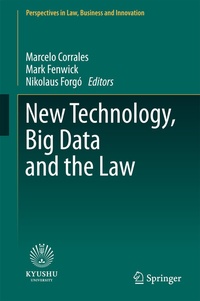
New Technology, Big Data and the Law
Description

The chapters presented in this edition address these issues from the perspective of different legal backgrounds. The first part of the book discusses some of the shortcomings that have prompted legislators to carry out reforms with regard to privacy, data protection, and data security. Notably, some of the complexities and salient points with regard to the new European General Data Protection Regulation (EU GDPR)and the new amendments to the Japan's Personal Information Protection Act (PIPA) have been scrutinized.
The second part looks at the vital role of Internet intermediaries (or brokers) for the proper functioning of the globalized electronic market and innovation technologies in general. The third part examines an electronic approach to evidence with an evaluation of how these technologies affect civil and criminal investigations. The authors also explore issues that have emerged in e-commerce, such as Bitcoin and its blockchain network effects.
The book aims to explain, systemize and solve some of the lingering legal questions created by the disruptive technological change that characterizes the early twenty-first century.
More details
Other editions
Additional editions
Content
Disruptive Technologies Shaping the Law of the Future (Marcelo Corrales, Mark Fenwick & Nikolaus Forgó).-
Part I Purpose and Limitation
.- The Principle of Purpose Limitation & Big Data (Nikolaus Forgó, Stefanie Hänold & Benjamin Schütze).- Scientific Research and Academic e-Learning in Light of the EU's Legal Framework for Data Protection (Cecilia Magnusson Sjöberg).- Internet of Things - Right to Data from a European Perspective (Christine Storr & Pam Storr).- The Right to be Forgotten: New Privacy Right in the Era of Internet (Yuriko Haga).-
Part II Innovation Intermediaries
.- Intermediaries and Mutual Trust: The Role of Social Capital in Facilitating Innovation and Creativity (Shinto Teramoto & Paulius Jurcys).- Nudging Cloud Providers: Improving Cloud Architectures Through Intermediary Services (Marcelo Corrales & George Kousiouris).- A Brokering Framework for Assessing Legal Risks in Big Data and the Cloud (Marcelo Corrales & Karim Djemame).- Internet Intermediaries and Copyright Enforcement in the EU: In Search of a Balanced Approach (Ioannis Revolidis).-
Part III Digital Evidence
.- The Collection of Electronic Evidence in Germany: A Spotlight on Recent Legal Developments and Court Rulings (Nikolaus Forgó, Christian Hawellek, Friederike Knoke & Jonathan Stoklas).- LegalAIze: Tackling the Normative Challenges of Artificial Intelligence and Robotics Through the Secondary Rules of Law (Ugo Pagallo).- In the Shadow of Banking: Oversight of Fintechs and Their Service Companies(Daniel Bunge).- Index.
