

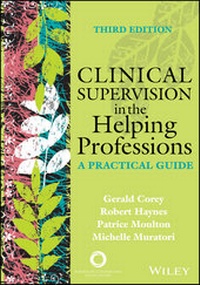
Clinical Supervision in the Helping Professions
Description

This user-friendly guide is for students, prelicensed professionals, and practicing supervisors seeking the knowledge and skills necessary to effectively supervise others. It is an ideal resource for practicum, fieldwork, and internship seminars across the mental health professions, and the contemporary case examples, authors' personal perspectives, and insightful vignettes from 45 contributing authors offer a unique glimpse at key issues in the theory and practice of supervision.
Topics covered include the roles and responsibilities of supervisors, the supervisory relationship, models and methods of supervision, development as a multiculturally competent supervisor, ethical and legal issues in supervision, crisis management, and evaluation. Interactive questions and exercises throughout the text stimulate readers to self-reflect and grow in both competence and confidence in navigating the supervision process.
*Requests for digital versions from ACA can be found on www.wiley.com
*To request print copies, please visit the ACA https://imis.counseling.org/store/detail
*Reproduction requests for material from books published by ACA should be directed to publications@counseling.org
More details
Persons
Gerald Corey, EdD, ABPP, is professor emeritus of Human Services and Counseling at California State University at Fullerton. He is a Diplomate in Counseling Psychology, American Board of Professional Psychology; a licensed psychologist in California; and a National Certified Counselor.
Robert Haynes, PhD, is a clinical psychologist, author, and producer of psychology video programs for Borderline Productions. Bob is a member of the American Counseling Association and the Association for Counselor Education and Supervision. Bob served for 35 years in the capacity of both administrative and clinical supervisor in a variety of academic and clinical settings.
Patrice Moulton, PhD, serves as full professor of psychology at Northwestern State University in the master's program for clinical psychology. She has worked as an educator, administrator, practitioner, supervisor, and consultant for over 30 years.
Michelle Muratori, PhD, is a senior counselor at the Center for Talented Youth at Johns Hopkins University, in Baltimore, Maryland, where she works with highly gifted middle school and high school students who participate in the Study of Exceptional Talent and their families. She has a passion for group counseling and loves training students in the art of group facilitation.
Content
Preface ix
Acknowledgments xvii
About the Authors xix
About the Contributors xxiii
CHAPTER 1 Introduction to Supervision 1
CHAPTER 2 Roles and Responsibilities of Supervisors 19
CHAPTER 3 The Supervisory Relationship 45
CHAPTER 4 Models of Supervision 71
CHAPTER 5 Methods of Supervision 95
CHAPTER 6 Becoming a Multiculturally Competent Supervisor 125
CHAPTER 7 Ethical Issues and Multiple Relationships in Supervision 159
CHAPTER 8 Legal and Risk Management Issues in Supervision 191
CHAPTER 9 Crisis Management in Supervision 219
CHAPTER 10 Evaluation in Supervision 247
CHAPTER 11 Becoming an Effective Supervisor 275
References 289
Subject Index 301
Name Index 314
