

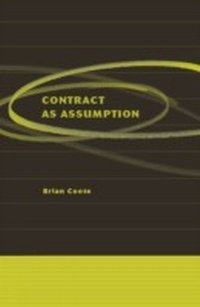
Contract as Assumption
Essays on a Theme
1st Edition
Published on 2. April 2010
246 pages
978-1-84731-578-6 (ISBN)
Description

It has many times been said that contracts involve assumptions of obligation or liability, but what that means, and what it is that is assumed, have not often been discussed.
It is to further such discussion that some of the author's previously published writings around this subject have been brought together in this book. His basic premises are that contractual obligation and liability in this context are two sides to the same coin and that an assumption of one is an assumption of both. Parties are bound not because liability has been imposed upon them by law as a result of their having entered into a contract but because, in the act of assuming, they have imposed it upon themselves. Contract provides a facility the purpose of which is to enable this to be done within the limits prescribed by law.
The implication of these premises are much more significant than might be supposed when applied to such areas of contract as formation, consideration, intention to contract, exception clauses, privity and damages. The book concludes with a treatment of the role of assumption in tort.
Because of the importance of its subject matter and its wide-ranging treatment, this book should appeal not only to teachers and postgraduate students of contract but also to practitioners in the field and to anyone else with an interest in contract theory.
It is to further such discussion that some of the author's previously published writings around this subject have been brought together in this book. His basic premises are that contractual obligation and liability in this context are two sides to the same coin and that an assumption of one is an assumption of both. Parties are bound not because liability has been imposed upon them by law as a result of their having entered into a contract but because, in the act of assuming, they have imposed it upon themselves. Contract provides a facility the purpose of which is to enable this to be done within the limits prescribed by law.
The implication of these premises are much more significant than might be supposed when applied to such areas of contract as formation, consideration, intention to contract, exception clauses, privity and damages. The book concludes with a treatment of the role of assumption in tort.
Because of the importance of its subject matter and its wide-ranging treatment, this book should appeal not only to teachers and postgraduate students of contract but also to practitioners in the field and to anyone else with an interest in contract theory.
More details
Edition
1. Auflage
Language
English
Place of publication
London
United Kingdom
Publishing group
Bloomsbury Publishing PLC
Target group
Professional and scholarly
ISBN-13
978-1-84731-578-6 (9781847315786)
Copyright in bibliographic data and cover images is held by Nielsen Book Services Limited or by the publishers or by their respective licensors: all rights reserved.
Schweitzer Classification
Other editions
Additional editions
Book
04/2010
Hart Publishing
€118.10
Shipment within 15-20 days
Persons
Brian Coote, CBE, FNZAH, FRSNZ is an Emeritus Professor and sometime Dean of Law at the University of Auckland, and has published widely on Contract topics
Content
1. Introduction
2. The Essence of Contract
Introduction
Textbook Definitions
Contract Theories
The Secret Paradox
The Failure of Traditional Contract Theories
The Reaction Against Classical Concepts of Contract
The Need for a More Inclusive Theory
A Suggested Solution to the 'Secret Paradox'
The Essence of a Contract
Some Consequences
The Contemporary Near-Contracts
Conclusion
3. Consideration and Benefit in Fact and in Law
The Facts
The Judgment
The Meaning of the Decision
An Explanation for the Decision
Bilateral Contracts
Unilateral Contracts
Conclusion
4. Consideration and the Variation of Contracts: A Different Solution
5. Consideration and the Joint Promisee
The Arguments for the Joint Promisee Principle
Two Fallacies
Joint Promisee as Promisor
Unilateral Contracts
Conclusion
Addendum
6. The Function of Exception Clauses
The Current Approach
Are Exception Clauses Substantive or Procedural In Their Effect?
Can the Parties to a Contract Create Rights Intended by Them to be Unenforceable?
A Different Approach Suggested
A Suggested Classification of Exception Clauses
The Interpretation of Exception Clauses In Relation to Their Function
Some Special Consequences of the Exception Form
Conclusions
Addendum
7. The Second Rise and Fall of Fundamental Breach
Discharge for Breach and Deviation Distinguished
The Function of Exception Clauses
The Suisse Atlantique Case
The Second Version of Fundamental Breach
The Securicor Case
The Significance of Securicor for the Future
Conclusion
8. Contract Damages, Ruxley, and the Performance Interest
The Ruxley case
A Basic Ambiguity in Contract Damages
Damages as Protection of the Performance Interest
Other Protections of the Performance Interest
Extending the Potential Inclusiveness of Performance Protection
The Compensation Principle
Reinstatement and Repair: Building Contracts
Difference in Value in Building Cases
Three Questions
The Place of General Damages
Summary and Conclusions
Addendum: Two Recent Cases
9. The Performance Interest, Panatown, and the Problem of Loss
The Arguments
The Problem of Characterisation
The Narrow Ground
The Albazero Exception
The Broad Ground
Who Suffered the Loss?
The Position Where Both Have Suffered Loss
Conclusion
10. Contract not Trust: Some Questions About the Contracts (Rights of Third Parties) Act from Another Perspective
Contract or Not?
A New Form of Contract?
The Availability of Equitable Remedies
Failure of Consideration
Defences Available to the Promisee
Conclusion
11. Assumption of Responsibility and Pure Economic Loss in New Zealand
Assumption of Legal Liability in Tort
Assumption of Non-Tort Obligation
Assumption of a Task
Conclusion
2. The Essence of Contract
Introduction
Textbook Definitions
Contract Theories
The Secret Paradox
The Failure of Traditional Contract Theories
The Reaction Against Classical Concepts of Contract
The Need for a More Inclusive Theory
A Suggested Solution to the 'Secret Paradox'
The Essence of a Contract
Some Consequences
The Contemporary Near-Contracts
Conclusion
3. Consideration and Benefit in Fact and in Law
The Facts
The Judgment
The Meaning of the Decision
An Explanation for the Decision
Bilateral Contracts
Unilateral Contracts
Conclusion
4. Consideration and the Variation of Contracts: A Different Solution
5. Consideration and the Joint Promisee
The Arguments for the Joint Promisee Principle
Two Fallacies
Joint Promisee as Promisor
Unilateral Contracts
Conclusion
Addendum
6. The Function of Exception Clauses
The Current Approach
Are Exception Clauses Substantive or Procedural In Their Effect?
Can the Parties to a Contract Create Rights Intended by Them to be Unenforceable?
A Different Approach Suggested
A Suggested Classification of Exception Clauses
The Interpretation of Exception Clauses In Relation to Their Function
Some Special Consequences of the Exception Form
Conclusions
Addendum
7. The Second Rise and Fall of Fundamental Breach
Discharge for Breach and Deviation Distinguished
The Function of Exception Clauses
The Suisse Atlantique Case
The Second Version of Fundamental Breach
The Securicor Case
The Significance of Securicor for the Future
Conclusion
8. Contract Damages, Ruxley, and the Performance Interest
The Ruxley case
A Basic Ambiguity in Contract Damages
Damages as Protection of the Performance Interest
Other Protections of the Performance Interest
Extending the Potential Inclusiveness of Performance Protection
The Compensation Principle
Reinstatement and Repair: Building Contracts
Difference in Value in Building Cases
Three Questions
The Place of General Damages
Summary and Conclusions
Addendum: Two Recent Cases
9. The Performance Interest, Panatown, and the Problem of Loss
The Arguments
The Problem of Characterisation
The Narrow Ground
The Albazero Exception
The Broad Ground
Who Suffered the Loss?
The Position Where Both Have Suffered Loss
Conclusion
10. Contract not Trust: Some Questions About the Contracts (Rights of Third Parties) Act from Another Perspective
Contract or Not?
A New Form of Contract?
The Availability of Equitable Remedies
Failure of Consideration
Defences Available to the Promisee
Conclusion
11. Assumption of Responsibility and Pure Economic Loss in New Zealand
Assumption of Legal Liability in Tort
Assumption of Non-Tort Obligation
Assumption of a Task
Conclusion
