


GWT in Practice
1st Edition
Published on 31. March 2008
376 pages
978-1-63835-223-5 (ISBN)
Description

If you're a web developer, you know that you can use Ajax to add rich, user-friendly, dynamic features to your applications. With the Google Web Toolkit (GWT), a new Ajax tool from Google that automatically converts Java to JavaScript, you can build Ajax applications using the Java language.
GWT in Practice is an example-driven, code-rich book designed for web developers already familiar with the basics of GWT who now want hands-on experience. After a quick review of GWT fundamentals, GWT in Practice presents scores of handy, reusable solutions to the problems you face when you need to move beyond "Hello World" and "proof of concept" applications. This book skips the theory and looks at the way things really work when you're building. I also shows you where GWT fits into the Enterprise Java Developer's toolset. Written by expert authors Robert Cooper and Charlie Collins, this book combines sharp insight with hard-won experience. Readers will find thorough coverage of all aspects of GWT development from the basic GWT concepts to in depth real world example applications.
The first part of the book is a rapid introduction to the GWT methodology The second part of the book then delves into several practical examples which further demonstrate core aspects of the toolkit The book concludes by presenting several larger GWT applications including drag and drop support for UI elements, data binding, processing streaming data, handling application state, automated builds, and continuous integration.
Along the way GWT in Practice covers many additional facets of working with the toolkit. Various development tools are used throughout the book, including Eclipse, NetBeans, IDEA, Ant, Maven, and, of course, the old fashioned command line. The book also addresses integrating GWT with existing applications and services along with enterprise and team development.
GWT in Practice is an example-driven, code-rich book designed for web developers already familiar with the basics of GWT who now want hands-on experience. After a quick review of GWT fundamentals, GWT in Practice presents scores of handy, reusable solutions to the problems you face when you need to move beyond "Hello World" and "proof of concept" applications. This book skips the theory and looks at the way things really work when you're building. I also shows you where GWT fits into the Enterprise Java Developer's toolset. Written by expert authors Robert Cooper and Charlie Collins, this book combines sharp insight with hard-won experience. Readers will find thorough coverage of all aspects of GWT development from the basic GWT concepts to in depth real world example applications.
The first part of the book is a rapid introduction to the GWT methodology The second part of the book then delves into several practical examples which further demonstrate core aspects of the toolkit The book concludes by presenting several larger GWT applications including drag and drop support for UI elements, data binding, processing streaming data, handling application state, automated builds, and continuous integration.
Along the way GWT in Practice covers many additional facets of working with the toolkit. Various development tools are used throughout the book, including Eclipse, NetBeans, IDEA, Ant, Maven, and, of course, the old fashioned command line. The book also addresses integrating GWT with existing applications and services along with enterprise and team development.
More details
Other editions
Additional editions
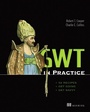
Robert Cooper | Charlie Collins
GWT in Practice
Book
05/2008
Manning Publications
€42.00
Article exhausted; check different version
Persons
Robert Cooper is a JEE developer with 15 years of web development experience. He is a contributor to several open source projects, including the ROME RSS/Atom API plugins for Podcasting and MediaRSS, is the author of the FeedPod text-to-speech podcasting system, and the gwt-maven plugins for supporting Maven based builds for Google Web Toolkit.
Charlie Collins is a software developer and author. Charlie has over 12 years of experience with Java and is interested in many areas of Java development including: SE, EE, mobile and embedded, and alternative languages on the JVM. Charlie is the co-author of GWT in Practice and has written various online articles. Charlie has also been an ardent open source supporter for many years and has contributed documentation and patches for several open source projects. Charlie is the co-creator and maintainer of GWT-Maven, and is also currently a Maven Mojo committer.
Charlie Collins is a software developer and author. Charlie has over 12 years of experience with Java and is interested in many areas of Java development including: SE, EE, mobile and embedded, and alternative languages on the JVM. Charlie is the co-author of GWT in Practice and has written various online articles. Charlie has also been an ardent open source supporter for many years and has contributed documentation and patches for several open source projects. Charlie is the co-creator and maintainer of GWT-Maven, and is also currently a Maven Mojo committer.
Content
- Intro
- Copyright
- Brief Table of Contents
- Table of Contents
- Preface
- Acknowledgments
- About this Book
- About the Cover Illustration
- Part 1. Getting Started
- Chapter 1. Introducing GWT
- Chapter 2. A New Kind of Client
- Chapter 3. Communicating with the Server
- Part 2. Task-specific Issues
- Chapter 4. Core Application Structure
- Chapter 5. Other Techniques for Talking to Servers
- Chapter 6. Integrating Legacy and Third-Party Ajax Libraries
- Chapter 7. Building, Packaging, and Deploying
- Chapter 8. Testing and Continuous Integration
- Part 3. Fully Formed Applications
- Chapter 9. Java Enterprise Reinvented
- Chapter 10. Building the Storefront
- Chapter 11. Managing Application State
- Appendix A. Notable GWT Projects
- Appendix B. Quick Reference
- Index
- List of Figures
- List of Tables
- List of Listings
