


Second Language Learning and Language Teaching
6th Edition
Published on 29. January 2026
376 pages
978-1-040-43230-3 (ISBN)
Description

A classic introduction to second language acquisition and its application to language teaching, the sixth edition of Second Language Learning and Language Teaching has been extensively revised to reflect the evolving realities of multilingual classrooms and global communication. Drawing on the latest research, it offers clear explanations of key theoretical concepts alongside practical insights for language teaching.
Written by leading expert Vivian Cook and sensitively updated by Dick Smakman, the book critically engages with native-speaker models, emphasizing intelligibility, meaningful communication, and the diverse ways in which people learn additional languages. A brand-new chapter on the changing classroom explores current pedagogical challenges and emerging learner profiles, while updated content is organized thematically for greater clarity.
Designed for readers with no prior background in second language research, this accessible and comprehensive text is ideal for students of applied linguistics, TESOL, and language education more broadly.
Pedagogical features include focusing questions, an expanded glossary, and a rich companion website offering additional materials for both students and instructors.
Written by leading expert Vivian Cook and sensitively updated by Dick Smakman, the book critically engages with native-speaker models, emphasizing intelligibility, meaningful communication, and the diverse ways in which people learn additional languages. A brand-new chapter on the changing classroom explores current pedagogical challenges and emerging learner profiles, while updated content is organized thematically for greater clarity.
Designed for readers with no prior background in second language research, this accessible and comprehensive text is ideal for students of applied linguistics, TESOL, and language education more broadly.
Pedagogical features include focusing questions, an expanded glossary, and a rich companion website offering additional materials for both students and instructors.
Reviews / Votes
If ever there were a timely book, this is it. Today, with new technologies transforming the field, we teach and study languages amid deep uncertainty. Our only hope of keeping up is to continue questioning the very nature of multilingualism and the impact language learning has on culturally diverse individuals around the world.Kapitolina Fedorova, Full Professor of Russian Studies, University of Tallinn, Estonia
The sixth edition of Second Language Learning and Language Teaching offers a comprehensive and accessible overview of key theories and practices in second language acquisition. Authored by renowned scholars Vivian Cook and Dick Smakman, the book bridges the gap between research and classroom application, making it an essential resource for language teachers and students alike. It includes up-to-date insights into contemporary issues in language learning. I plan to actively use this book in my own classes when engaging students in discussions about second language teaching. Its content aligns perfectly with my approach of combining theoretical foundations with the development of practical teaching skills in the field of second language education.
Giuli Shabashvili, Associate Professor of Linguistics, Tbilisi State University, Georgia
More details
Edition
6th edition
Language
English
Place of publication
London
United Kingdom
Publishing group
Taylor & Francis Ltd
Target group
College/higher education
Illustrations
25 Line drawings, black and white; 4 Halftones, black and white; 29 Illustrations, black and white
File size
8,23 MB
ISBN-13
978-1-040-43230-3 (9781040432303)
Copyright in bibliographic data and cover images is held by Nielsen Book Services Limited or by the publishers or by their respective licensors: all rights reserved.
Schweitzer Classification
Other editions
Additional editions
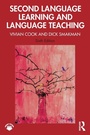
Vivian Cook | Dick Smakman
Second Language Learning and Language Teaching
Book
approx. 01/2026
6th Edition
Routledge
€74.90
Not yet published
Vivian Cook | Dick Smakman
Second Language Learning and Language Teaching
Book
approx. 01/2026
6th Edition
Routledge
€212.30
Not yet published

Vivian Cook
Second Language Learning and Language Teaching
Book
10/2025
Routledge
Unfortunately, price unknown
Available (delivery time upon request)
Previous edition
E-Book
05/2016
5th Edition
Routledge
€65.99
Available for download
Persons
Vivian Cook was Professor of Applied Linguistics at Newcastle University, UK. His main interests were how people learn second languages and how writing works in different languages, particularly in street signs. He was a founder of the European Second Language Association and co-founder and co-editor of the journal Writing System Research.
Dick Smakman is Lecturer of Sociolinguistics and Second Language Teaching at Leiden University, the Netherlands. In his teachings and research, he combines the two fields. He has taught English and Dutch at various universities.
Dick Smakman is Lecturer of Sociolinguistics and Second Language Teaching at Leiden University, the Netherlands. In his teachings and research, he combines the two fields. He has taught English and Dutch at various universities.
Content
Preface
Notes on the Text
Part I. BACKGROUND
1. Learning and Teaching Language
2. Second Language Acquisition Research
Part II. LEARNING A SECOND LANGUAGE
3. The Changing Classroom
4. Individual Learner Differences
5. Strategies for Communicating and Learning
6. Models of Second Language Learning
Part III. TEACHING A SECOND LANGUAGE
7. The Learner and the Native Speaker
8. The Goals of Language Teaching
9. Second Language Pedagogy
Part IV. LEARNING AND TEACHING SECOND LANGUAGE SKILLS
10. Writing
11. Grammar
12. Vocabulary
13. Pronunciation
References
Glossary
Index
Notes on the Text
Part I. BACKGROUND
1. Learning and Teaching Language
2. Second Language Acquisition Research
Part II. LEARNING A SECOND LANGUAGE
3. The Changing Classroom
4. Individual Learner Differences
5. Strategies for Communicating and Learning
6. Models of Second Language Learning
Part III. TEACHING A SECOND LANGUAGE
7. The Learner and the Native Speaker
8. The Goals of Language Teaching
9. Second Language Pedagogy
Part IV. LEARNING AND TEACHING SECOND LANGUAGE SKILLS
10. Writing
11. Grammar
12. Vocabulary
13. Pronunciation
References
Glossary
Index
