

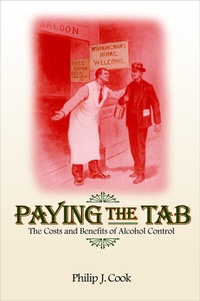
Paying the Tab
The Costs and Benefits of Alcohol Control
1st Edition
Published on 27. June 2011
280 pages
978-1-4008-3741-0 (ISBN)
Description

What drug provides Americans with the greatest pleasure and the greatest pain? The answer, hands down, is alcohol. The pain comes not only from drunk driving and lost lives but also addiction, family strife, crime, violence, poor health, and squandered human potential. Young and old, drinkers and abstainers alike, all are affected. Every American is paying for alcohol abuse.
Paying the Tab, the first comprehensive analysis of this complex policy issue, calls for broadening our approach to curbing destructive drinking. Over the last few decades, efforts to reduce the societal costs--curbing youth drinking and cracking down on drunk driving--have been somewhat effective, but woefully incomplete. In fact, American policymakers have ignored the influence of the supply side of the equation. Beer and liquor are far cheaper and more readily available today than in the 1950s and 1960s.
Philip Cook's well-researched and engaging account chronicles the history of our attempts to "legislate morality," the overlooked lessons from Prohibition, and the rise of Alcoholics Anonymous. He provides a thorough account of the scientific evidence that has accumulated over the last twenty-five years of economic and public-health research, which demonstrates that higher alcohol excise taxes and other supply restrictions are effective and underutilized policy tools that can cut abuse while preserving the pleasures of moderate consumption. Paying the Tab makes a powerful case for a policy course correction. Alcohol is too cheap, and it's costing all of us.
Paying the Tab, the first comprehensive analysis of this complex policy issue, calls for broadening our approach to curbing destructive drinking. Over the last few decades, efforts to reduce the societal costs--curbing youth drinking and cracking down on drunk driving--have been somewhat effective, but woefully incomplete. In fact, American policymakers have ignored the influence of the supply side of the equation. Beer and liquor are far cheaper and more readily available today than in the 1950s and 1960s.
Philip Cook's well-researched and engaging account chronicles the history of our attempts to "legislate morality," the overlooked lessons from Prohibition, and the rise of Alcoholics Anonymous. He provides a thorough account of the scientific evidence that has accumulated over the last twenty-five years of economic and public-health research, which demonstrates that higher alcohol excise taxes and other supply restrictions are effective and underutilized policy tools that can cut abuse while preserving the pleasures of moderate consumption. Paying the Tab makes a powerful case for a policy course correction. Alcohol is too cheap, and it's costing all of us.
All prices
More details
Other editions
Additional editions
Book
05/2016
Princeton University Press
€29.60
Shipment within 10-20 days
Book
08/2007
Princeton University Press
€68.09
Shipment within 10-20 days
Person
Philip J. Cook is professor of public policy and economics at Duke University and former director of the university's Sanford Institute of Public Policy. His books include Gun Violence, The Winner-Take-All Society, and Selling Hope.
Content
List of Illustrations ix
Preface xi
CHAPTER 1: Introduction 1
PART I Rise and Fall of Alcohol Control 11
CHAPTER 2: A Brief History of the Supply Side 13
CHAPTER 3: The Alcoholism Movement 34
PART II Evidence of Effectiveness 47
CHAPTER 4: Drinking: A Primer 49
CHAPTER 5: Prices and Quantities 65
CHAPTER 6: Alcohol Control as Injury Prevention 82
CHAPTER 7: Long-Term Effects: Hearts and Minds 107
CHAPTER 8: The Drinker's Bonus 120
PART III Assessing Policy Options 131
CHAPTER 9: Evaluating Interventions 133
CHAPTER 10: Regulating Supply 148
CHAPTER 11: Taxing the Alcohol Industry 165
CHAPTER 12: Youth as a Special Case 179
CHAPTER 13: Alcohol-Control Policy for the Twenty-First Century 196
Methodological Appendix 203
Notes 207
References 221
Index 249
Preface xi
CHAPTER 1: Introduction 1
PART I Rise and Fall of Alcohol Control 11
CHAPTER 2: A Brief History of the Supply Side 13
CHAPTER 3: The Alcoholism Movement 34
PART II Evidence of Effectiveness 47
CHAPTER 4: Drinking: A Primer 49
CHAPTER 5: Prices and Quantities 65
CHAPTER 6: Alcohol Control as Injury Prevention 82
CHAPTER 7: Long-Term Effects: Hearts and Minds 107
CHAPTER 8: The Drinker's Bonus 120
PART III Assessing Policy Options 131
CHAPTER 9: Evaluating Interventions 133
CHAPTER 10: Regulating Supply 148
CHAPTER 11: Taxing the Alcohol Industry 165
CHAPTER 12: Youth as a Special Case 179
CHAPTER 13: Alcohol-Control Policy for the Twenty-First Century 196
Methodological Appendix 203
Notes 207
References 221
Index 249

