

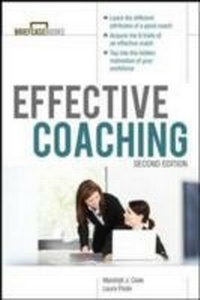
Manager's Guide to Effective Coaching, Second Edition
1st Edition
Published on 27. July 2011
239 pages
978-0-07-177253-2 (ISBN)
Description

Boost productivity by making the switch from boss to COACH! Effective managers know their job is to help employees succeed, not to give them orders. They create relationships that build collaboration and meaningful performance improvement. These managers know that when they facilitate the success of their team members, they facilitate their own success. Effective Coaching teaches you practices you can use immediately to engender employee commitment and help employees gain the skills necessary to sustain and grow any type of organization. Youll learn: The attributes of a successful coach How to set up an effective coaching session How to use coaching to correct unproductive behavior How to use coaching to be a better trainer Briefcase Books, written specifically for todays busy manager, feature eye-catching icons, checklists, and sidebars to guide managers step-by-step through everyday workplace situations. Look for these innovative design features to help you navigate through each page: -Clear definitions of key terms and concepts -Tactics and strategies for coaching employees -Tricks of the trade for executing effective coaching techniques -Practical advice for minimizing the possibility of error -Warning signs for when things are about to go wrong -Examples of successful workplace coaching -Specific planning procedures, tactics, and hands-on techniques
More details
Other editions
Additional editions
Marshall Cook | Laura Poole
Manager's Guide to Effective Coaching, Second Edition
Book
08/2011
2nd Edition
McGraw-Hill Professional
€23.50
Shipment within 15-20 days
Content
- Cover Page
- Effective Coaching
- Copyright Page
- Contents
- Preface
- About the Authors
- 1. The Goals of Good Coaching
- Why Should a Manager Be a Coach?
- Are You Tapping Your Most Valuable Resource?
- Accessibility
- The Benefits of Good Coaching
- Meanwhile, Back at the Publishing Group
- The Coach's Checklist for Chapter 1
- 2. The Attributes of a Good Coach
- Coaching: Definitions and Distinctions
- Characteristics of a Good Coach
- Translating Attitudes into Actions
- The Coach's Checklist for Chapter 2
- 3. What Do Your Players Want?
- Looking Beyond the Paycheck
- Three Drives That Motivate Your Staff
- Strategies for Motivational Coaching
- The Coach's Checklist for Chapter 3
- 4. The Signs of Good Coaching
- Body Language
- "Speaking" Body Language
- The Elements of a Good Coaching Session
- The Coach's Checklist for Chapter 4
- 5. Asking Good Questions
- Why Ask Questions?
- The Qualities of Effective Coaching Questions
- Seven Major Types of Questions
- Three Techniques for Asking Questions
- The Coach's Checklist for Chapter 5
- 6. Powerful Listening
- Three Levels of Listening
- Seven Keys to Effective Listening
- Moving Beyond Listening
- The Coach's Checklist for Chapter 6
- 7. Creating Solutions Through Coaching
- Six Steps to Effective Problem Solving
- Solution-Focused Coaching
- Degrees of Difficulty
- The Coach's Checklist for Chapter 7
- 8. The Coach as Trainer
- Guidelines for the Coach as Trainer
- Before, During, and After Training
- What Kind of Trainer Are You?
- Four Stages of Learning
- The Learner's Point of View
- An Ideal Training Session
- How Will You Know If It Worked?
- The Coach's Checklist for Chapter 8
- 9. The Coach as Mentor
- Types of Mentoring
- Effective Mentoring
- Mentoring to Define the Work
- Mentoring to Motivate
- Respecting the Boundaries of Mentoring
- The Coach's Checklist for Chapter 9
- 10. The Coach as Corrector
- Make It an Encounter, Not a Confrontation
- Positive Specific Action
- Define Consequences Clearly
- Build on the Possible
- Look to the Future
- Performance Killers
- The Coach's Checklist for Chapter 10
- 11. Coaching Trouble Spots
- Lack of Authentic Purpose
- Anxiety (Yours)
- Fear/Distrust (Theirs)
- Resistance to Change
- Lack of Coaching Skills
- Language Barriers
- Coaching Obstacles
- The Coach's Checklist for Chapter 11
- 12. Steps to Effective Coaching
- Step 1: Build Rapport
- Step 2: Identify the Issue or Goal
- Step 3: Create Vision
- Step 4: Brainstorm Approaches
- Step 5: Establish an Action Plan
- Step 6: Commitment and Accountability
- Step 7: Acknowledgment
- Step 8: Follow-Up
- The Coach's Checklist for Chapter 12
- 13. Once More, with Feedback
- Elements of Effective Feedback
- Before You Deliver Feedback
- Delivering Bad News
- Feedback on Your Feedback
- The Coach's Checklist for Chapter 13
- 14. Coaching and Rewards
- Tangible Rewards
- Symbolic Rewards
- Intangible Rewards
- Rules of Rewarding
- The Coach as a Cheerleader
- The Coach's Checklist for Chapter 14
- 15. Principles of Good Coaching (and Good Living)
- The Principle of Getting Started
- The Illusion of Control
- The Principle of Decisions
- The Principle of Change
- The Principle of Time
- The Principle of Questions
- The Principle of Mistakes
- The Principle of Anger
- The Illusion of Objectivity
- The Principle of the Big Picture
- The Principle of Fear
- The Principle of Role Modeling
- The Principle of Life
- The Coach's Checklist for Chapter 15
- Index
