

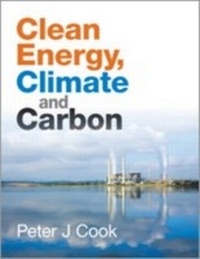
Clean Energy, Climate and Carbon
1st Edition
Published on 27. February 2012
265 pages
978-0-643-10682-6 (ISBN)
Description

With the general reader in mind, Clean Energy, Climate and Carbon outlines the global challenge of decreasing greenhouse gas emissions. It covers the changing concentration of atmospheric carbon dioxide through time and its causes, before considering the promise and the limitations of a wide range of energy technologies for decreasing carbon dioxide emissions. Despite the need to decrease carbon dioxide, the fact is that the global use of fossil fuels is increasing and is likely to continue to do so for some decades to come. With this in mind, the book considers in detail, what for many people is the unfamiliar clean energy technology of carbon capture and storage (CCS). How can we capture carbon dioxide from flue gases? How do we transport it? How do we store it in suitable rocks? What are suitable rocks and where do we find them? How do we know the carbon dioxide will remain trapped once it is injected underground? What does CCS cost and how do those costs compare with other technology options? The book also explores the political environment in which the discussion on clean energy technology options is occurring. What will a price on carbon do for technology uptake and what are the prospects of cutting our emissions by 2020 and of making even deeper cuts by 2050? What will the technology mix look like by that time?For people who are concerned about climate change, or who want to learn more about clean energy technologies, including CCS, this is the definitive view of the opportunities and the challenges we face in decreasing emissions despite a seemingly inexorable global increase in energy demand.
More details
Other editions
Additional editions
Peter J. Cook
Clean Energy, Climate and Carbon
Book
03/2012
CSIRO Publishing
€57.14
Article exhausted; check different version
Content
- Intro
- Dedication
- Title Page
- Copyright
- Contents
- Preface
- Acknowledgements
- 1 The context
- Climate change science: the controversies
- Global and national efforts to take action on climate change
- About this book
- 2 CO2 and climate change
- Greenhouse gases
- The nature of carbon dioxide
- Carbon dioxide and earth's history
- Weather versus climate
- Causes of pre-human climate change
- Distinguishing natural climate change from anthropogenic climate change
- Sea level change as evidence for global warming
- Global warming and extreme weather events
- Act now or later?
- Conclusions
- 3 Where and why are we producing so much CO2?
- The production and use of energy and its impacts on CO2 emissions: an overview
- The use of fossil fuels
- Two key sectors: electricity production and transport
- Conclusions
- 4 Technology options for decreasing CO2 emissions
- Solar energy
- Wind power
- Hydroelectric power
- Ocean energy
- Biomass
- Geothermal energy
- Nuclear power
- Sequestering CO2 through carbon capture and storage (CCS)
- Conclusion
- 5 The mitigation mix
- Population growth and the energy mix
- Biofuels in the mix
- Land requirements of different technologies
- Energy and water
- Renewable energy in the energy mix
- Non renewable energy in the energy mix
- The energy mix in the medium to long term
- Conclusions
- 6 Where and how can we capture CO2?
- Directly removing CO2 from the atmosphere
- Capturing CO2 emitted from various sources
- CCS and gas production
- CCS and coal and gas-fired power generation
- Post combustion capture
- CCS and gasification
- CCS and industrial processes emitting CO2
- Technologies for separating CO2 from emissions
- Conclusions
- 7 How can we transport CO2?
- Key issues in transportation of CO2 via pipelines
- CO2 transportation by road, rail and sea
- Reducing transportation costs: CO2 hubs
- Conclusion
- 8 Storing CO2
- Why geological storage over other forms of storage?
- Identifying suitable geological CO2 storage sites: sedimentary basins
- Features of a sedimentary basin that may make it suitable for storage
- Storage of CO2 in depleted oil and gas fields
- Storage in deep saline aquifers
- Storage in coals
- Storage in basalts
- Storage in serpentinites
- Assessing storage capacity
- National assessments of storage potential
- Conclusions
- 9 How do we know CCS will be effective?
- The nature of risk assessment
- Geological risk
- Existing natural gas storage facilities
- Natural accumulations of CO2
- Knowledge derived from large scale commercial CO2 storage projects
- Location-specific risk assessment: characterising the site
- The risks of earthquakes
- The risk to groundwater
- Monitoring
- The regulatory regime
- A 'social licence' for CCS?
- 10 The cost of clean energy
- The interplay of costs
- The costs of capturing CO2 emissions from non-power sources
- Transport and associated costs
- Storage costs
- Indicative total costs for CCS
- Cost estimates derived from operational CCS activities
- Costing uncertainty
- Comparison costing
- Conclusions
- 11 The technology and the politics of clean energy
- Future strategies in a carbon constrained world
- Achieving emissions reductions targets
- CCS in the clean energy mix
- The policy settings
- The impact of pricing carbon on clean energy technology uptake
- Conclusions
- Acronyms
- Additional general reading
- References to data sources
- Index
