

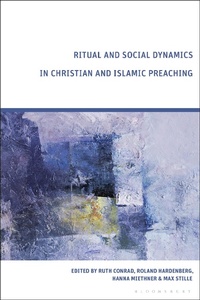
Ritual and Social Dynamics in Christian and Islamic Preaching
1st Edition
Published on 14. December 2023
224 pages
E-Book
978-1-350-40885-2 (ISBN)
Description

Christian and Islamic sermons from past and present, and their preachers, are analyzed to reveal the socio-cultural dynamics of religious speeches.
Part I focuses on the explicit contribution of sermons in socio-cultural transformation processes. It shows how sermons connect with holy texts, religious norms of the specific group, and social-cultural contexts.
Part II analyzes the dynamic tension between normativity and popularity. Rather than juxtaposing normative stances and the popularity of sermons, it shows how that normativity can itself contribute to popularity and the quest of popularity carries its own normative stances.
Part III explores the ritual embeddedness of religious speech in the sermon in relation to social dynamics, normativity, and popularity, and shows how speech and rituals have a reciprocal relationship.
Part I focuses on the explicit contribution of sermons in socio-cultural transformation processes. It shows how sermons connect with holy texts, religious norms of the specific group, and social-cultural contexts.
Part II analyzes the dynamic tension between normativity and popularity. Rather than juxtaposing normative stances and the popularity of sermons, it shows how that normativity can itself contribute to popularity and the quest of popularity carries its own normative stances.
Part III explores the ritual embeddedness of religious speech in the sermon in relation to social dynamics, normativity, and popularity, and shows how speech and rituals have a reciprocal relationship.
More details
Edition
1. Auflage
Language
English
Place of publication
London
United Kingdom
Publishing group
Bloomsbury Publishing PLC
Target group
Professional and scholarly
ISBN-13
978-1-350-40885-2 (9781350408852)
Copyright in bibliographic data and cover images is held by Nielsen Book Services Limited or by the publishers or by their respective licensors: all rights reserved.
Schweitzer Classification
Other editions
Additional editions
Ruth Conrad | Roland Hardenberg | Hanna Miethner
Ritual and Social Dynamics in Christian and Islamic Preaching
Book
07/2025
Bloomsbury Academic
€55.89
Shipment within 15-20 days
Ruth Conrad | Roland Hardenberg | Hanna Miethner
Ritual and Social Dynamics in Christian and Islamic Preaching
Book
01/2024
Bloomsbury Academic
€126.28
Shipment within 15-20 days
Persons
Ruth Conrad is Professor of Practical Theology at Humboldt University of Berlin, Germany.
Roland Hardenberg is Professor of Social and Cultural Anthropology at the Goethe University Frankfurt, Germany.
Hanna Miethner is a research assistant for the Faculty of Practical Theology at Humboldt University of Berlin, Germany.
Max Stille is Executive Director of NETZ Partnership for Development and Justice, Germany.
Roland Hardenberg is Professor of Social and Cultural Anthropology at the Goethe University Frankfurt, Germany.
Hanna Miethner is a research assistant for the Faculty of Practical Theology at Humboldt University of Berlin, Germany.
Max Stille is Executive Director of NETZ Partnership for Development and Justice, Germany.
Content
List of Contributors
Acknowledgements
Introduction, Ruth Conrad (Humboldt University of Berlin, Germany), Roland Hardenberg (Goethe University Frankfurt, Germany), Hanna Miethner (Humboldt University of Berlin, Germany), Max Stille (NETZ Partnership for Development and Justice, Wetzlar, Germany)
Part I: Preaching and Social Dynamics
1. Are 1000 Sermons Representative Enough? Political and Social Dimensions of Sermons and Religious Speeches 1800-1950 in Germany and Some Methodological Problems, Olaf Blaschke (University of Münster, Germany)
2. The Struggle for Hope Continues: The Christmas Sermons of Archbishop Thabo Makgoba, 2009-2019, Cas Wepener and Marileen Steyn (Stellenbosch University, South Africa)
3. Moral Exhortation in Islamic Discourse: Performance and Ethics in Islamic Sermons, Abdulkader Tayob (University of Cape Town, South Africa)
Part II: Popularity and Normativity in Sermons
4. Unity, Justice and Freedom: Preached Religious Staging of Political Values in the Public Sermons on the Day of Germany Unity ('Tag Der Deutschen Einheit'), Jan Hermelink (University of Göttingen, Germany)
5. Joel Osteen's Prosperity Gospel and the Enduring Popularity of America's 'Smiling Preacher', Maren Freudenberg (University of Bochum, Germany)
6. A Case on Behalf of the 'Routine Listener', Julian Millie (Monash University Melbourne, Australia)
Part III: Ritual and Religious Speech
7. 'Words Against Death' Religious Speech: Perspectives From Ritual Ambivalences and Trends, Paul Post (University of Tilburg, the Netherlands)
8. Arabic Oration in Early Islam: Religion, Ritual, and Rhetoric, Tahera Quitbuddin (University of Chicago, USA)
9. The Rain Rogation khutba: A Case Study of the Reciprocal Relationship Between Islamic Ritual and Religious Speech, Linda Gale Jones (Universitat Pompeu Fabra Barcelona, Spain)
Appendices
Index
Acknowledgements
Introduction, Ruth Conrad (Humboldt University of Berlin, Germany), Roland Hardenberg (Goethe University Frankfurt, Germany), Hanna Miethner (Humboldt University of Berlin, Germany), Max Stille (NETZ Partnership for Development and Justice, Wetzlar, Germany)
Part I: Preaching and Social Dynamics
1. Are 1000 Sermons Representative Enough? Political and Social Dimensions of Sermons and Religious Speeches 1800-1950 in Germany and Some Methodological Problems, Olaf Blaschke (University of Münster, Germany)
2. The Struggle for Hope Continues: The Christmas Sermons of Archbishop Thabo Makgoba, 2009-2019, Cas Wepener and Marileen Steyn (Stellenbosch University, South Africa)
3. Moral Exhortation in Islamic Discourse: Performance and Ethics in Islamic Sermons, Abdulkader Tayob (University of Cape Town, South Africa)
Part II: Popularity and Normativity in Sermons
4. Unity, Justice and Freedom: Preached Religious Staging of Political Values in the Public Sermons on the Day of Germany Unity ('Tag Der Deutschen Einheit'), Jan Hermelink (University of Göttingen, Germany)
5. Joel Osteen's Prosperity Gospel and the Enduring Popularity of America's 'Smiling Preacher', Maren Freudenberg (University of Bochum, Germany)
6. A Case on Behalf of the 'Routine Listener', Julian Millie (Monash University Melbourne, Australia)
Part III: Ritual and Religious Speech
7. 'Words Against Death' Religious Speech: Perspectives From Ritual Ambivalences and Trends, Paul Post (University of Tilburg, the Netherlands)
8. Arabic Oration in Early Islam: Religion, Ritual, and Rhetoric, Tahera Quitbuddin (University of Chicago, USA)
9. The Rain Rogation khutba: A Case Study of the Reciprocal Relationship Between Islamic Ritual and Religious Speech, Linda Gale Jones (Universitat Pompeu Fabra Barcelona, Spain)
Appendices
Index
