

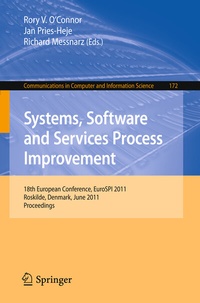
Systems, Software and Services Process Improvement
18th European Conference, EuroSPI 2011, Roskilde, Denmark, June 27-29, 2011, Proceedings
Published on 24. June 2011
XVI, 309 pages
978-3-642-22206-1 (ISBN)
Description

This volume constitutes the refereed proceedings of the 18th EuroSPI conference, held in Roskilde, Denmark, in June 2011. The 18 revised full papers presented together with 9 key notes were carefully reviewed and selected. They are organized in topical sections on SPI and assessments; SPI and implementation; SPI and improvement methods; SPI organization; SPI people/ teams; SPI and reuse; selected key notes for SPI implementation.
More details
Series
Language
English
Place of publication
Berlin
Germany
Publishing group
Springer Berlin
Target group
Professional and scholarly
Illustrations
XVI, 309 p. 67 illus., 42 illus. in color.
File size
6,16 MB
ISBN-13
978-3-642-22206-1 (9783642222061)
DOI
10.1007/978-3-642-22206-1
Schweitzer Classification
Other editions
Additional editions
Rory V. Connor | Jan Pries-Heje | Richard Messnarz
Systems, Software and Services Process Improvement
18th European Conference, EuroSPI 2011, Roskilde, Denmark, June 27-29, 2011, Proceedings
Book
06/2011
1st Edition
Springer
€53.49
Shipment within 7-9 days
Content
- Intro
- CCIS 172
- Preface
- Organization
- Table of Contents
- SPI and Assessment
- A Multi-model Workflow before Establishing an Acquisition Contract Based on CMMI-ACQ Model
- Introduction
- CMMI for Acquisition Model
- OAP: Procedure for Organizing the CMMI-ACQ Process Areas
- Identify Dependencies
- Analyze Dependencies
- Implementation Sequences
- Establishing the Main Workflow from SSAD Process Area
- Mapping
- Conclusions
- References
- ISO/IEC 15504-5 Best Practices for IT Service Management
- Introduction
- Background
- ISO/IEC 20000 Information Technology - Service Management
- ISO/IEC 15504-5 Part 5: An Exemplar Process Assessment Model
- Research Method
- Analysis of the Relations
- Results and Discussion
- Summary of the Relations
- Analysis from the ISO/IEC 20000-4 Perspective
- Analysis from the ISO/IEC 15504-5 Perspective
- Conclusion and Lessons Learned
- References
- A Self-assessment Framework for Finding Improvement Objectives with ISO/IEC 29119 Test Standard
- Introduction
- Related Research
- Self-assessment Framework
- The ISO/IEC 29119 Test Process Model
- Maturity Levels for Framework
- Pilot Study
- Data Collection and Analysis
- Developed Organizational Profiles
- Assessing Framework Results
- Discussion
- Conclusions
- References
- SPI and Implementation
- Improving the Deployment of IT Service Management Processes: A Case Study
- Introduction
- Our Contribution
- Research Methods
- The Case Organization and Data Collection Methods
- Data Analysis
- Improving the Deployment of IT Service Management Processes
- Change Vision and Sense of Urgency
- Coalition for Change
- Informing and Communication
- Defining Milestones and Removing Barriers
- Training
- Analysis
- Discussion and Conclusions
- References
- A Survey on the Application of the V-Modell XT in German Government Agencies
- Introduction
- Research Objectives and Context
- Related Work
- Case Study Design
- Survey Stage 1 - 2009 (Subject Selection)
- Survey Stage 2 - 2010 (Data Collection)
- Results
- Results from Stage 1
- Results from Stage 2
- Interpretation
- Conclusion and Future Work
- References
- Improving Verification & Validation in the Medical Device Domain
- Introduction
- Research Approach
- V&V in Generic Software Development
- V&V in Safety-Critical Domains
- Improvement in V&V in the Medical Device Software Domain
- Having Distinct Processes for Verification & Validation
- Independence in V&V
- Qualification of Tools
- Conclusions
- References
- SPI and Improvement Methods
- The Meaning of Success for Software SMEs: An Holistic Scorecard Based Approach
- Introduction
- Different Views of Business Success
- Financial Measures of Performance
- Multidimensional Performance Measurement Frameworks
- Harnessing the HSC to Examine Business Success
- Using the HSC Survey Instrument in Software SMEs
- Business Objectives for Software SMEs
- Relevance of HSC to Software SMEs
- Discussion and Conclusion
- References
- Five Agile Factors: Helping Self-management to Self-reflect
- Introduction
- Objectives
- Related Work
- Method
- Questionnaire Design
- Team Agreement
- Results
- Team Sample
- Global Sample
- Validity Considerations
- Discussion
- Recommendations
- Shared Leadership
- Team Orientation
- Redundancy
- Learning
- Autonomy
- Conclusion
- References
- A Detailed Software Process Improvement Methodology: BG-SPI
- Introduction
- SPI Methodologies
- BG-SPI Methodology for SPI
- Identify SPI objectives
- Train Personnel for the Reference Model
- Conduct Gap Analysis
- Develop SPI Project Plan
- Implement SPI Activities
- Conduct Pilot Project Studies and Update Process Assets
- Disseminate Improvements and Close SPI Project
- Experiences on Applying BG-SPI
- Conclusion and Future Work
- References
- SPI and Organization
- Motivation and Empowerment in Process Improvement
- Introduction
- Research Goals and Methodology
- Designing the Survey Questionnaire Based on Goal Internalization Items
- Data Collection and Description of the Sample
- Conducting Process Assessments
- Goal Internalization
- Data Analysis
- Goal Internalization after Evaluating Processes
- Goal Internalization after Process Improvement
- Conclusions
- References
- Improvement of Innovation Management through the Enlargement of Idea Sources
- Introduction
- Theoretical Considerations on Idea Generation Processes
- Idea Generation - A Major Task within Innovation Management
- Knowledge and Learning as the Main Levers of Idea Generation
- Stakeholders in the Idea Generation Process
- The Stakeholder Model
- Internal Sources of Ideas
- External Sources of Ideas
- Conclusion
- References
- The Usability Approach in Software Process Improvement
- Introduction
- People Issues in SPI
- Usability
- Approaching SPI with Usability
- Applying Usability Engineering Methods
- Conclusion and Future Work
- References
- SPI and People/Teams
- A Study of Software Development Team Dynamics in SPI
- Introduction
- Background
- Very Small Entities (VSEs)
- Software Process Improvement (SPI)
- SPI and Teams
- Teams Dynamics
- Research Study
- Study Findings and Discussion
- Team Structure and Process
- Communication Process
- Learning and Sharing Process
- SPI -Process Improvement and Assessment
- Conclusions
- References
- An Empirical Investigation into Social Productivity of a Software Process: An Approach by Using the Structural Equation Modeling
- Introduction
- Objective of Research
- Social Dynamics
- Productivity
- Social Capital
- Social Productivity
- Models and Methods
- The Systematic Approach
- Structural Equation Modeling
- The Measurement Model
- Software Productivity as Linear Structural Relation
- Conclusions and Future Work
- References
- Agile Process Improvement: Diagnosis and Planning to Improve Teamwork
- Introduction
- Characteristics of Agile Teams
- Process Improvement
- Research Context
- Diagnosis and Action Planning
- Diagnosing Teamwork
- Shared Leadership
- Team Orientation
- Learning
- Action Planning: Measures to Improve Teamwork
- Discussion
- Conclusion and Further Work
- References
- SPI and Reuse
- The Tutelkan Reference Process: A Reusable Process Model for Enabling SPI in Small Settings
- Introduction
- The Tutelkan Components
- The Development of TRP
- Current Version
- Development Strategy
- TRP Process Pattern
- TRP and CMMI
- TRP and ISO 9001
- TRP and Competisoft
- Conclusions and Future Work
- References
- Process Support for Product Line Application Engineering
- Introduction
- Background
- Limitations of Current Approaches
- Research Design
- Approach
- Pro-PD
- Units of Work: Activities and Tasks
- Roles
- Artefacts
- Initiate Project
- Identify and Refine Requirements
- Threats to Validity
- Conclusion
- References
- Software Product Lines - An Agile Success Factor?
- Introduction
- General Concepts
- Agility
- Software Product Lines
- Systems Engineering
- Related Work
- Success Factor: Flexible Product (Line) Architecture
- Software Product Line vs. Systems Engineering
- Variants of Solution Principles
- Development of Variants with SPL
- Agile Continuum
- Conclusion
- References
- Selected Key Notes for SPI Implementation
- SPI in SMEs
- Introducing Scrum in a Very Small Enterprise: A Productivity and Quality Analysis
- Introduction
- Context
- The Organization
- Why Scrum?
- The Project
- Analysis of Results
- Initial Considerations
- Productivity Analysis
- Quality Analysis
- Conclusions
- References
- Using ISO/IEC 29110 to Harness Process Improvement in Very Small Entities
- Introduction
- Background
- Standards and Benefits
- Problems with Standards
- Very Small Entities
- VSE and Standards
- The ISO/IEC 29110 Standard
- Engineering and Management Guide
- Deployment Assistance
- Pilot Projects
- Trials to Date
- Discussion
- References
- A Software Tool to Support the Integrated Management of Software Projects in Mature SMEs
- Introduction
- Company's Background
- BizzProject Development
- Objectives
- Processes Covered
- Business Model
- Technology
- Development Phases
- Promotion and Publication of Results
- BizzProject Modules
- Management Module
- Analysis Module
- Development Module
- Support Module
- Conformity of ISO/IEC 15504-7 Organizational Maturity Model
- Conclusion
- References
- How Can Software SMEs Become Medical Device Software SMEs
- Introduction - Background to Medical Device Software Development
- Why Software SMEs Are Interested in Becoming Medical Device SMEs
- Changes Impacting Medical Device Software Development
- Research to Help SMEs Develop Medical Device Software
- Medi SPICE
- Med-Trace
- Med-Adept
- Medi SPICE-Adept
- What Initial Steps May Be Taken by SMEs
- Conclusion
- References
- SPI and Innovation
- Towards Innovative Software Projects - Creating Environments Supporting Innovation and Improvement
- Introduction
- Immaterial Labor
- Software Development as Immaterial Labor
- Organizing Software Development
- Concluding Remarks
- References
- The Future of SPI Knowledge and Networking in Europe - A Vision
- EuroSPI and the SPI Hype Cycle Paradigm
- SPI Networking Strategy to Package and Transfer Knowledge in Europe - The European Certification Network
- European Certification and Qualification Association (ECQA) Platform
- Future SPI Networking Strategies - The Know-Net Strategy
- Future Outlook and Implementations
- Future Systems
- Impact on SPI
- Continuously Provoking Radical Innovation
- References
- Innovation Managers 2.0: Which Competencies?
- Introduction
- A Framework for Innovation Management
- Innovation Life Cycle Management
- Idea Management
- Product/Process Development
- Launch/Continuous Improvement
- Innovation Organization and Culture
- Stakeholder Integration
- Open Innovation
- Innovation Manager Competence Requirements
- Conclusion and Outlook
- References
- SPI and Functional Safety
- Adapting the FMEA for Safety Critical Design Processes
- Introduction
- Extending the FMEA Method for Safety Design Processes
- The Traditional FMEA Method and Meaning
- Extending the FMEA for Safety Design Processes
- Impacts on the System and Software Architectural Design Process
- Outlook and Conclusion
- References
- Extending Automotive SPICE to Cover Functional Safety Requirements and a Safety Architecture
- Functional and Requirements Traceability in Automotive SPICE
- Extensions of Automotive SPICE Implemented for ISO 26262
- Assessment of Specific Safety Content Based on the Extensions
- Lessons Learned
- References
- Author Index
