

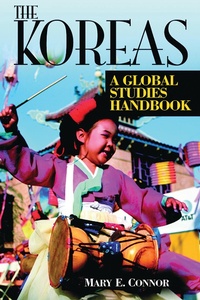
The Koreas
A Global Studies Handbook
Published on 3. April 2002
307 pages
978-1-57607-728-3 (ISBN)
Description

The Koreas delivers border-to-border coverage of North and South Korea, with chapters dedicated to history and geography, social and cultural customs, and economics and politics.
It's not hard to understand why Koreans describe their lives as han, which means "living with a great and sustained sorrow." In the 20th century alone, they endured a 35 year Japanese military occupation, one of the most brutal civil wars in history, and decades of occupation by rival superpowers.
Yet the story of this hauntingly beautiful, mountainous land is not ultimately one of war and devastation. The Koreas: A Global Studies Handbook tells the story of a warm and generous people who have retained their distinctive language and culture despite repeated foreign occupations, achieved a literacy rate of almost 100 percent, outscored nearly every other nation in science and math, and reshaped their devastated post-war economy into one of the four tigers of Asian economic growth.
It's not hard to understand why Koreans describe their lives as han, which means "living with a great and sustained sorrow." In the 20th century alone, they endured a 35 year Japanese military occupation, one of the most brutal civil wars in history, and decades of occupation by rival superpowers.
Yet the story of this hauntingly beautiful, mountainous land is not ultimately one of war and devastation. The Koreas: A Global Studies Handbook tells the story of a warm and generous people who have retained their distinctive language and culture despite repeated foreign occupations, achieved a literacy rate of almost 100 percent, outscored nearly every other nation in science and math, and reshaped their devastated post-war economy into one of the four tigers of Asian economic growth.
More details
Series
Language
English
Place of publication
New York
United States
Publishing group
Bloomsbury Publishing Plc
Target group
Young adult
Interest Age: From 7 to 17 years
Illustrations
37 bw illus
File size
3,31 MB
ISBN-13
978-1-57607-728-3 (9781576077283)
Copyright in bibliographic data and cover images is held by Nielsen Book Services Limited or by the publishers or by their respective licensors: all rights reserved.
Schweitzer Classification
Other editions
Additional editions
Book
04/2002
ABC-CLIO
€87.20
Shipment within 3-4 weeks
Content
- Cover
- THE KOREAS
- Series Editor's Foreword
- Preface
- NARRATIVE SECTION
- Geography and History
- THE PHYSICAL AND HUMAN GEOGRAPHY
- EARLY KOREA
- THE THREE KINGDOMS
- UNIFIED SILLA
- THE KORYO DYNASTY
- Early Koryo
- Later Koryo
- THE CHOSON DYNASTY
- The Early Period: 1392 to the Seventeenth Century
- A Nation in Transition: The Seventeenth, Eighteenth, and Nineteenth Centuries
- THE OPENING OF KOREA, ATTEMPTS AT REFORM, AND NATIONAL PERIL
- THE TONGHAK STRUGGLE, WAR, AND THE KABO REFORMS
- THE INDEPENDENCE MOVEMENT, MODERNIZATION, WAR, AND ANNEXATION
- THE COLONIAL PERIOD
- The First Phase of Japanese Rule, 1910-1919
- The Second Phase of Colonial Rule, 1919-1931
- The Third Phase of Japanese Occupation and World War II, 1931-1945
- LIBERATION, DIVISION, AND THE BEGINNINGS OF THE COLD WAR
- THE KOREAN WAR
- DIVIDED KOREA: THE SOUTH KOREAN EXPERIENCE
- The First and Second Republics, 1948-1961
- The Third and Fourth Republics, 1963-1979
- The Fifth Republic, 1980-1988
- The Sixth Republic, 1988-1993
- Civilian Government, Kim Young Sam, 1993-1998
- Kim Dae-jung, 1998-
- DIVIDED KOREA: THE NORTH KOREAN EXPERIENCE
- KOREA'S PLACE IN THE WORLD
- Economic Development since 1945
- SOUTH KOREA
- Precolonial Influences through Japanese Occupation: 1876-1945
- Liberation, the Korean War, and the Early Republic: 1945-1960
- Rapid Economic Growth and the State as Entrepreneur: 1961-1971
- New Industries, Inflation, and Urban Problems, 1971-1979
- The Role of the United States and Economic Development in Korea: 1946-1976
- The Role of Japan in Economic Development: 1961-1979
- Economic Stability, Social Equity, and Labor Militancy: 1979-1988
- The World Stage: 1988-1992
- Failed Reform and Increased Labor Agitation: 1992-1997
- The Economic Collapse: 1997
- Economic Restructuring
- More Problems in the Restructuring Process
- The Impact of the Crisis on Foreign Policy
- The Korean Economy: Current Conditions and Prospects for the Future
- NORTH KOREA
- Economic Development: 1948-1965
- Economic Development: 1965-1994
- Recent Economic Development and Prospects
- Political Development since 1945
- THE IMPACT OF TRADITION ON POLITICAL DEVELOPMENT
- THE IMPACT OF THE JAPANESE COLONIAL PERIOD ON CONTEMPORARY LIFE
- THE IMPACT OF U.S. AND SOVIET OCCUPATION AND THE KOREAN WAR ON POLITICAL DEVELOPMENT
- A DIVIDED PEOPLE: THE SOUTH KOREAN EXPERIENCE
- The First Republic, 1948-1961
- The Second Republic (1960-1961) and the Military Revolution
- Military Rule and the Third and Fourth Republics, 1961-1979
- Political Turmoil, 1979-1981
- The Fifth Republic, 1981-1988
- The Sixth Republic, 1988-1993
- The Seventh Republic, 1993-1998
- The Eighth Republic, 1998-2003
- A DIVIDED PEOPLE: THE NORTH KOREAN EXPERIENCE
- AFTER THE SUMMIT: CONCERNS AND PROSPECTS
- Contemporary Culture and Social Problems
- RAPID CHANGE AND THE PERSISTENCE OF TRADITION
- SOUTH KOREA
- The Family
- The Status of Women
- Women and the Family
- Women in School
- Women in the Workplace
- Women and Sexual Relations
- Conclusion
- SOUTH KOREA: AN EDUCATION SOCIETY
- Historical Background
- Contemporary Education
- The Need for Educational Reforms
- PHILOSOPHY AND RELIGION
- Shamanism and Daoism
- Confucianism
- Buddhism
- Christianity
- The "Newly Rising Religions"
- This-Worldly Orientation of Korean Religions
- The Persistence of Confucianism
- Current Religious Trends and the Issue of Reunification
- TRADITIONAL AND POPULAR CULTURE
- The Youth Culture
- Sports and Recreation
- NORTH KOREA
- The North Korean Perspective
- The Political Culture
- North Korean Society
- Education
- Religion
- North Korean Defectors
- REFERENCE MATERIALS
- Chronological Table
- Significant People, Places, and Events
- Ahn Chang-ho
- Ahn Sook-sun
- April Revolution
- Catholic Persecutions
- Ch'angdok-kung Palace
- Chong In-bo
- Chung, Myung-whun
- Chung Chu-Yong
- Chun Doo Hwan
- Demilitarized Zone (DMZ)
- General Sherman Incident
- Haein-sa
- Han Yongun
- Hideyoshi Invasions
- Hong Nanp'a
- Im Kwon-taek
- Kabo Reforms
- Kim Chongsuk
- Kim Dae-jung
- Kim Duk-soo
- Kim Il Sung
- Kim Jong Il
- Kim Songsu
- Kim Taegon
- Kim Whanki
- Kim Woo-choong
- Kim Young Sam
- King Sejong
- Korean American Treaty
- Korean War
- Kwangju Uprising
- Kyongju
- Lee Taeyong
- March First Movement
- Mongol Invasions
- Nuclear Crisis of 1994
- Pang Chong Hwan
- Park Chung Hee
- Rhee, Syngman
- Roh Tae Woo
- Samyongdang
- Queen Sondak
- Russo-Japanese War
- Seoul Olympics
- Sirhak Movement (Practical Learning)
- Shin Saimdang
- Sino-Japanese War
- Sydney Olympics
- Taft-Katsura Agreement
- The Tonghak Movement (Eastern Learning)
- Treaty of Kanghwa
- Wang Kon
- Western Learning (Catholicism)
- Wonhyo
- Yi Hwang or T'oegye
- Yi I
- Yi Sunsin
- Yu Kwansun
- Yusin (Revitalizing Reforms)
- Korean Language, Food, and Etiquette
- THE WRITTEN LANGUAGE
- THE SPOKEN LANGUAGE
- FOOD
- Common Korean Dishes
- Rice
- Kimchee
- Soup
- Beans
- Noodles
- Seafood
- Pulgogi
- Kalbi kui
- Pibimpap
- Kujol-p'an
- Sinsullo
- Desserts
- Common Beverages
- Alcoholic
- Nonalcoholic
- ETIQUETTE
- How Not to Succeed in Korea
- How to Behave Well and Succeed Harmoniously in Korea
- Hierarchy
- Humility
- Maintaining Harmonious Relations
- Kibun
- Nunch'i
- Introductions
- Forms of Address
- Clothes
- Gift Giving
- Punctuality
- Humor
- Gestures
- Shopping
- Personal Space
- Eating and Drinking
- Organizations
- GOVERNMENT ORGANIZATIONS
- BUSINESS AND ECONOMIC ORGANIZATIONS
- UNITED STATES KOREA TRADE CENTERS
- CULTURE/EDUCATION/EXCHANGE ORGANIZATIONS
- Korean Culture and Information Centers
- TOURISM ORGANIZATIONS
- KOREAN-AMERICAN ORGANIZATIONS
- Annotated Bibliography of Recommended Works on Korea
- BOOK RESOURCES
- Geography and History
- Economy
- Political Development
- Culture and Society
- PERIODICALS
- RECOMMENDED LITERATURE
- INTERNET
- WEB SITES FOR LEARNING KOREAN
- CD-ROMS
- FILMS/VIDEOS
- Index
- About the Author
