

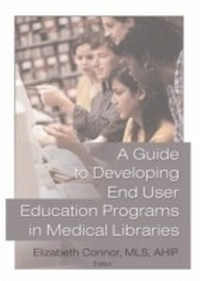
A Guide to Developing End User Education Programs in Medical Libraries
1st Edition
Published on 4. February 2014
274 pages
978-1-317-78802-7 (ISBN)
Description

Explore a wealth of ideas, insights, and approaches that can be used or adapted by any medical library!
Curricular changes in the health professions, coupled with a growing acceptance of the Internet as a tool for daily living, have contributed to a climate of change and opportunity for health sciences libraries. A Guide to Developing End User Education Programs in Medical Libraries will help graduate students in library science, entry-level medical librarians, and experienced educators to understand best practices and to build, expand, and improve medical library-sponsored educational programs.
A Guide to Developing End User Education Programs in Medical Libraries is designed to aid and inform professionals who develop, teach, or evaluate end-user education programs in health sciences libraries. Eighteen case studies represent the ideas and approaches of more than fifteen private and public institutions in the United States and the Caribbean. The studies focus on effective end-user programs for medical information electives, veterinary medicine programs, health care informatics, and evidence-based medicine, plus instructional programs for teaching residents, ThinkPad-facilitated instruction, and more. The guide also examines how several medical libraries have created and expanded their end-user education programs.
The contributors to A Guide to Developing End User Education Programs in Medical Libraries are health sciences librarians from teaching hospitals, medical/dental/veterinary schools, and health professions-focused universities in a dozen U.S. states and the West Indies. Each of them is involved in designing, teaching, and evaluating user education.
This book will help you educate students of medicine, pharmacy, physical therapy, dentistry, and veterinary medicine, plus residents and practicing health professionals. The educational objectives and approaches in the case studies include:
clinical medical librarianship
integrating informatics objectives into curricula
developing credit and non-credit coursework
distance learning
using new and emerging technologies to improve instruction
The case studies in A Guide to Developing End User Education Programs in Medical Libraries follow a format similar to that of the structured abstract, including introduction, setting, educational approaches, evaluation methods, future plans, conclusion, and references. Some are illustrated with tables and figures. Several are supplemented by material in chapter-specific appendixes. Further information about specific classes, programs, or teaching philosophies is made available via Web sites featured in the book.
Let this valuable guide help youand your institutiontake advantage of the opportunities available at this exciting time in the evolution of library science!
Curricular changes in the health professions, coupled with a growing acceptance of the Internet as a tool for daily living, have contributed to a climate of change and opportunity for health sciences libraries. A Guide to Developing End User Education Programs in Medical Libraries will help graduate students in library science, entry-level medical librarians, and experienced educators to understand best practices and to build, expand, and improve medical library-sponsored educational programs.
A Guide to Developing End User Education Programs in Medical Libraries is designed to aid and inform professionals who develop, teach, or evaluate end-user education programs in health sciences libraries. Eighteen case studies represent the ideas and approaches of more than fifteen private and public institutions in the United States and the Caribbean. The studies focus on effective end-user programs for medical information electives, veterinary medicine programs, health care informatics, and evidence-based medicine, plus instructional programs for teaching residents, ThinkPad-facilitated instruction, and more. The guide also examines how several medical libraries have created and expanded their end-user education programs.
The contributors to A Guide to Developing End User Education Programs in Medical Libraries are health sciences librarians from teaching hospitals, medical/dental/veterinary schools, and health professions-focused universities in a dozen U.S. states and the West Indies. Each of them is involved in designing, teaching, and evaluating user education.
This book will help you educate students of medicine, pharmacy, physical therapy, dentistry, and veterinary medicine, plus residents and practicing health professionals. The educational objectives and approaches in the case studies include:
clinical medical librarianship
integrating informatics objectives into curricula
developing credit and non-credit coursework
distance learning
using new and emerging technologies to improve instruction
The case studies in A Guide to Developing End User Education Programs in Medical Libraries follow a format similar to that of the structured abstract, including introduction, setting, educational approaches, evaluation methods, future plans, conclusion, and references. Some are illustrated with tables and figures. Several are supplemented by material in chapter-specific appendixes. Further information about specific classes, programs, or teaching philosophies is made available via Web sites featured in the book.
Let this valuable guide help youand your institutiontake advantage of the opportunities available at this exciting time in the evolution of library science!
More details
Language
English
Place of publication
London
United Kingdom
Publishing group
Taylor & Francis Ltd
Target group
College/higher education
Product notice
Reflowable
File size
1,78 MB
ISBN-13
978-1-317-78802-7 (9781317788027)
Copyright in bibliographic data and cover images is held by Nielsen Book Services Limited or by the publishers or by their respective licensors: all rights reserved.
Schweitzer Classification
Other editions
Additional editions
Book
01/2005
1st Edition
Haworth Press Inc
€178.27
Article exhausted; check different version
Book
01/2005
1st Edition
Routledge
€69.51
Shipment within 10-20 days
Person
Content
About the Editor
Contributors
Preface
Introduction
Chapter 1. Computers & Medical Information Elective at Texas A&M University (Gale G. Hannigan)
Setting
Educational Approaches
Evaluation Methods
Future Plans
Conclusion
Appendix A: Computers & Medical Information Elective (IMED-989301) 2003-2004 Modules
Appendix B: Computers & Medical Information Elective (IMED-989301) Evaluation
Chapter 2. Instructional Outreach and Liaison to a Veterinary Medicine Program at Washington State University (Sarah K. McCord and Vicki F. Croft)
Setting
Educational Approaches
Evaluation Methods
Conclusion
Chapter 3. Researching the Evidence in Physical Therapy at the University of Missouri-Columbia (Rebecca S. Graves, Evan Prost, and Yvette Silvey)
Setting
Background
Educational Approaches
Evaluation Methods
Future Plans
Conclusion
Chapter 4. The Librarian As Partner in the Development of the Health Care Informatics Curriculum at James Madison University (Jennifer McCabe)
Setting
Educational Approaches
Evaluation Methods
Conclusion
Appendix: Informatics for Health Care Professionals Syllabus
Chapter 5. Educating Users of the Health Sciences Library System at the University of Pittsburgh (Linda M. Hartman)
Setting
Educational Approaches
Evaluation Methods
Conclusion
Chapter 6. Hardin Library for the Health Sciences: Experiencing Change (Denise H. Britigan
and Anne K. Gehringer)
Introduction
Setting
Background
Educational Approaches
Evaluation Methods
Conclusion
Chapter 7. Medical Informatics Intervention: Teaching the Teaching Residents at Christiana Care Health System (Sharon Easterby-Gannett and Ellen M. Justice)
Setting
Educational Approaches
Evaluation Methods
Future Plans
Conclusion
Appendix: Findings from the Teaching Resident Block: Pre- and Postinformatics Rating Scale
Chapter 8. The Librarian's Role As Information Technology Educator at the University of South Alabama (Justin Robertson)
Introduction
Setting
Educational Approaches
Evaluation Methods
Conclusion
Appendix A: College of Medicine Elective FMP 479
Appendix B: Basic Personal Computer Confidence Survey (BBL 479)
Chapter 9. Using Computer-Based Case Studies for Developing Information Searching Skills and Implementing Evidence-Based Medicine at Jefferson Medical College (Anthony J. Frisby and Daniel G. Kipnis)
Introduction
Setting
Educational Approaches
Support Issues
Evaluation Methods
Future Plans
Chapter 10. Education and E-Learning at the William H. Welch Medical Library (Cynthia L. Sheffield, Jayne M. Campbell, and Dongming Zhang)
Introduction
Setting
Educational Approaches
Future Plans
Conclusion
Chapter 11. An Information Course for First-Year Pharmacy Students at the University of California, San Francisco (David J. Owen, Gail L. Persily, and Patricia C. Babbitt)
Introduction
Setting
Educational Approaches
Evaluation Methods
Conclusion
Chapter 12. Building an Effective User Education Program: The Medical Librarian As Coeducator at the University of the West Indies (Ernesta Greenidge and Meerabai Gosine-Boodoo)
Setting
Educational Approaches
Evaluation Methods
Future Plans
Conclusion
Chapter 13. Educational Programs at the New York University College of
Contributors
Preface
Introduction
Chapter 1. Computers & Medical Information Elective at Texas A&M University (Gale G. Hannigan)
Setting
Educational Approaches
Evaluation Methods
Future Plans
Conclusion
Appendix A: Computers & Medical Information Elective (IMED-989301) 2003-2004 Modules
Appendix B: Computers & Medical Information Elective (IMED-989301) Evaluation
Chapter 2. Instructional Outreach and Liaison to a Veterinary Medicine Program at Washington State University (Sarah K. McCord and Vicki F. Croft)
Setting
Educational Approaches
Evaluation Methods
Conclusion
Chapter 3. Researching the Evidence in Physical Therapy at the University of Missouri-Columbia (Rebecca S. Graves, Evan Prost, and Yvette Silvey)
Setting
Background
Educational Approaches
Evaluation Methods
Future Plans
Conclusion
Chapter 4. The Librarian As Partner in the Development of the Health Care Informatics Curriculum at James Madison University (Jennifer McCabe)
Setting
Educational Approaches
Evaluation Methods
Conclusion
Appendix: Informatics for Health Care Professionals Syllabus
Chapter 5. Educating Users of the Health Sciences Library System at the University of Pittsburgh (Linda M. Hartman)
Setting
Educational Approaches
Evaluation Methods
Conclusion
Chapter 6. Hardin Library for the Health Sciences: Experiencing Change (Denise H. Britigan
and Anne K. Gehringer)
Introduction
Setting
Background
Educational Approaches
Evaluation Methods
Conclusion
Chapter 7. Medical Informatics Intervention: Teaching the Teaching Residents at Christiana Care Health System (Sharon Easterby-Gannett and Ellen M. Justice)
Setting
Educational Approaches
Evaluation Methods
Future Plans
Conclusion
Appendix: Findings from the Teaching Resident Block: Pre- and Postinformatics Rating Scale
Chapter 8. The Librarian's Role As Information Technology Educator at the University of South Alabama (Justin Robertson)
Introduction
Setting
Educational Approaches
Evaluation Methods
Conclusion
Appendix A: College of Medicine Elective FMP 479
Appendix B: Basic Personal Computer Confidence Survey (BBL 479)
Chapter 9. Using Computer-Based Case Studies for Developing Information Searching Skills and Implementing Evidence-Based Medicine at Jefferson Medical College (Anthony J. Frisby and Daniel G. Kipnis)
Introduction
Setting
Educational Approaches
Support Issues
Evaluation Methods
Future Plans
Chapter 10. Education and E-Learning at the William H. Welch Medical Library (Cynthia L. Sheffield, Jayne M. Campbell, and Dongming Zhang)
Introduction
Setting
Educational Approaches
Future Plans
Conclusion
Chapter 11. An Information Course for First-Year Pharmacy Students at the University of California, San Francisco (David J. Owen, Gail L. Persily, and Patricia C. Babbitt)
Introduction
Setting
Educational Approaches
Evaluation Methods
Conclusion
Chapter 12. Building an Effective User Education Program: The Medical Librarian As Coeducator at the University of the West Indies (Ernesta Greenidge and Meerabai Gosine-Boodoo)
Setting
Educational Approaches
Evaluation Methods
Future Plans
Conclusion
Chapter 13. Educational Programs at the New York University College of
