

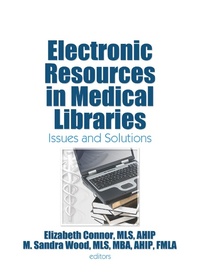
Electronic Resources in Medical Libraries
Issues and Solutions
1st Edition
Published on 26. April 2021
154 pages
978-1-136-45568-1 (ISBN)
Description

Give your patrons access to the digital content they need
Electronic Resources in Medical Libraries is an essential guide to the challenges of acquiring, licensing, and managing the electronic access and use of books and journals. Medical librarians working in a variety of settings, including academic health centers, hospital libraries, and government health associations, provide entry-level, mid-career, and experienced librarians with comprehensive information and advice on dealing with electronic resources. This invaluable resource examines a wide range of issues, including collection development, pricing, open access, licensing, remote access, statistics, publisher liability, and the Semantic Web.
As healthcare professionals, researchers, educators, and students rely more and more on digital content, medical libraries spend more and more time dealing with the complexities surrounding the use of e-resources. Electronic Resources in Medical Libraries examines the issues they face everyday, including the shift from print to electronic materials, off-campus and cross-campus access, usage statistics, journal pricing, open-access publishing, licensing, collection development, and much more.
Topics addressed in Electronic Resources in Medical Libraries include:
how to negotiate consortial packages
how to use an electronic resource management (ERM) system
how to create a portal to share electronic resources
how to consolidate costs and provide wide access
how open access affects pricing
how to establish and maintain access to licensed e-resources
how to develop a combined e-journal Web page
how off-campus students interact with a full-service document delivery option for electronic journals
how to integrate e-resources into an online catalog
how to apply emerging Semantic Web technologies to digital libraries
and much more
Electronic Resources in Medical Libraries is an invaluable professional guide for medical and academic librarians, and a helpful classroom resource for faculty and students in library schools.
Electronic Resources in Medical Libraries is an essential guide to the challenges of acquiring, licensing, and managing the electronic access and use of books and journals. Medical librarians working in a variety of settings, including academic health centers, hospital libraries, and government health associations, provide entry-level, mid-career, and experienced librarians with comprehensive information and advice on dealing with electronic resources. This invaluable resource examines a wide range of issues, including collection development, pricing, open access, licensing, remote access, statistics, publisher liability, and the Semantic Web.
As healthcare professionals, researchers, educators, and students rely more and more on digital content, medical libraries spend more and more time dealing with the complexities surrounding the use of e-resources. Electronic Resources in Medical Libraries examines the issues they face everyday, including the shift from print to electronic materials, off-campus and cross-campus access, usage statistics, journal pricing, open-access publishing, licensing, collection development, and much more.
Topics addressed in Electronic Resources in Medical Libraries include:
how to negotiate consortial packages
how to use an electronic resource management (ERM) system
how to create a portal to share electronic resources
how to consolidate costs and provide wide access
how open access affects pricing
how to establish and maintain access to licensed e-resources
how to develop a combined e-journal Web page
how off-campus students interact with a full-service document delivery option for electronic journals
how to integrate e-resources into an online catalog
how to apply emerging Semantic Web technologies to digital libraries
and much more
Electronic Resources in Medical Libraries is an invaluable professional guide for medical and academic librarians, and a helpful classroom resource for faculty and students in library schools.
More details
Edition
1. Auflage
Language
English
Place of publication
London
United Kingdom
Publishing group
Taylor & Francis Ltd
Target group
College/higher education
Professional and scholarly
ISBN-13
978-1-136-45568-1 (9781136455681)
Copyright in bibliographic data and cover images is held by Nielsen Book Services Limited or by the publishers or by their respective licensors: all rights reserved.
Schweitzer Classification
Other editions
Additional editions
Book
10/2012
1st Edition
Routledge
€59.60
Shipment within 15-20 days
Book
05/2007
1st Edition
Routledge
€133.69
Shipment within 10-20 days
Person
Elizabeth Connor, MLS, AHIP, is Associate Professor of Library Science and Science Liaison at the Daniel Library of The Citadel, the Military College of South Carolina. Since earning her MLS at the State University College at Geneseo in 1978, Ms. Connor has worked as a community college librarian, medical librarian at teaching hospitals and medical schools in three states (Maryland, Connecticut, and South Carolina), and two foreign countries (Kingdom of Saudi Arabia and Commonwealth of Dominica), and is employed as an academic librarian at the Military College of South Carolina in Charleston. She is a distinguished member of the Academy of Health Information Professionals (AHIP), serves as the book review editor of Medical Reference Services Quarterly, and co-edits Journal of Electronic Resources in Medical Libraries. Research interests relate to how scientists develop habits of mind and how case studies can be used to engage and sustain science learning, especially in undergraduates. Recent publications include A Guide to Developing End User Education Programs in Medical Libraries; Planning, Renovating, Expanding, and Constructing Library Facilities in Hospitals, Academic Medical Centers, and Health Organizations; An Introduction to Reference Services in Academic Libraries; and Evidence-Based Librarianship: Case Studies and Active Learning Exercises.
Content
Introduction (Elizabeth Connor and M. Sandra Wood)
Moving the Big Deal (Chung Sook Kim and Barbara M. Koehler)
Scholarly E-Journal Pricing Models and Open Access Publishing (Maggie Wineburgh-Freed)
Extending Electronic Resource Licenses to a Newly Established Overseas Medical School Branch (Michael A. Wood, Carole Thompson, and Kristine M. Alpi)
Access to Health Information in Latin America and the Caribbean (C. Veronica Abdala and Rosane Taruhn)
Assessing Online Use: Are Statistics from Web-Based Online Journal Lists Representative? (Rick Ralston)
Two Interfaces, One Knowledge Base: The Development of a Combined E-Journal Web Page (Felicia Yeh and Karen McMullen)
Off-Campus User Behavior: Are They Finding Electronic Journals on Their Own or Still Ordering Through Document Delivery? (Julie A. Garrison and Pamela A. Grudzien)
Integrating E-Resources into an Online Catalog: The Hospital Library Experience (Devica Ramjit Samsundar)
Is There a Pending Change in Medical Publisher and Library Liability? (A. Bruce Strauch, Earl Walker, and Mark Bebensee)
Semantic Web Technologies: Opportunity for Domain Targeted Libraries? (Jon C. Ferguson)
Index
Reference Notes Included
Moving the Big Deal (Chung Sook Kim and Barbara M. Koehler)
Scholarly E-Journal Pricing Models and Open Access Publishing (Maggie Wineburgh-Freed)
Extending Electronic Resource Licenses to a Newly Established Overseas Medical School Branch (Michael A. Wood, Carole Thompson, and Kristine M. Alpi)
Access to Health Information in Latin America and the Caribbean (C. Veronica Abdala and Rosane Taruhn)
Assessing Online Use: Are Statistics from Web-Based Online Journal Lists Representative? (Rick Ralston)
Two Interfaces, One Knowledge Base: The Development of a Combined E-Journal Web Page (Felicia Yeh and Karen McMullen)
Off-Campus User Behavior: Are They Finding Electronic Journals on Their Own or Still Ordering Through Document Delivery? (Julie A. Garrison and Pamela A. Grudzien)
Integrating E-Resources into an Online Catalog: The Hospital Library Experience (Devica Ramjit Samsundar)
Is There a Pending Change in Medical Publisher and Library Liability? (A. Bruce Strauch, Earl Walker, and Mark Bebensee)
Semantic Web Technologies: Opportunity for Domain Targeted Libraries? (Jon C. Ferguson)
Index
Reference Notes Included
