

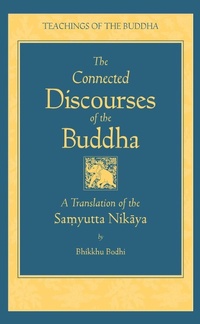
The Connected Discourses of the Buddha
A New Translation of the Samyutta Nikaya
Wisdom Publications (Publisher)
Published on 10. June 2005
2080 pages
978-0-86171-973-0 (ISBN)
Description

This volume offers a complete translation of the Samyutta Nikaya, The Connected Discourses of the Buddha, the third of the four great collections in the Sutta Pitaka of the Pali Canon. The Samyutta Nikaya consists of fifty-six chapters, each governed by a unifying theme that binds together the Buddha's suttas or discourses. The chapters are organized into five major parts.
The first, The Book with Verses, is a compilation of suttas composed largely in verse. This book ranks as one of the most inspiring compilations in the Buddhist canon, showing the Buddha in his full grandeur as the peerless "teacher of gods and humans." The other four books deal in depth with the philosophical principles and meditative structures of early Buddhism. They combine into orderly chapters all the important short discourses of the Buddha on such major topics as dependent origination, the five aggregates, the six sense bases, the seven factors of enlightenment, the Noble Eightfold Path, and the Four Noble Truths.
Among the four large Nikayas belonging to the Pali Canon, the Samyutta Nikaya serves as the repository for the many shorter suttas of the Buddha where he discloses his radical insights into the nature of reality and his unique path to spiritual emancipation. This collection, it seems, was directed mainly at those disciples who were capable of grasping the deepest dimensions of wisdom and of clarifying them for others, and also provided guidance to meditators intent on consummating their efforts with the direct realization of the ultimate truth.
The present work begins with an insightful general introduction to the Samyutta Nikaya as a whole. Each of the five parts is also provided with its own introduction, intended to guide the reader through this vast, ocean-like collection of suttas.
To further assist the reader, the translator has provided an extensive body of notes clarifying various problems concerning both the language and the mean
The first, The Book with Verses, is a compilation of suttas composed largely in verse. This book ranks as one of the most inspiring compilations in the Buddhist canon, showing the Buddha in his full grandeur as the peerless "teacher of gods and humans." The other four books deal in depth with the philosophical principles and meditative structures of early Buddhism. They combine into orderly chapters all the important short discourses of the Buddha on such major topics as dependent origination, the five aggregates, the six sense bases, the seven factors of enlightenment, the Noble Eightfold Path, and the Four Noble Truths.
Among the four large Nikayas belonging to the Pali Canon, the Samyutta Nikaya serves as the repository for the many shorter suttas of the Buddha where he discloses his radical insights into the nature of reality and his unique path to spiritual emancipation. This collection, it seems, was directed mainly at those disciples who were capable of grasping the deepest dimensions of wisdom and of clarifying them for others, and also provided guidance to meditators intent on consummating their efforts with the direct realization of the ultimate truth.
The present work begins with an insightful general introduction to the Samyutta Nikaya as a whole. Each of the five parts is also provided with its own introduction, intended to guide the reader through this vast, ocean-like collection of suttas.
To further assist the reader, the translator has provided an extensive body of notes clarifying various problems concerning both the language and the mean
More details
Other editions
Additional editions
Book
06/2003
Wisdom Publications,U.S.
€81.00
Shipment within 3-4 weeks
Person
Ven. Bhikkhu Bodhi is an American Buddhist monk from New York City, born in 1944. He obtained a BA in philosophy from Brooklyn College and a PhD in philosophy from Claremont Graduate School. After completing his university studies he traveled to Sri Lanka, where he received novice ordination in 1972 and full ordination in 1973, both under the leading Sri Lankan scholar-monk, Ven. Balangoda Ananda Maitreya (1896-1998). From 1984 to 2002 he was the editor for the Buddhist Publication Society in Kandy, where he lived for ten years with the senior German monk, Ven. Nyanaponika Thera (1901-1994), at the Forest Hermitage. He returned to the U.S. in 2002. He currently lives and teaches at Chuang Yen Monastery in Carmel, New York. Ven. Bodhi has many important publications to his credit, either as author, translator, or editor. These include The Middle Length Discourses of the Buddha (Majjhima Nikaya, 1995), The Connected Discourses of the Buddha (Samyutta Nikaya, 2000), and The Numerical Discourses of the Buddha (Anguttara Nikaya, 2012). In 2008, together with several of his students, Ven. Bodhi founded Buddhist Global Relief, a nonprofit supporting hunger relief, sustainable agriculture, and education in countries suffering from chronic poverty and malnutrition.
Content
- Front Cover
- General Contents
- Preface
- Key to the Pronunciation of Pali
- General Introduction
- PART I: The Book with Verses (Sagathavagga)
- Contents
- Introduction
- 1. Devatasamyutta: Connected Discourses with Devatas
- 2. Devaputtasamyutta: Connected Discourses with Young Devas
- 3. Kosalasamyutta: Connected Discourses with the Kosalan
- 4. Marasamyutta: Connected Discourses with Mara
- 5. Bhikkhunisamyutta: Connected Discourses with Bhikkhunis
- 6. Brahmasamyutta: Connected Discourses with Brahmas
- 7. Brahmanasamyutta: Connected Discourses with Brahmins
- 8. Vangisasamyutta: Connected Discourses with Vangisa
- 9. Vanasamyutta: Connected Discourses in the Woods
- 10. Yakkhasamyutta: Connected Discourses with Yakkhas
- 11. Sakkasamyutta: Connected Discourses with Sakka
- Notes
- PART II: The Book of Causation (Nidanavagga)
- Contents
- Introduction
- 12. Nidanasamyutta: Connected Discourses on Causation
- 13. Abhisamayasamyutta: Connected Discourses on the Breakthrough
- 14. Dhatusamyutta: Connected Discourses on Elements
- 15. Anamataggasamyutta: Connected Discourses on Without Discoverable Beginning
- 16. Kassapasamyutta: Connected Discourses with Kassapa
- 17. Labhasakkarasamyutta: Connected Discourses on Gains and Honour
- 18. Rahulasamyutta: Connected Discourses with Rahula
- 19. Lakkhanasamyutta: Connected Discourses with Lakkhana
- 20. Opammasamyutta: Connected Discourses with Similes
- 21. Bhikkhusamyutta: Connected Discourses with Bhikkhus
- Notes
- PART III: The Book of the Aggregates (Khandhavagga)
- Contents
- Introduction
- 22. Khandhasamyutta: Connected Discourses on the Aggregates
- 23. Radhasamyutta: Connected Discourses with Radha
- 24. Ditthisamyutta: Connected Discourses on Views
- 25. Okkantisamyutta: Connected Discourses on Entering
- 26. Uppadasamyutta: Connected Discourses on Arising
- 27. Kilesasamyutta: Connected Discourses on Defilements
- 28. Sariputtasamyutta: Connected Discourses with Sariputta
- 29. Nagasamyutta: Connected Discourses on Nagas
- 30. Supannasamyutta: Connected Discourses on Supannas
- 31. Gandhabbasamyutta: Connected Discourses on Gandhabbas
- 32. Valahakasamyutta: Connected Discourses on Cloud Devas
- 33. Vacchagottasamyutta: Connected Discourses with Vacchagotta
- 34. Jhanasamyutta: Connected Discourses on Meditation
- Notes
- PART IV: The Book of the Six Sense Bases (Salayatanavagga)
- Contents
- Introduction
- 35. Salayatanasamyutta: Connected Discourses on the Six Sense Bases
- 36. Vedanasamyutta: Connected Discourses on Feeling
- 37. Matugamasamyutta Connected Discourses on Women
- 38. Jambukhadakasamyutta: Connected Discourses with Jambukhadaka
- 39. Samandakasamyutta: Connected Discourses with Samandaka
- 40. Moggallanasamyutta: Connected Discourses with Moggallana
- 41. Cittasamyutta: Connected Discourses with Citta
- 42. Gamanisamyutta: Connected Discourses with Headmen
- 43. Asankhatasamyutta: Connected Discourses on the Unconditioned
- 44. Abyakatasamyutta: Connected Discourses on the Undeclared
- Notes
- PART V: The Great Book (Mahavagga)
- Contents
- Introduction
- 45. Maggasamyutta: Connected Discourses on the Path
- 46. Bojjhangasamyutta: Connected Discourses on the Factors of Enlightenment
- 47. Satipatthanasamyutta: Connected Discourses on the Establishments of Mindfulness
- 48. Indriyasamyutta: Connected Discourses on the Faculties
- 49. Sammappadhanasamyutta: Connected Discourses on the Right Strivings
- 50. Balasamyutta: Connected Discourses on the Powers
- 51. Iddhipadasamyutta: Connected Discourses on the Bases for Spiritual Power
- 52. Anuruddhasamyutta: Connected Discourses with Anuruddha
- 53. Jhanasamyutta: Connected Discourses on the Jhanas
- 54. Anapanasamyutta: Connected Discourses on Breathing
- 55. Sotapattisamyutta: Connected Discourses on Stream-Entry
- 56. Saccasamyutta: Connected Discourses on the Truths
- Notes
- Concordances
- 1. Verse Parallels
- 2. Exact Sutta Parallels
- 3. Template Parallels
- 4. Auditor-Setting Variants
- Bibliography
- Abbreviations
- Pali-English Glossary
- Indexes
- Of Subjects
- A
- B
- C
- D
- E
- F
- G
- H
- I
- J
- K
- L
- M
- N
- O
- P
- Q
- R
- S
- T
- U
- V
- W
- Y
- Of Proper Names
- A
- B
- C
- D
- E
- F
- G
- H
- I
- J
- K
- L
- M
- N
- P
- R
- S
- T
- U
- V
- W
- Y
- Of Similes
- A
- B
- C
- D
- E
- F
- G
- H
- I
- J
- K
- L
- M
- N
- O
- P
- R
- S
- T
- V
- W
- Y
- Of Pali Terms Discussed in the Introduction and Notes
- A
- B
- C
- D
- E
- G
- H
- I
- J
- K
- L
- M
- N
- O
- P
- R
- S
- T
- U
- V
- Y
