

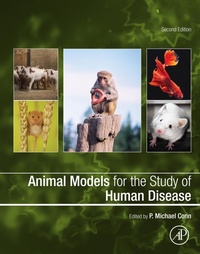
Animal Models for the Study of Human Disease
2nd Edition
Published on 20. June 2017
1198 pages
978-0-12-809699-4 (ISBN)
Description

Animal Models for the Study of Human Disease, Second Edition, provides needed information on model sharing, animal alternatives, animal ethics and access to databanks of models, bringing together common descriptions of models for busy researchers across biomedical and biological sciences.
Offering easily searchable advantages and disadvantages for each animal model and organized by disease topics, this resource aids researchers in finding the best animal model for research in human disease.
- Organized by disease orientation for ease of searchability
- Provides information on locating resources, animal alternatives, and animal ethics
- Covers a broad range of animal models used in research for human disease
- Contributed by leading experts across the globe
- Expanded coverage of diabetes and neurological diseases
More details
Other editions
Additional editions
P. Michael Conn
Animal Models for the Study of Human Disease
Book
06/2017
2nd Edition
Academic Press
€276.50
Shipment within 15-20 days
Previous edition
P. Michael Conn
Animal Models for the Study of Human Disease
E-Book
05/2013
1st Edition
Academic Press
€236.00
Available for download
Content
1. Ethics and animal research: Foundations, basic principles, applications for animal models of human disease2. Psychological enrichment of animals in research3. Large Animal Models4. Animal models of cataracts5. Animal models for retinitis pigmentosa6. Animal Models for Atherosclerosis and myocardial infarction7. Animal Models for cardiovascular research8. Animal models of cardiac disease9. Animal models of metabolic syndrome10. Animal Models of Diabetes11. Animal models of obesity12. Models for the manipulation of energy expenditure13. Animal models for liver diseases14. Animal Models of Skin Regeneration15. Animal models of skin disorders16. Models of Chronic Kidney Disease17. Animal Models of Urinary Stone Disease18. Animals models for for healing studies after partial nephrectomy19. Animal models of IBD20. Animal models of stroke21. Zebrafish models of olfactory and neuromuscular dysfunction of degeneration22. Animal models of drug abuse23. Animal models of schizophrenia24. Animal models for the exploration of Klinefelter's syndrome25. The Use of Zebrafish in Medical Genomics26. Transgenic pigs as models for translational biomedical research27. Genetically modified animal models28. Mouse model of human disease by forward and reverse genetics29. Animal models of neonatal seizures30. Animal Models for the Study of Infection-Associated Preterm Birth31. Animal models for the study of neonatal disease32. Animal models of fetal programming33. Animal models of human viral diseases34. CRISPR Models of Cancer35. Animal models of breast cancer36. Animal models of systemic sclerosis: past, present, and perspective37. Animal models of multiple sclerosis38. Animal Models of Mood Disorders39. Pigs in Behaviour Models40. Models of Alzheimer's disease41. MPTP-induced animal models for Parkinson's disease42. Animal Models of Neurodegenerative Disease43. Animal models of mania44. Animal Models of Stress Coping and Resilience
