

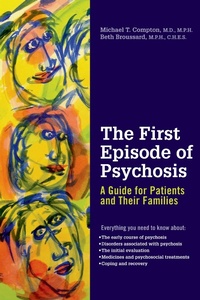
The First Episode of Psychosis
A Guide for Patients and Their Families
Published on 28. April 2009
286 pages
978-0-19-970700-3 (ISBN)
Description

The First Episode of Psychosis is the ideal book for patients experiencing the frightening and confusing initial episode of psychosis, which often occurs during late adolescence or early adulthood, and which affects nearly 3% of all people over the course of their lifetime. The book covers a range of disorders, focusing on primary psychotic disorders such as schizophrenia and schizophreniform disorder, clearly describing symptoms, early warning signs, and treatment--information that is essential for patients and families faced with the challenges posed by psychosis. The book also discusses psychiatric evaluation, healthy lifestyle choices, and the stigma often associated with mental illnesses. Worksheets allow readers to keep records of symptoms to facilitate communication with care providers, and an extensive glossary clarifies the dizzying array of terms used by medical professionals. Optimistic, practical, and recovery-oriented, The First Episode of Psychosis will help patients and their families to take an active, informed role in their care to ensure the best possible prognosis.
More details
Other editions
Additional editions
Michael T. Compton | Beth Broussard
The First Episode of Psychosis
A Guide for Patients and Their Families
Book
01/2010
1st Edition
Oxford University Press Inc
€17.96
Article exhausted; check different version
Content
- Intro
- Contents
- List of Figures, Tables, and Worksheets
- Part I. Answering Your Basic Questions
- 1. What Is Psychosis?
- What Psychosis Is
- What Psychosis is NOT
- Developing Psychosis
- The Psychosis Continuum
- Schizophrenia and Other Serious Psychotic Disorders
- Possible Causes of Psychosis
- Taking Action: Treatment and Recovery
- Putting It All Together
- Key Chapter Points
- 2. What Are the Symptoms of Psychosis?
- Positive Symptoms
- Negative Symptoms
- Disorganized Symptoms
- Impaired Insight
- Cognitive Dysfunction
- Hostile/Aggressive Symptoms
- Catatonic and Movement Symptoms
- Mood Symptoms and Anxiety
- Suicidal Thoughts
- Prodromal Symptoms
- Putting It All Together
- Key Chapter Points
- 3. What Diagnoses Are Associated with Psychosis?
- Three Causes of Psychotic Symptoms
- Medical Causes of Psychosis
- Psychosis Caused by Substances
- Psychiatric Causes of Psychosis
- Primary Psychotic Disorders
- Other Psychiatric Disorders that Can Cause Psychosis
- Putting It All Together
- Key Chapter Points
- 4. What Causes Primary Psychotic Disorders Like Schizophrenia?
- Genes
- Risk Factors that Occur before Birth, during Delivery, and in Infancy
- Abnormalities in Early Brain Development
- Risk Factors Occuring during Childhood and Adolescence
- Abnormalities in Brain Development during Adolescence
- Putting It All Together
- Key Chapter Points
- Part II. Clarifying the Initial Evaluation and Treatment of Psychosis
- 5. The Initial Evaluation of Psychosis
- Interviews and Observations
- Other Records and Collateral Information
- Physical Exam
- Cognitive Assessments
- Lab Tests
- Electroencephalogram
- Imaging Studies
- Combining the Pieces of an Evaluation
- Inpatient versus Oupatient Evaluation
- Putting It All Together
- Key Chapter Points
- 6. Medicines Used to Treat Psychosis
- Antipsychotic Medicines
- How Do Antipsychotics Work?
- What Are Side Effects?
- What Are Adverse Events?
- Conventional Antipsychotics
- Atypical Antipsychotics
- Finding the Right Antipsychotic Medicine
- Other Medicines Sometimes Used in the Treatment of Psychotic Disorders
- Possible Future Treatments for Psychotic Disorders
- Why Is It Important to Take the Medicine?
- How Long Should the Medicine Be Taken?
- Putting It All Together
- Key Chapter Points
- 7. Psychosocial Treatments for Early Psychosis
- Psychosocial Problems Caused by Psychosis
- Psychosocial Treatments
- The Need for Some Level of Reality Testing and Insight
- Starting and Sticking with Psychosocial Treatments
- Cognitive-Behavioral Therapy
- Group Therapy
- Family Interventions
- Supportive Housing
- Supported Employment and Vocational Rehabilitation
- Social Skills Training
- Assertive Community Treatment
- Substance Abuse Treatment Programs
- Day Treatment Programs and Partial Hospitalization
- Putting It All Together
- Key Chapter Points
- 8. Follow-up and Sticking with Treatment
- Adherence
- Attending Follow-up Appointments
- Taking Medicine Regularly
- Completing Therapy Exercises
- Mental Health Treatment Plans
- Time in Treatment
- Nonadherence
- Importance of Adherence
- Hospitalization
- Support from Family and Friends
- Tips for Family and Friends
- Support for Family and Friends
- Putting It All Together
- Key Chapter Points
- Part III. Helping You Look Ahead to Next Steps
- 9. Early Warning Signs and Preventing a Relapse
- The Importance of Detecting Early Warning Signs
- Common Early Warning Signs
- Relapse Prevention: Responding to Early Warning Signs
- Putting It All Together
- Key Chapter Points
- 10. Staying Healthy
- Cigarette Smoking
- Substance Abuse
- Diet and Exercise
- Social Support
- Putting It All Together
- Key Chapter Points
- 11. Promoting Recovery
- The New Concept of Recovery
- Principles of Recovery
- Characteristics of Those in Recovery
- Putting It All Together
- Key Chapter Points
- 12. Fighting Stigma
- Stigma Defined
- Stigma and the Media
- Effects of Stigma
- Coping with Stigma: Helpful and Harmful Strategies
- Successfully Dealing with Stigma
- Putting It All Together
- Key Chapter Points
- 13. Reducing Stress, Coping, and Communicating Effectively: Tips for Family Members and Patients
- What Is Stress?
- Stress and the Early Stages of Psychosis
- Ways to Reduce Stress in the Family
- Ways for Patients to Reduce Stress
- What Is Coping?
- How Family Members Can Cope Effectively
- How the Patient Can Cope Effectively
- The Importance of Communication
- Symptoms of Psychosis Can Sometimes Interfere with Communication
- Advice for Effective Communication within the Family
- Putting It All Together
- Key Chapter Points
- 14. Finding Specialized Programs for Early Psychosis
- Where Are Special Programs for Early Psychosis?
- What Do Special Programs for Early Psychosis Provide?
- Case Management
- Medicines
- Psychosocial Treatments
- Mobile Crisis Teams
- Community Outreach
- Treatments during the Prodromal Phase
- Putting It All Together
- Key Chapter Points
- 15. Seeking More Information
- Psychoeducation
- Talking to Your Mental Health Professional
- Information on Psychosis from Books and Magazines
- Web Sites with Information on Psychosis
- Putting It All Together
- Key Chapter Points
- 16. Understanding Mental Health First Aid for Psychosis
- Purpose of These Guidelines
- How to Use These Guidelines
- How Do I Know If Someone Is Experiencing Psychosis?
- How Should I Approach Someone Who May Be Experiencing Psychotic Symptoms?
- How Can I Be Supportive?
- How Do I Deal with Delusions and Hallucinations?
- How Do I Deal with Communication Difficulties?
- Should I Encourage the Person to Seek Professional Help?
- What If the Person Does Not Want Help?
- What Should I Do in a Crisis Situation When the Person Has Become Acutely Unwell?
- What If the Person Becomes Aggressive?
- How Do I De-escalate the Situation?
- Key Chapter Points
- Glossary
- A
- B
- C
- D
- E
- F
- G
- H
- I
- L
- M
- N
- O
- P
- R
- S
- T
- V
- W
- References
- Index
- A
- B
- C
- D
- E
- F
- G
- H
- I
- J
- K
- L
- M
- N
- O
- P
- R
- S
- T
- U
- V
- W
