

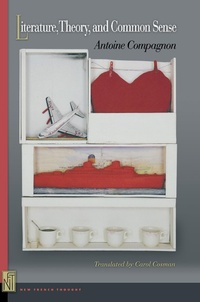
Literature, Theory, and Common Sense
1st Edition
Published on 29. May 2024
232 pages
978-0-691-26834-7 (ISBN)
Description

An engaging introduction to contemporary debates in literary theory
In the late twentieth century, the common sense approach to literature was deemed naïve. Roland Barthes proclaimed the death of the author, and Hillis Miller declared that all interpretation is theoretical. In many a literature department, graduate students spent far more time on Derrida and Foucault than on Shakespeare and Milton. Despite this, common sense approaches to literature-including the belief that literature represents reality and authorial intentions matter-have resisted theory with tenacity. As a result, argues Antoine Compagnon, theorists have gone to extremes, boxed themselves into paradoxes, and distanced others from their ideas. Eloquently assessing the accomplishments and failings of literary theory, Compagnon ultimately defends the methods and goals of a theoretical commitment tempered by the wisdom of common sense.
The book is organized not by school of thought but around seven central questions: literariness, the author, the world, the reader, style, history, and value. What makes a work literature? Does fiction imitate reality? Is the reader present in the text? What constitutes style? Is the context in which a work is written important to its apprehension? Are literary values universal?
As he examines how theory has wrestled these themes, Compagnon establishes not a simple middle-ground but a state of productive tension between high theory and common sense. The result is a book that will be met with both controversy and sighs of relief.
In the late twentieth century, the common sense approach to literature was deemed naïve. Roland Barthes proclaimed the death of the author, and Hillis Miller declared that all interpretation is theoretical. In many a literature department, graduate students spent far more time on Derrida and Foucault than on Shakespeare and Milton. Despite this, common sense approaches to literature-including the belief that literature represents reality and authorial intentions matter-have resisted theory with tenacity. As a result, argues Antoine Compagnon, theorists have gone to extremes, boxed themselves into paradoxes, and distanced others from their ideas. Eloquently assessing the accomplishments and failings of literary theory, Compagnon ultimately defends the methods and goals of a theoretical commitment tempered by the wisdom of common sense.
The book is organized not by school of thought but around seven central questions: literariness, the author, the world, the reader, style, history, and value. What makes a work literature? Does fiction imitate reality? Is the reader present in the text? What constitutes style? Is the context in which a work is written important to its apprehension? Are literary values universal?
As he examines how theory has wrestled these themes, Compagnon establishes not a simple middle-ground but a state of productive tension between high theory and common sense. The result is a book that will be met with both controversy and sighs of relief.
More details
Other editions
Additional editions
Book
07/2004
Princeton University Press
€89.28
Shipment within 10-20 days
Persons
Antoine Compagnon is the Blanche W. Knopf Professor of French and Comparative Literature at Columbia University and professor of literature at the Sorbonne.
Content
- Cover
- Half-title Page
- Title Page
- Copyright Page
- Contents
- Introduction: What Remains of Our Loves?
- Theory and Common Sense
- Theory and Practice of Literature
- Theory, Criticism, History
- Theory or Theories
- Theory of Literature or Literary Theory
- Literature Reduced to Its Elements
- Chapter 1: Literature
- The Scope of Literature
- The Comprehension of Literature: Function
- The Comprehension of Literature: The Form of Content
- The Comprehension of Literature: The Form of Expression
- Literariness or Prejudice
- Literature Is Literature
- Chapter 2: The Author
- The Thesis of the Death of the Author
- Voluntas" and "Actio
- Allegory and Philology
- Philology and Hermeneutics
- Intention and Consciousness
- The Method of Parallel Passages
- Straight from the Horse's Mouth
- Intention or Coherence
- The Two Arguments against Intention
- The Return to Intention
- Meaning Is Not Signification
- Intention Is Not Premeditation
- The Presumption of Intentionality
- Chapter 3: The World
- Against "Mimesis
- Mimesis Denaturalized
- Realism: Reflection or Convention
- The Referential Fallacy and Intertextuality
- The Terms of the Dispute
- Critique of the Anti-mimetic Thesis
- The Arbitrariness of Language
- Mimesis as Recognition
- Fictional Worlds
- The World of Books
- Chapter 4: The Reader
- Reading Sidelined
- The Resistance of the Reader
- Reception and Influence
- The Implied Reader
- The Open Work
- The Horizon of (Phantom) Expectation
- Genre as a Model of Reading
- Freewheeling Reading
- After the Reader
- Chapter 5: Style
- Style in All Its Conditions
- Language, Style, Writing
- Down with Stylel
- Norm, Deviation, Context
- Style as Thought
- The Return of Style
- Style and Exemplification
- Norm or Aggregate
- Chapter 6: History
- Literary History and History of Literature
- Literary History and Literary Criticism
- History of Ideas, Social History
- Literary Evolution
- The Horizon of Expectation
- Philology Disguised
- History or Literature?
- History as Literature
- Chapter 7: Value
- Most Poems Are Bad, but They Are Poems
- Aesthetic Illusion
- What Is a Classic?
- On the National Tradition in Literature
- Saving the Classic
- The Last Plea for Objectivism
- Value and Posterity
- In Favor of a Tempered Relativism
- Conclusion: The Theoretical Adventure
- Theory and Fiction
- Theory and "Bathmology
- Theory and Perplexity
- Notes
- Bibliography
- Index
