

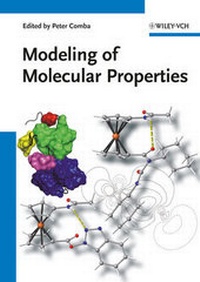
Modeling of Molecular Properties
1st Edition
Published on 19. September 2011
XXV, 485 pages
978-3-527-63642-6 (ISBN)
Description

Molecular modeling encompasses applied theoretical approaches and computational techniques to model structures and properties of molecular compounds and materials in order to predict and / or interpret their properties. The modeling covered in this book ranges from methods for small chemical to large biological molecules and materials. With its comprehensive coverage of important research fields in molecular and materials science, this is a must-have for all organic, inorganic and biochemists as well as materials scientists interested in applied theoretical and computational chemistry. The 28 chapters, written by an international group of experienced theoretically oriented chemists, are grouped into four parts: Theory and Concepts; Applications in Homogeneous Catalysis; Applications in Pharmaceutical and Biological Chemistry; and Applications in Main Group, Organic and Organometallic Chemistry. The various chapters include concept papers, tutorials, and research reports.
More details
Other editions
Additional editions
P. Comba
Modeling of Molecular Properties
Software
09/2011
Wiley-VCH
€231.69
No shipping information available
Peter Comba
Modeling of Molecular Properties
Book
09/2011
1st Edition
Wiley-VCH
€182.00
Article exhausted; check different version
Person
Peter Comba is Professor of Inorganic Chemistry at the University of Heidelberg, Germany. He obtained his diploma in chemistry from ETH and his PhD in 1981 from the University of Neuchâtel, Switzerland. After postdoctoral positions at the Australian National University (ANU) and the University of Lausanne and the habilitation at the University of Basel, he moved in 1992 to Heidelberg.
He received the Humboldt South Africa Research Award in 2000 and had visiting professorships at the universities of Leiden, ANU, Pretoria, Brisbane and Osaka. His research includes theory and experiments in transition metal coordination and bioinorganic chemistry - molecular modeling, spectroscopy, thermodynamics, magnetochemistry, kinetics and mechanisms, synthesis and catalysis.
He received the Humboldt South Africa Research Award in 2000 and had visiting professorships at the universities of Leiden, ANU, Pretoria, Brisbane and Osaka. His research includes theory and experiments in transition metal coordination and bioinorganic chemistry - molecular modeling, spectroscopy, thermodynamics, magnetochemistry, kinetics and mechanisms, synthesis and catalysis.
Content
Preface
PART I: Theory and Concepts
ACCURATE DISPERSION-CORRECTED DENSITY FUNCTIONALS FOR GENERAL CHEMISTRY APPLICATIONS
Introduction
Theoretical Background
Examples
Summary and Conclusions
FREE-ENERGY SURFACES AND CHEMICAL REACTION MECHANISMS AND KINETICS
Introduction
Elementary Reactions
Two Consecutive Steps
Multiple Consecutive Steps
Competing Reactions
Catalysis
Conclusions
THE ART OF CHOOSING THE RIGHT QUANTUM CHEMICAL EXCITED-STATE METHOD FOR LARGE MOLECULAR SYSTEMS
Introduction
Existing Excited-State Methods for Medium-Sized and Large Molecules
Basic Theory of Paramagnetic NMR
Signal Assignments
Case Studies
TRACING ULTRAFAST ELECTRON DYNAMICS BY MODERN PROPAGATOR APPROACHES
Charge Migration Processes
Interatomic Coulombic Decay in Noble Gas Clusters
NATURAL BOND ORBITALS AND LEWIS-LIKE STRUCTURES OF COPPER BLUE PROTEINS
Introduction: Localized Bonding Concepts in Copper Chemistry
Localized Bonds and Molecular Geometries in Polytomic Cu Complexes
Copper Blue Proteins and Localized Bonds
Summary
PREDICTIVE MODELING OF MOLECULAR PROPERTIES: CAN WE GO BEYOND INTERPRETATION?
Introduction
Models and Modeling
Parameterized Classical and Quantum Mechanical Theories
Predictive Energies and Structures
Other Gas-Phase Properties
Solvent Effects: The Major Problem
Reaction Selectivity
Biological and Parmaceutical Modeling
Conclusions
INTERPRETATION AND PREDICTION OF PROPERTIES OF TRANSITION METAL COORDINATION COMPOUNDS
Introduction
Molecular Structure Optimization
Correlation of Molecular Structures and Properties
Computation of Molecular Properties
A Case Study: Electronic and Magnetic Properties of Cyano-Bridged Homodinuclear Copper(II) Complexes
Conclusions
HOW TO REALIZE THE FULL POTENTIAL OF DFT: BUILD A FORCE FIELD OUT OF IT
Introduction
Spin-Crossover in Fe(II) Complexes
Ligand Field Molecular Mechanics
Molecular Discovery for New SCO Complexes
Dynamic Behavior of SCO Complexes
Light-Induced Excited Spin-State Trapping
Summary and Future Prospects
PART II: Applications in Homogeneous Catalysis
DENSITY FUNCTIONAL THEORY FOR TRANSITION METAL CHEMISTRY: THE CASE OF A WATER-SPLITTING RUTHENIUM CLUSTER
Introduction
Shortcomings of Present-Day Density Functionals
Strategies for Constructing Density Functionals
A Practical Example: Catalytic Water Splitting
Conclusions
RATIONAL END EFFICIENT DEVELOPMENT OF A NEW CLASS OF HIGHLY ACTIVE RING-OPENING METATHESIS POLYMERIZATION CATALYSTS
Introduction
A New Lead Structure: Introduction of Chelating, Bulky, Electron-Rich Bisphosphines with Small Bite Angles
ROMP Activity of the Neutral Systems
Cationic Carbene Complexes: Synthesis and Structure
Olefin Metathesis with Cationic Carbene Complexes: Mechanistic Considerations
ROMP Kinetics in Solution
Summary and Outlook
EFFECTS OF SUBSTITUENTS ON THE REGIOSELECTIVITY OF PALLADIUM-CATALYZED ALLYLIC SUBSTITUTIONS: A DFT STUDY
Introduction
Computational Details
Results and Discussion
Conclusions
DICOPPER CATALYSTS FOR THE AZIDE ALKYNE CYCLOADDITION: A MECHANISTIC DFT STUDY
Introduction
Theoretical Methods
Discussion of the CuAAC Mechanism
Conclusion and Summary
FROM DYNAMICS TO KINETICS: INVESTIGATION OF INTERCONVERTING STEREOISOMERS AND CATALYZED REACTIONS
Investigation of Interconversions by Gas Chromatography
Evaluation Tools
Investigation of Catalyzed Reactions
Perspectives
MECHANISTIC DICHOTOMIES IN COUPLING-ISOMERIZATION-CLAISEN PERICYCLIC DOMINO REACTIONS IN EXPERIMENT AND THEORY
Introduction
Computation of the Concluding Intramolecular Diels-Alder Reaction in the Domino Formation of (Tetrahydroisobenzofuran) spiro-Benzofuranones or spiro-Indolones
Computation of the Pericyclic Dichotomies of Propargyl Tritylethers
Conclusions
PART III: Applications in Pharmaceutical and Biological Chemistry
COMPUTATIONAL DESIGN OF NEW PROTEIN CATALYSTS
Introduction
The Inside-Out Approach
Catalyst Selection and the Catalytic Unit
Theozymes
Scaffold Selection and Theozyme Incorporation
Design
Evaluating Matches and Designs
Experiments
PART I: Theory and Concepts
ACCURATE DISPERSION-CORRECTED DENSITY FUNCTIONALS FOR GENERAL CHEMISTRY APPLICATIONS
Introduction
Theoretical Background
Examples
Summary and Conclusions
FREE-ENERGY SURFACES AND CHEMICAL REACTION MECHANISMS AND KINETICS
Introduction
Elementary Reactions
Two Consecutive Steps
Multiple Consecutive Steps
Competing Reactions
Catalysis
Conclusions
THE ART OF CHOOSING THE RIGHT QUANTUM CHEMICAL EXCITED-STATE METHOD FOR LARGE MOLECULAR SYSTEMS
Introduction
Existing Excited-State Methods for Medium-Sized and Large Molecules
Basic Theory of Paramagnetic NMR
Signal Assignments
Case Studies
TRACING ULTRAFAST ELECTRON DYNAMICS BY MODERN PROPAGATOR APPROACHES
Charge Migration Processes
Interatomic Coulombic Decay in Noble Gas Clusters
NATURAL BOND ORBITALS AND LEWIS-LIKE STRUCTURES OF COPPER BLUE PROTEINS
Introduction: Localized Bonding Concepts in Copper Chemistry
Localized Bonds and Molecular Geometries in Polytomic Cu Complexes
Copper Blue Proteins and Localized Bonds
Summary
PREDICTIVE MODELING OF MOLECULAR PROPERTIES: CAN WE GO BEYOND INTERPRETATION?
Introduction
Models and Modeling
Parameterized Classical and Quantum Mechanical Theories
Predictive Energies and Structures
Other Gas-Phase Properties
Solvent Effects: The Major Problem
Reaction Selectivity
Biological and Parmaceutical Modeling
Conclusions
INTERPRETATION AND PREDICTION OF PROPERTIES OF TRANSITION METAL COORDINATION COMPOUNDS
Introduction
Molecular Structure Optimization
Correlation of Molecular Structures and Properties
Computation of Molecular Properties
A Case Study: Electronic and Magnetic Properties of Cyano-Bridged Homodinuclear Copper(II) Complexes
Conclusions
HOW TO REALIZE THE FULL POTENTIAL OF DFT: BUILD A FORCE FIELD OUT OF IT
Introduction
Spin-Crossover in Fe(II) Complexes
Ligand Field Molecular Mechanics
Molecular Discovery for New SCO Complexes
Dynamic Behavior of SCO Complexes
Light-Induced Excited Spin-State Trapping
Summary and Future Prospects
PART II: Applications in Homogeneous Catalysis
DENSITY FUNCTIONAL THEORY FOR TRANSITION METAL CHEMISTRY: THE CASE OF A WATER-SPLITTING RUTHENIUM CLUSTER
Introduction
Shortcomings of Present-Day Density Functionals
Strategies for Constructing Density Functionals
A Practical Example: Catalytic Water Splitting
Conclusions
RATIONAL END EFFICIENT DEVELOPMENT OF A NEW CLASS OF HIGHLY ACTIVE RING-OPENING METATHESIS POLYMERIZATION CATALYSTS
Introduction
A New Lead Structure: Introduction of Chelating, Bulky, Electron-Rich Bisphosphines with Small Bite Angles
ROMP Activity of the Neutral Systems
Cationic Carbene Complexes: Synthesis and Structure
Olefin Metathesis with Cationic Carbene Complexes: Mechanistic Considerations
ROMP Kinetics in Solution
Summary and Outlook
EFFECTS OF SUBSTITUENTS ON THE REGIOSELECTIVITY OF PALLADIUM-CATALYZED ALLYLIC SUBSTITUTIONS: A DFT STUDY
Introduction
Computational Details
Results and Discussion
Conclusions
DICOPPER CATALYSTS FOR THE AZIDE ALKYNE CYCLOADDITION: A MECHANISTIC DFT STUDY
Introduction
Theoretical Methods
Discussion of the CuAAC Mechanism
Conclusion and Summary
FROM DYNAMICS TO KINETICS: INVESTIGATION OF INTERCONVERTING STEREOISOMERS AND CATALYZED REACTIONS
Investigation of Interconversions by Gas Chromatography
Evaluation Tools
Investigation of Catalyzed Reactions
Perspectives
MECHANISTIC DICHOTOMIES IN COUPLING-ISOMERIZATION-CLAISEN PERICYCLIC DOMINO REACTIONS IN EXPERIMENT AND THEORY
Introduction
Computation of the Concluding Intramolecular Diels-Alder Reaction in the Domino Formation of (Tetrahydroisobenzofuran) spiro-Benzofuranones or spiro-Indolones
Computation of the Pericyclic Dichotomies of Propargyl Tritylethers
Conclusions
PART III: Applications in Pharmaceutical and Biological Chemistry
COMPUTATIONAL DESIGN OF NEW PROTEIN CATALYSTS
Introduction
The Inside-Out Approach
Catalyst Selection and the Catalytic Unit
Theozymes
Scaffold Selection and Theozyme Incorporation
Design
Evaluating Matches and Designs
Experiments
